

How to Detect Cable Depth Accurately on Site?
Learn how to perform accurate cable depth measurement on site and how the Wrindu RDCD-Ⅱ/507 cable pipeline detector improves underground cable locating safety and precision.
Accurate cable depth measurement protects underground power systems and improves excavation safety. If engineers misjudge burial depth, digging may damage cables or delay repair work. So reliable on-site cable depth detection becomes a key step before maintenance or fault location.
This article explains practical methods for precise depth measurement and shows how the Wrindu RDCD-Ⅱ/507 Cable Pipeline Detector supports safe field operation.
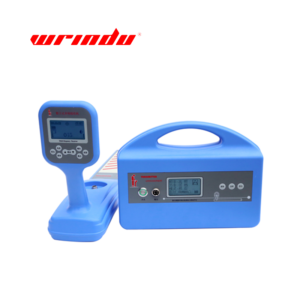
Click the picture to know more about Wrindu RDCD-Ⅱ/507 Cable Pipeline Detector.
Why Is Accurate Cable Depth Measurement Important?
Correct underground cable depth provides several benefits:
-
Prevents accidental cable damage during excavation
-
Improves fault locating accuracy by confirming real cable position
-
Reduces repair time and cost through proper planning
-
Ensures worker safety in complex underground environments
Without accurate depth data, even correct route tracing may still lead to risk.
What Methods Help Measure Cable Depth on Site?
Engineers commonly use these cable depth detection methods:
1. Electromagnetic Field Calculation
A locator measures the signal strength and angle above the cable.
The device then calculates burial depth automatically.
This method delivers fast and practical results in the field.
2. Multi-Point Verification
Engineers measure depth at several points along the cable route.
Consistent readings confirm reliable underground cable depth measurement.
3. Signal Strength Adjustment
Stable transmitter output improves depth calculation accuracy.
Weak or unstable signals may create incorrect readings.
These steps help achieve precise on-site cable depth measurement.
How Does the Wrindu RDCD-Ⅱ/507 Improve Depth Detection?
The Wrindu RDCD-Ⅱ/507 Cable Pipeline Detector provides advanced tools for accurate cable depth measurement:
-
Real-time depth display for quick field judgment
-
Stable signal transmission for reliable calculation
-
High locating accuracy in complex urban cable networks
-
Portable and durable design for outdoor maintenance work
These features help engineers obtain clear and repeatable underground cable depth data before excavation.
What Factors Affect Cable Depth Measurement Accuracy?
Several field conditions influence depth detection results:
-
Nearby metal pipelines or cables that disturb the signal
-
Unstable grounding or weak transmitter connection
-
Incorrect receiver position above the cable center
-
Strong electromagnetic interference in urban areas
Engineers should verify readings and keep proper measurement procedures.
Common Questions About Cable Depth Measurement
Q1: What is the most reliable way to measure cable depth?
Use an electromagnetic cable locator with multi-point verification. This method provides fast and accurate field results.
Q2: Why do depth readings sometimes change?
Signal interference or incorrect positioning often causes variation. Repeat measurement along the same cable path.
Q3: How does the Wrindu RDCD-Ⅱ/507 help improve accuracy?
It offers stable signals and real-time depth display. This ensures clear and repeatable measurements.
Q4: Should engineers measure depth before excavation?
Yes. Depth measurement must come first for safe digging.
Wrindu Expert Review
Precise cable depth measurement forms the foundation of safe underground maintenance.
Without accurate depth data, engineers face:
-
Higher excavation risk
-
Longer repair time
-
Possible cable damage
With professional tools like the Wrindu RDCD-Ⅱ/507 Cable Pipeline Detector, teams gain:
-
Reliable on-site depth detection
-
Clear underground cable positioning
-
Safer and more efficient maintenance work
Accurate underground cable depth detection ensures protection of power assets and stable system operation.
