

How to Diagnose Electric Motor Problems with Static Testing
Learn how static motor testing helps diagnose hidden faults in three-phase induction motors. Discover key tests like winding resistance, insulation resistance, PI, high-pot, and surge testing to detect insulation failures and improve motor reliability.
When a three-phase induction motor suddenly fails or trips its overcurrent protection, finding the root cause can be a challenge. Often, there are no visible signs of overheating or mechanical damage.
To prevent the motor from failing again after a repair, technicians use a systematic approach called static motor testing. These offline electrical tests check the health of the motor’s windings and insulation system, uncovering hidden faults before the motor is put back into service.
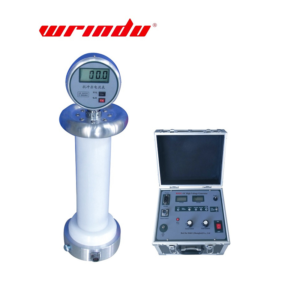
Click the picture to know more about Wrindu DC Withstand HV Tester.
What Are the Most Essential Static Electrical Tests?
A thorough diagnostic process uses a combination of different static tests to get a complete picture of the motor’s health:
-
Winding Resistance Test: Measures the DC resistance of the motor windings. An unbalance between phases points to issues like poor connections, broken conductors, or short circuits.
-
Insulation Resistance (IR) Test: Evaluates the main ground insulation by measuring the resistance between the windings and the ground. It easily detects contamination, moisture, or thermal aging.
-
Polarization Index (PI) & Dielectric Absorption (DA): These are timed insulation tests. A low PI ratio (the 10-minute reading divided by the 1-minute reading) strongly indicates moisture or dirt inside the insulation.
-
DC Step-Voltage & High-Pot (High-Potential) Test: These tests apply higher voltages to expose insulation weaknesses that standard operating voltages might miss, confirming the overall dielectric strength.
-
Surge Testing: The most critical test for finding faults between turns (turn-to-turn insulation). By applying high-voltage pulses, it detects fine defects that cause localized overheating and eventual motor failure.
How Does Surge Testing Improve Fault Detection?
While all static tests are important, surge testing is uniquely effective because it catches early-stage faults that other methods miss.
Standard low-voltage tests (like winding resistance) are often not sensitive enough to detect minor insulation weaknesses between adjacent wire turns. A surge test simulates the real-world electrical stress a motor experiences during startup or voltage spikes. When combined with partial discharge measurements, surge testing can also identify contamination on the winding ends and thermal aging.
What Common Motor Faults Can Static Testing Identify?
By implementing a strict static testing program, repair shops can reliably diagnose a variety of common motor and generator faults, including:
-
Ground Insulation Issues: Faults in the core insulation that cause leakage currents or ground shorts.
-
Turn-to-Turn Insulation Weaknesses: Small defects between individual wire loops that eventually lead to full shorts.
-
Inter-turn Short Circuits: Complete shorts between turns that cause rapid, severe localized heating.
-
Contact Resistance Errors: High resistance at the connection terminals, which can be precisely located using a four-wire Kelvin low-resistance measurement to prevent localized voltage drops.
Frequently Asked Questions (FAQs)
Why did my motor trip the overcurrent protection if there is no visible damage?
Internal insulation breakdowns, such as turn-to-turn shorts or ground faults, are often invisible to the naked eye. Static testing applies electrical stress to safely reveal these hidden internal short circuits without causing further physical destruction.
Can standard low-voltage meters detect all winding faults?
No. Standard low-voltage resistance meters lack the sensitivity to detect early-stage insulation degradation between turns. High-voltage diagnostic tools, like surge testers, are required to simulate operational stress and catch these faults before they cause a total breakdown.
How does moisture affect a motor’s insulation resistance?
Moisture and dirt create conductive paths within the motor’s insulation system. This lowers the insulation resistance, which is easily detected during timed tests like the Polarization Index (PI) test. A low PI score is a clear warning sign that the motor needs cleaning or drying.
