

How to Measure Transformer No Load Loss Accurately?
Learn how to measure transformer no load loss accurately. Understand instrument accuracy, power analyzer requirements, and best practices using Wrindu test systems.
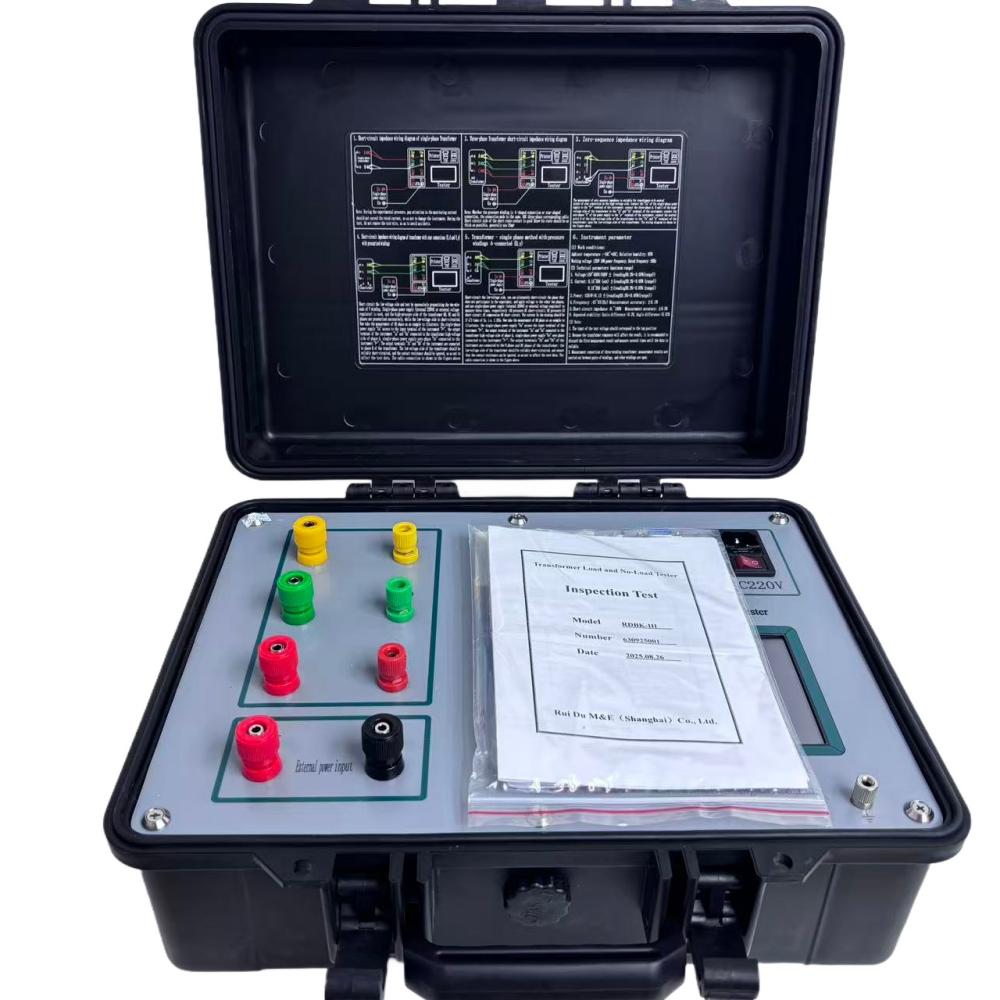
Measuring transformer no load loss is a critical task in transformer testing and efficiency evaluation. No load loss occurs when rated voltage energizes the transformer while the secondary remains open. Even though the transformer delivers no output power, energy loss still exists inside the core. Accurate no load loss data helps utilities and manufacturers reduce operating costs, verify design quality, and meet IEC or IEEE standards. To measure no load loss correctly, both test method and instrument selection matter.
What Is No Load Loss and Why Does Accuracy Matter?
No load loss mainly comes from core magnetization, including hysteresis loss and eddy current loss. These losses remain constant during normal operation and directly affect long-term energy consumption. If test accuracy is poor, even small errors can lead to wrong efficiency evaluation and commercial disputes. That is why engineers must focus on instrument accuracy and proper measurement conditions when they measure no load loss.
How Do You Measure No Load Loss of a Transformer Correctly?
To measure no load loss, apply rated voltage to the primary winding and keep the secondary winding open. During the test, record voltage, current, and input power once readings stabilize. Although the procedure seems simple, the challenge comes from very low no load current and low power factor. These conditions make the test highly sensitive to measurement error. Stable voltage control and repeatable readings play a key role in achieving reliable results.
Why Is Instrument Accuracy So Important in No Load Loss Testing?
Instrument accuracy directly determines the reliability of no load loss data. No load current is often less than 2% of rated current, which places high demands on current resolution and phase angle accuracy. Even a small phase error can cause a large power deviation under low power factor conditions. For this reason, standard meters often fail to deliver consistent results. Professional transformer testers from Wrindu use high-precision sensors and optimized signal processing to ensure stable and repeatable measurements when engineers measure no load loss.
What Power Analyzer Requirements Should You Consider?
Power analyzer performance is a key factor in no load loss testing. The analyzer must support true RMS measurement, high sensitivity at low current, and accurate phase angle detection across a wide range. It should also remain stable when the power factor drops below 0.1. Without these features, power readings fluctuate and test repeatability suffers. Wrindu transformer test systems integrate dedicated power analyzers designed specifically for low power factor transformer measurements.
Why Does Low Power Factor Cause Measurement Problems?
Low power factor is one of the main challenges in no load loss testing. Under this condition, the active power is very small compared to reactive power. As a result, small instrument errors produce large percentage deviations in measured loss. This explains why many engineers see inconsistent results during repeated tests. Advanced phase correction and digital filtering, as used in Wrindu test equipment, help reduce these effects and improve measurement confidence.
How Can Test Setup Improve Measurement Accuracy?
A proper test setup supports accurate measurement and helps instruments perform at their best. Engineers should use short, shielded test leads and avoid nearby electromagnetic interference. Voltage should remain stable throughout the test, and sufficient time should pass before recording data to allow core magnetization to settle. Repeating the test and comparing results also helps verify accuracy. These practices reduce noise and improve result consistency.
What Are Common Questions From Test Engineers?
Why Do My No Load Loss Results Vary Each Time?
Common reasons include:
-
Inconsistent voltage control
-
Instrument warm-up not completed
-
Residual magnetism in the core
-
Poor current measurement resolution
Using a stable Wrindu transformer tester can reduce these issues.
Can I Use a General Power Meter?
General meters often lack accuracy at low power factor. They may pass basic checks but fail acceptance tests.
For reliable results, always use a dedicated transformer no load loss test system.
How Long Should I Apply Voltage Before Recording Data?
Wait until readings stabilize. This usually takes 60 to 120 seconds. Core magnetization needs time to settle.
How Does Wrindu Support Accurate No Load Loss Measurement?
Wrindu focuses on power system testing and transformer measurement solutions. Our transformer no load loss test systems combine high instrument accuracy with stable power analyzers and user-friendly operation. They help engineers measure no load loss with confidence in both factory and field environments. With strong anti-interference design and compliance with international standards, Wrindu equipment supports reliable transformer evaluation and long-term efficiency control.
