

How to Perform Transformer No Load Loss Testing Step by Step (IEC Method)
IEC 60076 transformer no load loss test: 5-step practical procedure including preparation, voltage application, accurate measurement, stability verification & result comparison with tolerance.
Transformer no load loss testing must follow IEC guidelines to ensure accuracy and acceptance. This guide explains the practical procedure aligned with IEC 60076 requirements.
👉 Related guide: What Are IEC Standards for Transformer No Load Loss Testing?
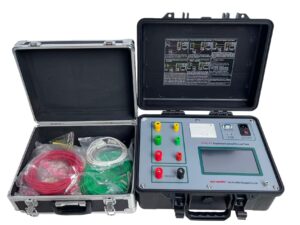
👉 Related Testers: Click the picture to know more about Wrindu No load Loss Tester.
Step 1: Prepare the Transformer
-
Keep the secondary winding open
-
Ensure correct tap position
-
Demagnetize the core if required
-
Confirm stable ambient conditions
Residual magnetism can distort results, so proper preparation is essential.
Step 2: Apply Rated Voltage
IEC requires:
-
Rated voltage applied to primary
-
Sinusoidal waveform
-
Stable frequency
Voltage distortion increases measured core loss. Use regulated power supply equipment to maintain waveform quality.
Step 3: Measure Power Accurately
Because magnetizing current is small and power factor is low:
-
Use high-accuracy power analyzers
-
Ensure proper phase calibration
-
Minimize external interference
Low PF conditions amplify measurement errors. Even slight phase shifts can distort active power readings.
Step 4: Verify Stability
IEC requires stable readings before recording final results.
Check:
-
Voltage stability
-
Frequency consistency
-
Repeatability
If values fluctuate, inspect test setup before concluding transformer failure.
Step 5: Compare with Guaranteed Value
Final verification:
Measured Loss ≤ Guaranteed Loss + IEC Tolerance
If within limits, the transformer passes.
👉 Further reading: How to Calculate Transformer No Load Loss Tolerance Under IEC?
