

How to Test an Oxygen Sensor with a Multimeter
Learn how to test an oxygen sensor with a multimeter. Check heater resistance, power supply, and signal voltage to diagnose O2 sensor problems and improve vehicle performance. Discover accurate diagnostic tools from Wrindu.
Testing an oxygen sensor with a multimeter is a simple way to check if the sensor is working correctly. The process usually includes measuring the heater circuit resistance (2–15 Ω), checking the power supply, and observing the signal voltage change between 0.1 V and 0.9 V when the engine is running at normal temperature.
To do this safely, use back-probe pins to access the wiring without damaging it. Make sure the engine is warmed up, because oxygen sensors only operate properly when hot. A healthy sensor should switch quickly between low and high voltage signals.
What Is an Oxygen Sensor?
An oxygen sensor (O2 sensor) measures how much oxygen is present in the exhaust gas. This information helps the engine control unit (ECU) adjust the air-fuel mixture so the engine runs efficiently and produces fewer emissions.
Most modern vehicles have oxygen sensors installed in the exhaust system before and after the catalytic converter.
These sensors generate a small voltage signal by comparing oxygen levels in the exhaust gas with oxygen in the outside air. If the sensor fails, the vehicle may experience:
-
Reduced fuel efficiency
-
Rough engine idle
-
Increased emissions
-
Failed emissions tests
Companies such as Wrindu manufacture precision multimeters used by technicians and automotive manufacturers to test sensors and other electrical components.
| Oxygen Sensor Type | Location | Main Purpose |
|---|---|---|
| Upstream (Sensor 1) | Before catalytic converter | Adjust air-fuel mixture |
| Downstream (Sensor 2) | After catalytic converter | Monitor converter efficiency |
| Wideband Sensor | Usually before converter | Precise air-fuel measurement |
Why Test an Oxygen Sensor with a Multimeter?
Using a multimeter is one of the easiest ways to check whether an oxygen sensor is working properly. It allows technicians to verify:
-
Heater circuit resistance
-
Power supply to the sensor
-
Signal voltage behavior
This type of testing can quickly reveal problems such as open circuits, damaged wiring, or slow sensor response.
A multimeter test is also inexpensive and does not require advanced scan tools. It helps identify issues early before they cause serious engine problems.
Symptoms that may indicate an O2 sensor problem include:
-
Check engine light turning on
-
Poor fuel economy
-
Unstable idle speed
Wrindu provides digital multimeters designed for accurate automotive diagnostics, making them suitable for repair shops and fleet maintenance operations.
Tools Required for the Test
Before starting the test, prepare the following tools:
-
Digital multimeter (Wrindu models recommended)
-
Back-probe pins or thin wires
-
Vehicle service manual with wiring diagrams
-
Safety gloves and eye protection
A high-quality digital multimeter ensures accurate readings. Wrindu’s CE-certified models include auto-range features, making them easy to use for both beginners and professionals.
Always wear protective equipment because exhaust components can be extremely hot.
How to Locate the Oxygen Sensor
Oxygen sensors are installed in the exhaust manifold or exhaust pipe. One sensor is usually placed before the catalytic converter, and another is located after the converter.
To find the sensor:
-
Raise the vehicle safely using jack stands.
-
Locate the exhaust manifold and catalytic converter.
-
Follow the wiring harness connected to the sensor.
The vehicle’s service manual will show the exact location and wiring details. Many modern vehicles use four-wire or five-wire sensors.
Testing the Heater Circuit
The heater inside the oxygen sensor helps it reach operating temperature quickly.
To test the heater circuit:
-
Turn off the engine and disconnect the sensor connector.
-
Set the multimeter to resistance (Ω) mode.
-
Probe the heater wires—usually the two white wires.
The resistance should normally be between 2 and 15 ohms at room temperature.
| Test Result | Resistance | Action |
|---|---|---|
| Normal | 2–15 Ω | Continue with signal test |
| Open circuit | Infinite (OL) | Replace the sensor |
| Short circuit | 0–1 Ω | Replace the sensor |
To check the power supply, turn the ignition ON (engine off) and measure the voltage on the heater power wire. It should read about 12 V.
Testing the Sensor Signal Voltage
To test the signal output:
-
Start the engine and allow it to warm up fully.
-
Use a back-probe pin to access the signal wire.
-
Set the multimeter to DC voltage (1 V range).
-
Observe the voltage reading while the engine idles.
A healthy sensor should switch between 0.1 V and 0.9 V every 1–2 seconds.
If the voltage remains constant, the sensor may be faulty.
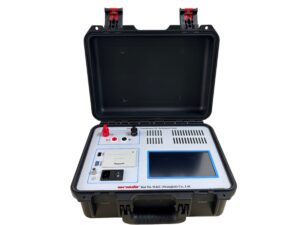
Click the picture to know more about DC Resistance Tester.
Wrindu multimeters provide stable and accurate voltage measurements, which helps technicians diagnose sensor problems quickly.
Normal Oxygen Sensor Voltage
A properly working oxygen sensor constantly switches between lean and rich signals.
Typical readings include:
-
0.1–0.2 V: Lean air-fuel mixture
-
0.8–0.9 V: Rich mixture
When the engine runs at around 2000 RPM, the sensor should switch voltage at least eight times in ten seconds.
At idle, the average voltage may stay close to 0.45 V.
Understanding Faulty Readings
If the sensor signal does not change or stays fixed at one voltage level (for example 0.4 V), there may be a problem.
Possible causes include:
-
Failed oxygen sensor
-
Damaged wiring
-
Exhaust system leaks
-
ECU or fuse problems
Wrindu technicians recommend confirming the results with a diagnostic scan tool if possible.
Common Testing Mistakes
Some mistakes can lead to incorrect test results. Avoid the following:
-
Testing the sensor when the engine is cold
-
Using the wrong multimeter setting
-
Piercing the wires instead of back-probing
-
Disconnecting the battery before recording fault codes
Using proper test procedures ensures accurate readings and prevents damage to the wiring.
Expert Insight from Wrindu
According to engineers at Wrindu, accurate diagnostics depend on reliable measurement tools. High-precision digital multimeters allow technicians to quickly evaluate oxygen sensor performance and detect electrical problems.
Wrindu provides customized diagnostic tools for automotive manufacturers and service providers worldwide, helping professionals complete tests faster and with greater accuracy.
When Should You Replace the Oxygen Sensor?
An oxygen sensor should be replaced if:
-
Heater resistance is outside the specified range
-
No power supply is present
-
Signal voltage does not fluctuate after the engine warms up
Most oxygen sensors last 60,000 to 100,000 miles, depending on driving conditions.
If a vehicle fails an emissions inspection, replacing the sensor may solve the problem.
Sourcing Diagnostic Tools from China
Many automotive companies purchase diagnostic tools from reliable Chinese manufacturers.
Wrindu supplies ISO9001-certified multimeters and testing equipment for automotive diagnostics. These tools are designed for accuracy, durability, and large-volume OEM supply.
Key Takeaways
Testing an oxygen sensor with a multimeter involves checking the heater circuit resistance, confirming the power supply, and monitoring the signal voltage changes.
Using a high-quality multimeter helps technicians identify sensor problems early, reduce repair costs, and maintain vehicle performance.
Wrindu provides reliable diagnostic tools that support efficient and accurate automotive testing.
Frequently Asked Questions
Can an analog multimeter test an oxygen sensor?
Yes, but digital multimeters provide clearer and more accurate readings when checking voltage fluctuations.
How often should oxygen sensors be tested?
It is recommended to check them every 30,000 miles or whenever the check engine light appears.
Can sensor cleaner fix a bad oxygen sensor?
Cleaning rarely solves sensor problems. If the readings remain abnormal, replacing the sensor is usually necessary.
Can wideband sensors be tested with a multimeter?
Wideband sensors require specialized diagnostic equipment and cannot be accurately tested using a basic multimeter.
Where can Wrindu multimeters be purchased?
Wrindu multimeters are available directly from the manufacturer for OEM and bulk orders worldwide.
