

Low Voltage Pulse vs High Voltage Flashover Testing
Compare low voltage pulse and HV flashover testing for cable faults. Learn how 502 and 535T improve distance measurement, pinpoint accuracy, and maintenance efficiency.
- BYwrindu
- On
- InCase Studies
Cable fault location requires accurate testing methods. Engineers often choose between low voltage pulse testing and HV flashover testing. Each method serves a different purpose. Understanding the difference helps improve efficiency, safety, and repair speed.
This article explains how both methods work, when to use them, and how tools like 502 Cable Fault Pre-locator and 535T Cable Test High-voltage Signal Generator support reliable cable fault detection.
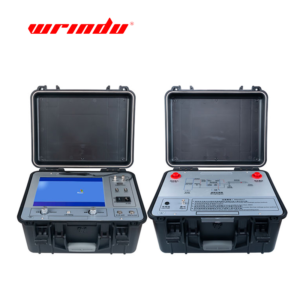
Click the picture to know more about Wrindu RDCD-Ⅱ/502 Cable Fault Pre-locator(multiple pulse).
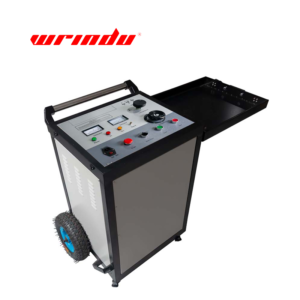
Click the picture to know more about Wrindu RDCD-Ⅱ/535T Cable Test High-voltage Signal Generator (Three gear).
What Is Low Voltage Pulse Testing?
Low voltage pulse testing sends a small signal into the cable.
The signal travels along the conductor and reflects at the fault point.
Technicians read the reflection to estimate the distance to the fault.
Key features
-
Uses safe low voltage energy
-
Works well for open circuit faults and short circuits
-
Provides fast distance measurement
-
Causes no additional insulation damage
Low voltage pulse testing often acts as the first diagnostic step.
Instruments such as the 502 help engineers quickly determine the fault section before applying higher energy methods.
What Is HV Flashover Testing?
HV flashover testing applies high voltage energy to break down the fault point temporarily.
This controlled flashover creates a clear discharge path.
Technicians then combine acoustic or electromagnetic detection to pinpoint the exact location.
Key features of an HV flashover test
-
Locates high-resistance cable faults
-
Produces clear discharge signals for precise positioning
-
Works together with acoustic detection systems
-
Requires careful voltage control for safety
The 535T supports stable high-voltage output and controlled discharge, making HV flashover testing more accurate and repeatable in field conditions.
When Should You Use Low Voltage Pulse or HV Flashover Testing?
Use low voltage pulse testing when:
-
The cable shows open circuit or short circuit behavior
-
You need a quick distance estimate
-
You want to avoid stressing insulation
Use HV flashover testing when:
-
The fault is high resistance or intermittent
-
Pulse reflection gives unclear results
-
You must obtain precise ground location
In real projects, engineers often combine both methods.
They first measure distance with a 502 pulse locator, then confirm the exact point using 535T HV flashover testing.
Why Does HV Flashover Testing Improve Fault Location Accuracy?
High-resistance faults block normal signal reflection.
Low voltage pulses may not detect them clearly.
HV flashover testing forces a temporary insulation breakdown at the weak point.
This creates:
-
Strong acoustic signals
-
Stable electromagnetic pulses
-
Clear positioning for ground detection
Because of this, the HV flashover test remains essential for underground cable maintenance and emergency repair.
Common Questions About Pulse and HV Flashover Testing
Q1: Which method is safer?
Low voltage pulse testing is safer. It uses minimal energy and does not stress insulation.
Q2: Which method is more accurate?
HV flashover testing gives higher positioning accuracy. It creates real discharge signals at the fault point.
Q3: Do engineers need both methods?
Yes. Most field work combines both. Pulse testing finds distance. HV flashover confirms the exact point.
Q4: When should I choose the 502 or 535T?
Use 502 for quick distance measurement. And use 535T for high-resistance fault pinpointing.
How Do 502 and 535T Work Together in Cable Fault Location?
Efficient cable testing follows a step-by-step workflow:
-
Initial diagnosis with low voltage pulse testing
-
Distance estimation using the 502
-
High-resistance breakdown using the 535T
-
Precise pinpointing with acoustic detection
This process reduces repair time and avoids unnecessary excavation.
Wrindu Expert Review
Both low voltage pulse testing and HV flashover testing play critical roles in cable fault location.
-
Pulse testing offers safe and fast distance detection.
-
HV flashover testing provides accurate pinpointing for difficult faults.
-
Combining 502 and 535T creates a complete and reliable testing solution.
Choosing the correct method improves maintenance efficiency, protects cable insulation, and shortens outage time.
