

Manual vs Automatic No Load Loss Measurement
Compare manual vs automatic no load loss measurement and see how Wrindu transformer testers improve efficiency, accuracy, and reliability for on-site and factory testing.
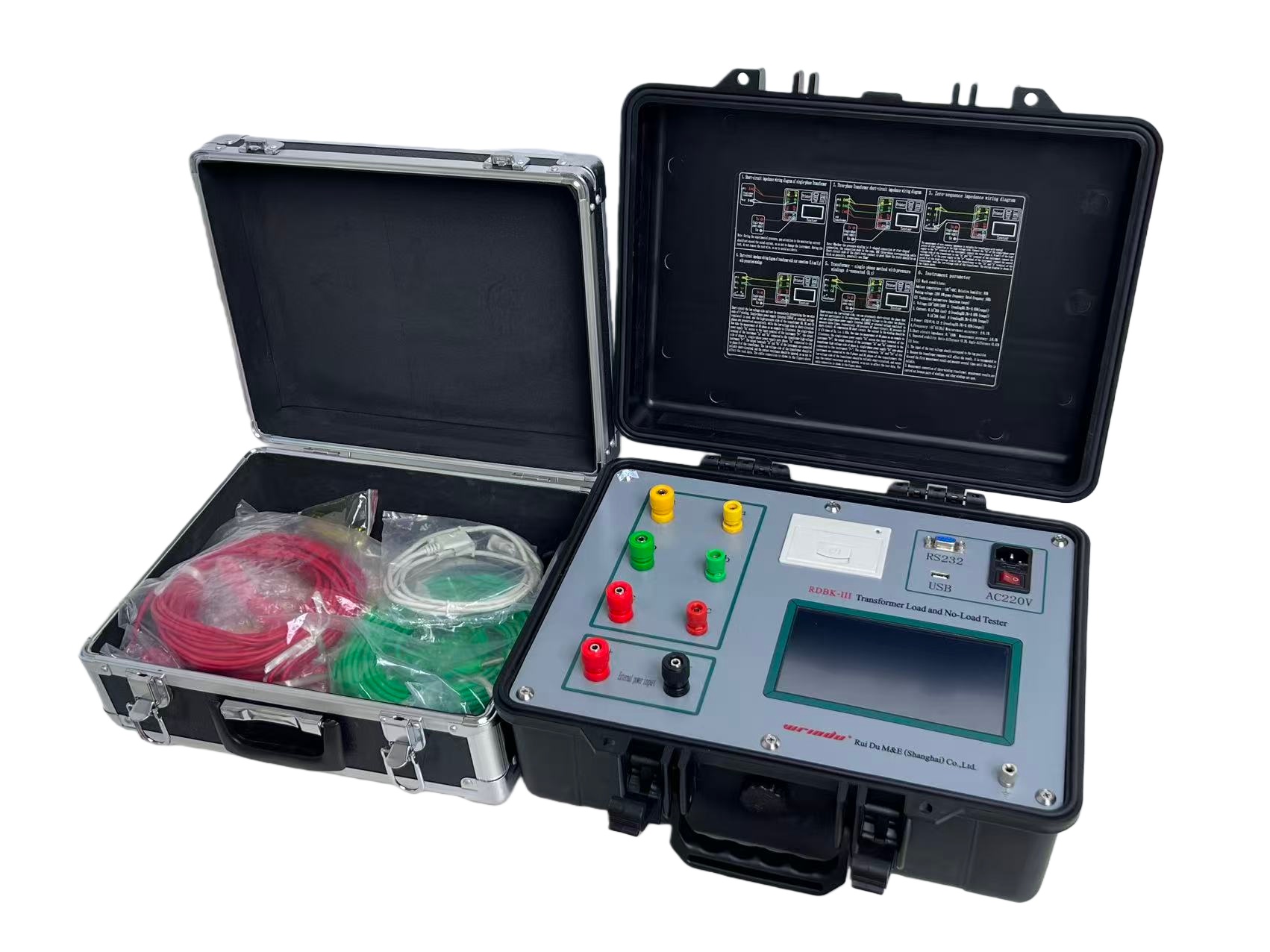
Transformer no load loss testing is critical for evaluating efficiency, reducing energy waste, and ensuring compliance with manufacturer specifications. Modern automated instruments offer advantages over manual methods by improving accuracy, saving time, and reducing human error. This article compares manual and automatic no load loss measurement, highlighting efficiency gains and the value of automation with Wrindu instruments.
Why Compare Manual and Automatic No Load Loss Measurement?
Manual testing requires technicians to set voltages, measure current and power readings, and calculate results by hand or with basic instruments. This process is prone to human error, takes more time, and may vary across operators or sites.
Automatic measurement instruments, like Wrindu testers, streamline the process. They apply rated voltage, measure active power, automatically correct for temperature and frequency, and store results. Comparing both approaches helps engineers understand efficiency improvements and justify investment in automation.
How Does Efficiency Compare Between Manual and Automatic Testing?
Efficiency in this context includes both measurement accuracy and time savings.
-
Manual Testing: Accuracy depends on operator skill. Minor voltage deviations or timing errors can introduce discrepancies. The process may take hours per transformer, especially for large units.
-
Automatic Testing: Instruments maintain precise voltage and current, use digital signal processing (DSP) to calculate active power, and automatically store results. Measurement is faster and more repeatable.
In practice, automated testing reduces measurement errors, ensures consistency across multiple transformers, and allows engineers to allocate time to other critical tasks.
What Features Make Automatic Transformer Testing More Reliable?
Automatic instruments like Wrindu testers include features that enhance both reliability and user convenience:
-
Built-in voltage and current regulation to maintain rated values
-
DSP-based active power computation for accurate no load loss measurement
-
Automatic temperature, frequency, and voltage correction
-
Data storage, printing, and USB export for reporting and documentation
-
Portable design for on-site and factory testing
These features allow engineers to focus on interpreting results rather than performing repetitive measurement steps.
How Do Engineers Decide Between Manual and Automatic Measurement?
Engineers often weigh several factors:
-
Accuracy Needs: Critical for energy efficiency audits and large transformers; automation minimizes human error.
-
Time Constraints: Automatic testing significantly reduces testing duration, especially for fleets of transformers.
-
Documentation Requirements: Automated instruments provide structured, retrievable data that supports compliance.
-
Operational Safety: Reduces exposure to high voltages and complex wiring during testing.
In most cases, automation improves efficiency, reliability, and safety while delivering more trustworthy results.
What Common Questions Do Users Ask About Automatic Testing?
Q: Can automatic testing detect small efficiency deviations?
A: Yes. Automated instruments maintain precise voltage and current and use DSP to calculate small differences accurately.
Q: Are automatic tests suitable for all transformer sizes?
A: Yes. Wrindu instruments adapt to different ratings with internal and external CT/PT extensions.
Q: How does automation impact testing workflow?
A: It reduces manual effort, improves repeatability, and simplifies data collection for reporting.
Q: Is automatic testing more cost-effective?
A: Yes. While initial investment is higher, reduced labor, improved accuracy, and prevention of energy loss make automation cost-efficient in the long term.
Why Automation Adds Value for No Load Loss Testing?
Automatic no load loss measurement increases testing efficiency, reduces errors, and supports consistent reporting. Wrindu No Load Loss Testers provide engineers with precise, repeatable measurements, simplify on-site and factory workflows, and help demonstrate operational reliability to stakeholders.
Investing in automatic testing positions utilities and manufacturers to save energy, maintain compliance, and focus on critical engineering tasks rather than repetitive measurement steps.
