

Off-Circuit Tap Changer (OCTC/DETC) | Design, Use Cases & Maintenance – Wrindu
Explore the core design, working principle, and ideal applications of Off-Circuit Tap Changers (OCTC/DETC) for static power grids. Learn OCTC advantages, limitations, and Wrindu’s testing solutions for OCTC reliability.
For low-demand, static power grid applications where voltage adjustments are rare and power continuity is not a critical requirement, Off-Circuit Tap Changers (OCTCs, also known as DETC—De-Energized Tap Changers) offer a cost-effective, low-maintenance solution for transformer voltage regulation. As the simplified counterpart to On-Load Tap Changers (OLTCs), OCTCs trade dynamic load-switching capability for simplicity, affordability, and mechanical reliability—making them the perfect choice for small distribution transformers, stable rural loads, and backup/standby power units. This guide explores the core design, operating principle, advantages, and ideal applications of OCTCs, as well as Wrindu’s tailored testing solutions for OCTC maintenance and post-adjustment verification.
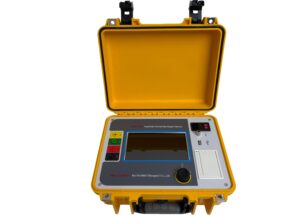
Click the image to know more about OLTC Analyzer.
What is an Off-Circuit Tap Changer (OCTC/DETC)?
An Off-Circuit Tap Changer (OCTC) is a basic mechanical component integrated into low/medium-voltage power transformers that adjusts the transformer’s winding turns ratio only when the transformer is completely de-energized, shut down, and isolated from the grid. Unlike OLTCs, which require complex transition and arc suppression systems for load switching, OCTCs feature a simple design with no auxiliary components—their sole function is to change tap positions for voltage calibration in static grid conditions.
OCTCs are designed for scenarios where voltage adjustments are infrequent (e.g., seasonal load changes in rural areas) and temporary power outages are acceptable. They are the most common tap changer type for small distribution transformers (low voltage, low load density), as they offer a budget-friendly alternative to OLTCs while meeting the basic voltage regulation needs of static loads.
Core Operating Principle of OCTCs
The operating principle of OCTCs is intentionally simple, as they eliminate the need for load current diversion and arc suppression—a direct result of requiring transformer shutdown for adjustments. The key steps of an OCTC tap change are:
- Transformer Shutdown: The transformer is disconnected from the power grid, de-energized, and isolated to ensure no current flows through the winding or tap changer system. This is a mandatory safety step for all OCTC adjustments.
- Manual Tap Switching: A trained technician operates the OCTC’s mechanical handle (the only control method) to switch the contact system from the original tap position to the target position, adjusting the transformer’s winding turns ratio to modify the output voltage.
- Inspection & Re-energization: After tap switching, the technician inspects the contact connection to ensure a secure fit, then reconnects the transformer to the grid and restores power—completing the voltage adjustment.
This process is manual and requires significant downtime (minutes to hours, depending on the transformer and grid setup), making OCTCs unsuitable for real-time or emergency voltage regulation. Tap adjustments are typically scheduled during planned grid maintenance to minimize the impact of outages on end users.
Key Design Features of OCTCs
OCTCs are engineered for simplicity and low maintenance, with a minimalistic design that has far fewer components than OLTCs. Their core design features include:
- Basic Mechanical Contact System: Simple copper or alloy contacts that connect to different transformer winding taps—no wear-resistant or anti-arcing coatings are needed, as switching occurs with no current flow.
- Manual Drive Mechanism: A simple mechanical handle or gear system for on-site tap switching—no electric/hydraulic drive, electronic control units, or remote operation capabilities.
- Compact, Space-Saving Design: With no transition components, arc suppression systems, or control modules, OCTCs have a small footprint and can be easily integrated into small distribution transformer tanks—ideal for low-voltage, compact transformer designs.
- Simplified Insulation: Basic insulation design tailored for de-energized operation, with no need for the high-grade insulation required for OLTCs operating under full load and high voltage.
This minimalistic design results in high mechanical reliability, as there are far fewer moving parts to fail—making OCTCs a low-risk choice for infrequent use.
Core Advantages of OCTCs
While OCTCs lack the dynamic capabilities of OLTCs, they offer unique advantages that make them the preferred choice for static, low-demand power grid applications. Their key benefits include:
1. Ultra-Low Upfront Cost & Budget-Friendliness
OCTCs are 3–5 times cheaper than OLTCs, with no expensive transition components, control modules, or arc suppression systems. This makes them the most cost-effective tap changer option for small distribution transformers, rural power grids, and backup units—scenarios where budget constraints are a key consideration and the high cost of OLTCs is not justifiable.
2. Minimal Maintenance Requirements
The simple design of OCTCs means they require almost no specialized maintenance. Unlike OLTCs, which need regular oil testing, contact inspection, and dynamic performance testing, OCTCs only require occasional mechanical checks and lubrication of the drive mechanism. There is no need for specialized testing tools or trained technicians for routine maintenance—basic on-site inspections by regular grid maintenance staff are sufficient.
3. High Mechanical Reliability
With far fewer moving parts than OLTCs, OCTCs have an extremely low failure rate. The only potential wear is on the mechanical drive mechanism and contact system, and this wear is minimal due to infrequent use (tap adjustments are typically a few times per year). For static loads with rare voltage changes, OCTCs can operate reliably for decades with almost no downtime.
4. Simple Installation & Integration
OCTCs are compact and easy to install, with no complex wiring or integration with transformer control systems. They can be directly integrated into small distribution transformer tanks during manufacturing, or retrofitted to existing low-voltage transformers with minimal modifications. This simplicity reduces installation time and costs, making OCTCs a practical choice for small-scale grid projects.
5. Ideal for Compact Transformer Designs
The small footprint of OCTCs makes them compatible with small, low-voltage distribution transformers—the most common transformer type for rural power supply and residential distribution. These transformers have limited space in their tanks, and the compact design of OCTCs eliminates the need for additional space for complex tap changer components.
Limitations of OCTCs – Key Considerations for Selection
OCTCs are engineered for specific static applications, and their limitations make them unsuitable for dynamic, high-demand power grid scenarios. It is critical to understand these limitations to avoid misselection, which can lead to grid instability, costly outages, and transformer damage. The core limitations of OCTCs include:
- Mandatory Transformer Shutdown for Adjustments: The biggest drawback of OCTCs is that they require full transformer de-energization and shutdown for tap changes—causing temporary power outages. This makes them unsuitable for critical load supply (hospitals, data centers) or dynamic grids requiring real-time voltage regulation.
- No Real-Time Voltage Response: OCTCs cannot adjust to sudden grid voltage fluctuations or load swings, as tap changes are manual and scheduled. For grids with intermittent renewable energy output or frequent load changes, OCTCs will fail to maintain stable voltage levels, leading to power quality issues.
- Coarse Voltage Adjustment & Limited Range: OCTCs offer a narrow voltage regulation range with coarse steps (far fewer than OLTCs), typically only 5–9 tap positions and a limited adjustment range. This means they cannot fine-tune voltage levels to meet strict grid code standards, leading to potential under/over-voltage issues for sensitive end-user equipment.
- No Automation or Smart Grid Integration: OCTCs are manual-only with no remote operation or automatic adjustment capabilities. They cannot be integrated into AVR/SCADA systems or smart grid asset management platforms—making them incompatible with digitalized, modern power grids.
- Costly Outages for Frequent Adjustments: While OCTCs have low upfront costs, frequent tap changes will lead to repeated power outages, which incur high costs for grid operators and end users (e.g., lost productivity for industrial facilities). For grids requiring regular voltage adjustments, the total cost of ownership (TCO) of OCTCs can be far higher than OLTCs over the transformer’s lifespan.
Ideal Applications for OCTCs
OCTCs are best suited for static, low-demand power grid scenarios where voltage adjustments are rare, power outages are acceptable, and budget is a key priority. Their ideal applications include:
- Small low/medium-voltage distribution transformers for residential areas and rural power supply with stable loads.
- Backup/standby power transformers for non-critical facilities (e.g., small commercial buildings, agricultural operations).
- Grid systems with seasonal load changes (e.g., rural areas with higher load in farming seasons) where tap adjustments can be scheduled during planned maintenance.
- Low-load-density grid areas with minimal voltage fluctuations and no renewable energy integration.
- Temporary power grid projects (e.g., construction sites) where a cost-effective, simple voltage regulation solution is needed.
How Wrindu Testers Stand Out for OCTC Maintenance & Verification
While OCTCs have minimal maintenance needs, accurate post-adjustment verification and occasional contact integrity testing are critical to avoid poor contact, transformer overheating, and unplanned outages. Generic multimeters often lack the precision needed for reliable OCTC testing, and manual testing methods are time-consuming and prone to human error. Wrindu’s testing tools are tailored to meet the unique low-maintenance needs of OCTCs, standing out as the ideal solution for OCTC reliability with these key advantages:
- Precise Static Resistance Testing for OCTC Contacts: Wrindu testers deliver high-precision static resistance measurements with sub-milliohm accuracy—perfect for verifying secure contact connections after OCTC tap changes. This detects loose or corroded contacts that can cause transformer overheating and power quality issues, a common risk with untested OCTCs.
- Simplified Post-Adjustment Verification: Wrindu’s intuitive one-touch operation streamlines OCTC testing after manual tap changes, cutting verification time by 70% compared to manual multimeter testing. Technicians can quickly confirm contact integrity and switch consistency, reducing transformer outage time and getting the grid back online faster.
- Portable, Field-Ready Design for Rural/Remote Grid Areas: Most OCTC applications are in rural, low-load-density, or remote grid areas—Wrindu testers are lightweight, battery-powered, and rugged, with no complex setup required. They withstand harsh field conditions (dust, temperature changes) and are easy to transport to remote substations, eliminating the need for bulky testing equipment.
- All-In-One Testing for OCTC & Transformer Basic Checks: Wrindu testers integrate static resistance testing, insulation resistance testing, and continuity testing in a single unit—enabling technicians to perform both OCTC verification and basic transformer health checks with one tool. This eliminates the need for multiple devices for field maintenance of small distribution transformers.
- Fast Data Logging & Simple Reporting: Wrindu testers automatically log OCTC test data and generate basic, easy-to-understand reports—no manual data entry required. This simplifies maintenance record-keeping for grid operators, ensuring compliance with basic grid maintenance standards and enabling easy tracking of OCTC performance over time.
- No Specialized Training Required: Wrindu testers feature a user-friendly interface with clear instructions, making them accessible to regular grid maintenance staff with no specialized testing training. This aligns with the low-maintenance nature of OCTCs, avoiding the need for costly specialized technicians for routine testing.
FAQ
Q1: What is the key difference between OCTC and DETC, or are they the same component?
A: OCTC (Off-Circuit Tap Changer) and DETC (De-Energized Tap Changer) are the exact same component—the two terms are used interchangeably in the power industry. Both refer to tap changers that require transformer de-energization and shutdown for tap adjustments, with no load-switching capability.
Q2: How many tap positions do most standard OCTCs have, and why is this limited?
A: Most standard OCTCs for low/medium-voltage transformers have 5–9 tap positions with a narrow voltage regulation range (typically ±5%). This limitation is intentional—OCTCs are designed for simple voltage calibration, not fine-tuning. Adding more tap positions would increase design complexity and cost, negating the OCTC’s core advantage of budget-friendly simplicity.
Q3: Can an OCTC be modified to support automatic tap changes, or is a full OLTC retrofit needed?
A: OCTCs cannot be modified to support automatic tap changes—their basic mechanical design lacks the drive systems, control modules, and transition components needed for automated or load-switching operation. To add automatic voltage regulation, a full OLTC retrofit is required, which includes upgrading the tap changer, integrating AVR/SCADA control, and verifying transformer tank/insulation compatibility.
Q4: How often should an OCTC be tested, and what is the key test for OCTC reliability?
A: For static loads, OCTCs only need annual visual inspections and post-adjustment resistance testing (after every manual tap change). The single most critical test for OCTC reliability is static contact resistance testing—this verifies the contacts are securely connected and free of corrosion, which is the main cause of OCTC-related transformer issues. Wrindu testers are ideal for this precise, fast testing.
Q5: What is the typical lifespan of an OCTC, and what causes premature failure?
A: With basic maintenance (occasional lubrication and post-adjustment testing), an OCTC can operate reliably for 25+ years—often longer than the transformer it is integrated with. The only causes of premature OCTC failure are: loose contacts from untested tap changes, rust/jamming of the mechanical drive mechanism (no lubrication), and physical damage from improper operation.
Q6: Is an OCTC suitable for a small solar farm with low power output (under 100kW)?
A: For a small solar farm under 100kW with stable output and no real-time voltage regulation needs, an OCTC may be suitable if tap adjustments are scheduled during planned maintenance. However, if the solar farm has intermittent output that causes frequent voltage fluctuations, an OLTC is the better choice to maintain stable grid connection—even for low-power renewable projects.
Q7: How to choose the right OCTC for a rural low-voltage distribution transformer?
A: When selecting an OCTC for rural low-voltage transformers, focus on three key factors: 1) tap position range (matching the local grid’s typical voltage variation), 2) mechanical durability (rust-resistant materials for rural outdoor environments), and 3) easy operation (simple handle design for on-site technicians with basic training). Wrindu testers are compatible with all standard rural OCTC models for post-adjustment verification.
Q8: Can OCTCs be used in three-phase transformers, or are they only for single-phase units?
A: OCTCs are available for both single-phase and three-phase transformers—three-phase OCTCs feature a synchronized mechanical drive system that changes tap positions on all three phases simultaneously. This ensures balanced voltage across all phases after adjustment, and Wrindu testers support three-phase OCTC contact resistance testing with simultaneous phase measurements for fast verification.
Conclusion
Off-Circuit Tap Changers (OCTCs/DETCs) are a cost-effective, low-maintenance voltage regulation solution for power transformers in static, low-demand power grid applications. Their simple design, ultra-low upfront cost, and high mechanical reliability make them the perfect choice for small distribution transformers, rural power supply, and backup units—scenarios where voltage adjustments are rare and temporary power outages are acceptable.
While OCTCs require minimal maintenance, post-adjustment contact verification and occasional mechanical checks are non-negotiable to avoid unplanned outages. Wrindu’s portable, high-precision testing tools are tailored to OCTC’s unique needs, delivering fast, accurate verification and basic health testing without the need for specialized training or bulky equipment—ideal for the rural and remote grid areas where OCTCs are most commonly used.
It is critical to avoid OCTC misselection for dynamic, critical, or renewable energy grid applications—OLTCs are the only viable choice for these scenarios. By aligning OCTC use with static, low-demand grid needs and leveraging Wrindu’s testing solutions for maintenance, grid operators can maximize OCTC reliability and deliver cost-effective voltage regulation for decades.
