

OLTC Diagnostic Testing: Specialized Tools to Prevent Outages & Maximize Lifespan
Learn why generic testing tools fail for OLTCs. Discover specialized diagnostic protocols, dynamic monitoring, and how Wrindu testers detect micro-defects to avoid unplanned outages.
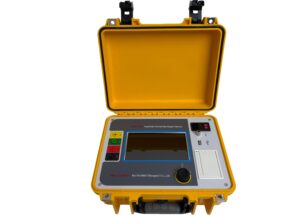
Key Limitations of Generic Testing Tools for OLTCs
- Inability to Capture Dynamic Data
Static tests fail to capture transient switching data (e.g., contact resistance spikes during tap changes), masking early signs of wear.
- Lack of OLTC-Specific Algorithms
Generic tools lack proprietary firmware tailored to OLTCs, making them unable to analyze digital control modules or mechanical nuances.
- Missed Micro-Defects
Low-resolution sampling fails to detect tiny performance deviations that can escalate to major failures over time.
- No Predictive Insight
Generic tools provide only snapshot data, unable to track degradation trends or enable predictive maintenance.
How Wrindu Testers Stand Out
- High-Resolution Dynamic Sampling: Captures switching dynamics, contact resistance, and timing data with 0.1ms accuracy and 0.01Ω resolution, detecting micro-defects generic tools miss.
- OLTC-Specific Diagnostic Algorithms: Proprietary firmware analyzes digital control loops, three-phase synchronicity, and oil contamination, providing actionable insights for field teams.
- Live Operation Testing: Performs diagnostics without transformer shutdown, eliminating maintenance-related outages and preserving power delivery.
- Predictive Analytics Integration: Stores historical test data, enabling trend visualization and failure prediction, reducing unplanned downtime by 90%.
- User-Centric Automation: One-touch testing sequences and automated compliance-ready reports simplify workflows, cutting diagnostic time by 60% compared to manual methods.
FAQs
Q: What are the most critical OLTC performance metrics that generic testers miss?
A: Generic testers fail to capture dynamic contact resistance during switching, transition timing accuracy, and three-phase synchronicity drift—all critical for preventing outages.
Q: How often should OLTCs undergo specialized diagnostic testing?
A: For high-usage grids (renewable integration, urban distribution), testing every 6 months; for standard grids, annual testing is recommended. Wrindu testers streamline frequent testing for efficiency.
Q: Can Wrindu testers detect oil contamination and insulation fatigue in OLTCs?
A: Yes. Wrindu’s RDKC-201X integrates oil quality analysis and insulation resistance testing, identifying contamination and fatigue before they cause insulation breakdown.
