

OLTC for Renewable Energy Integration: Stabilizing Grids with Dynamic Voltage Control
Discover how OLTC technology enables seamless solar/wind integration. Learn to counteract renewable intermittency, and how Wrindu testers optimize OLTC performance for renewable grids.
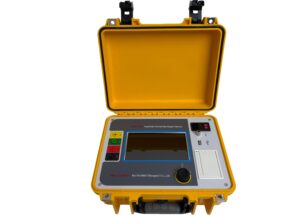
How OLTC Technology Solves Renewable Grid Challenges
- Counteract Renewable Intermittency
OLTCs adjust voltage in milliseconds to compensate for fluctuations in solar/wind output, preventing voltage sags/swells that damage grid assets.
- Enable Seamless Grid Integration
OLTCs maintain voltage levels within strict grid code requirements, allowing renewable energy to be fed into the grid without compromising stability.
- Reduce Grid Upgrade Costs
By stabilizing voltage, OLTCs minimize the need for costly grid infrastructure upgrades (e.g., new transformers, power lines) for renewable projects.
- Protect Renewable Assets
Stable voltage regulation prevents overloading and insulation degradation in wind turbine transformers and solar inverters, extending their operational life.
How Wrindu Testers Stand Out
- Renewable-Specific Diagnostics: Customized protocols detect rapid switching wear (common in high-renewable grids) and transition component fatigue, ensuring OLTC reliability in dynamic conditions.
- Fast Response Testing: High-speed sampling captures transient performance during rapid tap changes, identifying bottlenecks that cause voltage instability in renewable grids.
- IoT-Enabled Predictive Maintenance: Syncs with renewable grid SCADA systems, enabling real-time monitoring and proactive repairs to avoid outages during peak renewable generation.
- Vacuum OLTC Compatibility: Specialized profiles for vacuum-type OLTCs (the preferred design for renewables) ensure accurate diagnostics for low-wear, high-speed units.
- Field-Ready Portability: Rugged, battery-powered design supports on-site testing in remote wind/solar farms, eliminating the need for grid shutdowns during maintenance.
FAQs
Q: Why are vacuum-type OLTCs preferred for solar/wind renewable grids?
A: Vacuum-type OLTCs offer superior arc suppression, faster switching speeds, and no oil contamination risks—ideal for handling the frequent, rapid adjustments needed to counteract renewable intermittency. Wrindu testers include specialized DRM profiles for these units.
Q: How does OLTC performance impact renewable energy grid efficiency?
A: Poor OLTC performance leads to voltage instability, increasing energy losses by 20–25% and reducing renewable generation output. Wrindu testers optimize OLTC performance, cutting losses by 8–15%.
Q: Can OLTC technology support microgrid integration with renewable energy?
A: Yes. Modern OLTCs integrate with microgrid automation platforms, enabling autonomous voltage control to balance renewable generation and microgrid loads. Wrindu testers support microgrid OLTC diagnostics for end-to-end reliability.
