

OLTC Maintenance and Reliability Best Practices: Guarantee Long-Term Transformer Performance
Follow proven OLTC maintenance & reliability best practices to prevent failures, extend transformer lifespan, and ensure stable grid performance with expert tips.
On-load tap changers (OLTCs) are the most critical moving components in power transformers, enabling uninterrupted voltage regulation under dynamic load conditions and serving as the backbone of stable grid delivery. Despite their robust design, OLTCs endure constant mechanical stress, electrical arcing, and thermal cycling during routine operation—industry statistics consistently show that OLTC-related failures account for over 30% of total transformer outages.
Without structured maintenance and proactive reliability management, OLTC performance degrades over time, leading to costly unplanned downtime, equipment damage, and non-compliance with grid codes. Implementing targeted, industry-leading best practices is the only way to extend OLTC lifespan, minimize failure risks, and maximize the return on investment for transformer assets. This guide outlines actionable maintenance protocols and reliability strategies for utilities, transformer OEMs, and field maintenance teams.
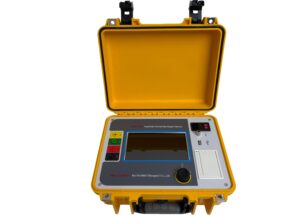
Click the image to know more about OLTC Analyzer.
The Foundation: Understand OLTC Failure Modes & Vulnerabilities
Effective maintenance starts with identifying the most common OLTC failure points, allowing teams to prioritize inspections and testing:
-
Contact Wear & Degradation: Frequent tap switching causes arcing, pitting, and increased resistance on moving contacts.
-
Transition Component Failure: Resistors/reactors degrade due to thermal stress, leading to unstable switching and power interruptions.
-
Mechanical Wear: Drive mechanisms, gears, and bearings suffer from lubrication loss and misalignment over time.
-
Insulation Deterioration: Oil contamination, moisture, and thermal aging weaken insulation, increasing short-circuit risks.
-
Timing & Synchronization Drift: Three-phase switching misalignment causes unbalanced loading and transformer stress.
By targeting these vulnerabilities with routine maintenance, teams can eliminate 90% of preventable OLTC failures.
Core OLTC Maintenance Best Practices (Scheduled & Proactive)
1. Implement a Structured Maintenance Schedule
Follow a time-based and condition-based maintenance regime, tailored to OLTC usage intensity:
-
Monthly Visual Inspections: Check for oil leaks, unusual noise, vibration, and loose wiring; monitor tap operation smoothness.
-
Quarterly Mechanical Checks: Lubricate drive mechanisms, inspect gears/bearings, and verify tap position indicator accuracy.
-
Semi-Annual Oil Quality Testing: Test for moisture content, dissolved gases, carbon deposits, and acidity; replace or filter contaminated oil promptly.
-
Annual Comprehensive Diagnostic Testing: Conduct full performance testing to assess contact resistance, transition timing, and three-phase synchronicity.
For high-usage OLTCs (frequent tap switching in renewable grids or urban substations), reduce testing intervals to 6 months for peak reliability.
2. Prioritize Precision Diagnostic Testing
Generic inspections miss subtle OLTC defects—invest in specialized testing equipment to detect early warning signs:
-
Dynamic Resistance Measurement (DRM): Capture instantaneous contact resistance during switching to identify wear, poor connections, or arcing damage.
-
Transition Timing Analysis: Verify switching speed and phase synchronicity to eliminate mechanical lag and imbalance.
-
Insulation Resistance Testing: Assess insulation health to prevent short circuits and flashovers.
Pro Tip: Wrindu RDKC-201X OLTC Analyzers streamline this process, delivering high-precision DRM, timing, and synchronicity testing with 0.01Ω resistance resolution and 0.1ms timing accuracy—catching defects that standard tools overlook.
3. Optimize Oil Management & Contamination Control
OLTC oil acts as both insulation and cooling medium, making oil quality non-negotiable for reliability:
-
Use high-quality, oxidation-resistant insulating oil compatible with OLTC design specifications.
-
Install oil filtration systems to remove moisture, carbon, and particulate contaminants continuously.
-
Seal OLTC compartments properly to prevent moisture ingress and external contamination.
-
Replace oil immediately if dissolved gas analysis (DGA) detects abnormal carbon monoxide or arcing byproducts.
4. Calibrate Control & Monitoring Systems
OLTC performance relies on accurate control mechanisms to avoid misoperation:
-
Calibrate Automatic Voltage Regulators (AVR) quarterly to ensure responsive, accurate tap switching.
-
Verify SCADA integration and remote tap position monitoring for real-time visibility.
-
Test alarm systems (overcurrent, overheating, abnormal switching) to ensure fault alerts are triggered promptly.
5. Train Maintenance Teams on Safe, Proper Procedures
Human error is a leading cause of OLTC damage—invest in specialized training:
-
Train teams on manufacturer-specific OLTC operation and disassembly protocols.
-
Enforce lockout-tagout (LOTO) safety procedures during maintenance to prevent accidental energization.
-
Educate staff on interpreting diagnostic test data (waveforms, resistance readings) for early fault detection.
Advanced Reliability Best Practices: Predictive & Preventive Strategies
Adopt Condition-Based Maintenance (CBM)
Move beyond fixed schedules to data-driven maintenance: use real-time monitoring data to adjust maintenance frequency based on actual OLTC condition. Wrindu OLTC analyzers support this by storing historical test data, enabling trend analysis to predict failures before they occur.
Avoid Excessive Tap Switching
Minimize unnecessary tap operations during grid instability, as frequent switching accelerates contact wear and thermal fatigue. Coordinate OLTC operation with reactive power compensation systems to reduce switching frequency.
Use Genuine Spare Parts & Manufacturer Components
Avoid low-cost aftermarket parts that compromise OLTC precision and durability. Always use OEM-approved contacts, lubricants, and seals to maintain mechanical and electrical integrity.
Conduct Periodic Overhauls for Aging OLTCs
For OLTCs with 15+ years of service, schedule full overhauls: replace worn contacts, refurbish drive mechanisms, and re-insulate critical components. This extends lifespan by 10–15 years and avoids full transformer replacement.
How Wrindu Testers Elevate OLTC Maintenance & Reliability
Wrindu’s RDKC-201X OLTC Analyzer is purpose-built to support these best practices, making reliable OLTC maintenance faster, safer, and more accurate:
-
High-Precision Measurements: Captures transition resistance, timing, and three-phase synchronicity with industry-leading accuracy to detect early wear.
-
Field-Ready Design: Compact, lightweight, and industrial-grade (operates in -10℃ to 50℃), ideal for on-site substation testing without transformer shutdown.
-
Intuitive Operation: 7-inch touchscreen, dual control modes, and built-in thermal printing simplify on-site data collection and reporting.
-
Data-Driven Insights: Local/U-disk storage and PC software integration enable long-term trend analysis for predictive maintenance.
-
Comprehensive Protection: Built-in safety circuits protect both the tester and transformer during live diagnostics.
Key Maintenance Mistakes to Avoid
-
Skipping diagnostic testing and relying solely on visual inspections
-
Delaying oil replacement or using unfiltered oil
-
Overlooking three-phase synchronicity drift
-
Using improper lubricants or aftermarket spare parts
-
Ignoring abnormal noise, vibration, or test reading anomalies
Conclusion
OLTC maintenance and reliability are not reactive tasks—they are strategic initiatives that directly impact grid stability, transformer lifespan, and operational costs. By following structured scheduled maintenance, adopting predictive testing protocols, and leveraging specialized tools like the Wrindu RDKC-201X Analyzer, teams can eliminate preventable failures, extend OLTC life to 30+ years, and ensure uninterrupted voltage regulation for critical power infrastructure.
For utilities and asset managers, investing in OLTC best practices is the most cost-effective way to protect transformer assets and maintain reliable power delivery.
