

OLTC TCO for Renewable Grids: 20-Year Cost Comparison and Optimization
Understand OLTC vs OCTC TCO for solar and wind integration. Learn how OLTCs lower outage losses & improve voltage stability, plus how Wrindu testers reduce long-term costs.
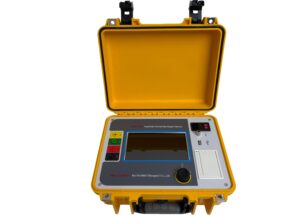
Key TCO Drivers for Renewable Grids
- Outage losses dominate OCTC TCO
Intermittent renewable output means tap changes happen 3–5 times more often than in traditional grids. Each OCTC shutdown leads to direct generation loss and grid stability costs.
- Voltage control quality affects energy efficiency
OLTCs provide fine-step voltage regulation (1.25%/1.5%) and real-time response, reducing energy losses by 8–15%.
- Retrofit costs make OCTCs uneconomical
Most grids upgrade toward smart automation, and OCTCs cannot support AVR/SCADA integration. Retrofitting costs reach 70–80% of a new OLTC investment.
How Wrindu Testers Stand Out
- Ultra-precise Dynamic Resistance Measurement (DRM) detects contact wear, transition delays, and arcing issues months before failure, cutting unplanned outages by 90%.
- Live testing without transformer shutdown preserves renewable generation output during maintenance, avoiding revenue loss.
- Specialized DRM profiles for vacuum-type OLTCs — the preferred design for renewables — ensure accurate diagnostics for low-wear, high-speed tap changers.
- Predictive trend tracking extends OLTC lifespan by up to 50%, eliminating early replacement costs over the 20-year period.
- One-device all-in-one testing reduces labor time by 60% compared to manual methods, lowering operational expenses for remote wind and solar farms.
FAQs
Q: Why do OCTCs have much higher TCO than OLTCs in solar and wind farms?
A: Intermittent renewable output requires frequent voltage adjustments. OCTCs need full shutdowns for every tap change, leading to massive outage losses, grid instability, and higher energy waste. OLTCs operate under load and eliminate these costs entirely.
Q: What type of OLTC is best for renewable energy grids to minimize TCO?
A: Vacuum-type OLTCs are ideal. They have no oil contamination risk, faster switching, and lower long-term maintenance. Wrindu testers support vacuum OLTCs with dedicated testing modes.
Q: How much can Wrindu testers reduce OLTC TCO in renewable applications?
A: Wrindu tools reduce total OLTC TCO by 20–30% through fewer outages, faster maintenance, longer asset life, and better voltage control stability.
