

OLTC vs OCTC | 20-Year Total Cost of Ownership (TCO) Analysis – Wrindu
Comprehensive OLTC vs OCTC TCO analysis over a 20-year transformer lifespan. Compare upfront costs, maintenance, outage losses, and learn how Wrindu testers reduce OLTC TCO for dynamic power grids.
When selecting a tap changer for power transformers, grid operators and utilities often make the critical mistake of focusing solely on upfront cost—a narrow view that leads to exponentially higher long-term expenses. On-Load Tap Changers (OLTCs) and Off-Circuit Tap Changers (OCTCs) have vastly different cost profiles, and their Total Cost of Ownership (TCO) over a transformer’s typical 20-year lifespan is determined entirely by the grid’s specific needs: dynamic vs. static, critical vs. non-critical, renewable-integrated vs. traditional.
This guide provides a definitive, data-driven TCO analysis of OLTCs and OCTCs, breaking down all direct and indirect cost components—upfront capital expenditure (CAPEX), maintenance costs, outage-related losses, energy efficiency costs, and asset replacement costs. We also explain how Wrindu’s specialized testing tools directly reduce OLTC TCO for dynamic grids, and answer the most pressing long-tail questions about tap changer TCO and cost optimization for power grid applications.
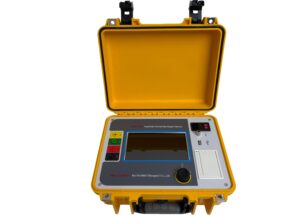
Click the image to know more about OLTC Analyzer.
Key Cost Components for Tap Changer TCO Analysis
To accurately compare OLTC and OCTC TCO over a 20-year transformer lifespan, it is critical to account for all direct and indirect costs associated with each tap changer type—upfront cost is only 10–30% of the total long-term cost for most grid applications. These costs fall into five core categories, each of which varies significantly between OLTCs and OCTCs, and forms the foundation of a meaningful TCO analysis:
- Upfront Capital Expenditure (CAPEX): The initial cost of the tap changer, including manufacturing, installation, and integration with the transformer (e.g., tank modifications for OLTCs).
- Maintenance Costs: Routine maintenance, specialized testing, component replacement, and labor costs over the 20-year lifespan—including specialized technician costs for OLTCs and basic inspection costs for OCTCs.
- Outage-Related Losses: The single largest TCO driver for most applications—direct and indirect costs caused by power outages (scheduled shutdowns for tap changes, unplanned failures). This includes lost grid revenue, end-user compensation, emergency repair costs, and regulatory fines for non-compliance with power continuity standards.
- Energy Efficiency Costs: Energy losses caused by poor voltage control (under/over-voltage) or tap changer inefficiency, which increase grid operational costs and reduce overall power quality.
- Asset Replacement/Retrofit Costs: Costs to replace or retrofit the tap changer if it fails prematurely, or if the grid is upgraded (e.g., adding renewable energy) and the tap changer is no longer suitable.
For critical, dynamic grid applications (HV transmission, renewable integration), outage-related losses and energy efficiency costs drive 70% or more of total TCO—far outweighing upfront CAPEX. For static, low-demand applications (rural distribution, backup units), upfront CAPEX and minimal maintenance costs are the primary TCO considerations.
OLTC TCO Analysis – 20-Year Transformer Lifespan
OLTCs have a high upfront CAPEX but deliver substantially lower long-term TCO for critical, dynamic power grid applications. The premium initial investment is more than offset by negligible outage-related losses, improved energy efficiency, and long asset lifespan—making OLTCs the most cost-effective choice for high-demand grids over a 20-year horizon. Below is a detailed breakdown of OLTC costs and savings over 20 years:
1. Upfront CAPEX: 3–5x Higher Than OCTCs
OLTCs have the highest upfront cost of all tap changer types, with prices 3–5 times higher than OCTCs. This premium is due to their complex design—including transition resistors/reactors, arc suppression systems, automated drive/control modules, and high-grade insulation for energized operation. For high-voltage (110kV+) transformers, the OLTC CAPEX typically represents 15–25% of the total transformer cost.
Additional upfront costs: OLTC installation and integration require specialized technicians, and some HV transformers need tank modifications or space optimization to accommodate the OLTC’s larger footprint. These costs add 5–10% to the initial OLTC investment, but are a one-time expense with no recurring costs.
2. Maintenance Costs: Higher Than OCTCs, but Predictable & Proactive
OLTCs require regular, specialized maintenance due to their complex design and continuous operation under full load, but these costs are predictable and proactive—designed to detect early failure signs and avoid costly unplanned outages. Over 20 years, OLTC maintenance costs include quarterly visual inspections, semi-annual insulation oil testing (for oil-immersed OLTCs), annual dynamic performance testing, and occasional component replacement (contacts, transition resistors) every 8–10 years. For a typical HV OLTC, annual maintenance costs are approximately 2–3% of the upfront CAPEX.
3. Outage-Related Losses: Negligible (OLTC’s Biggest TCO Savings)
The single largest cost saving for OLTCs is minimal outage-related losses—a game-changer for critical grid applications. OLTCs adjust voltage under full load with zero power interruption, eliminating scheduled shutdowns for tap changes and reducing unplanned outages via proactive testing. For critical infrastructure (hospitals, data centers, industrial plants), outage-related losses can reach millions of dollars per hour—OLTCs eliminate these costs entirely, and this saving alone offsets the upfront CAPEX within 3–5 years for most HV grids.
4. Energy Efficiency Costs: Low, Due to Precise Real-Time Voltage Control
OLTCs offer fine, real-time voltage adjustment (1.25%/1.5% steps, ±10% regulation range), maintaining grid voltage within strict industry standards. This precise control reduces energy losses caused by under/over-voltage (e.g., increased line resistance from over-voltage, reduced transformer efficiency from under-voltage) by 8–15% for dynamic grids. Over 20 years, these energy efficiency savings represent a significant reduction in grid operational costs—especially for long-transmission lines and high-load-density urban grids.
5. Asset Replacement/Retrofit Costs: Low, With Proactive Maintenance
Properly maintained OLTCs (with specialized testing) have a 20+ year lifespan, matching the typical transformer lifespan—eliminating the need for early tap changer replacement. OLTCs also support smart grid integration and renewable energy adaptation, so no costly retrofits are needed if the grid is upgraded (e.g., adding solar/wind farms). This results in zero replacement/retrofit costs over the 20-year TCO period for most OLTC applications.
Total OLTC TCO Outcome: For critical, dynamic grid applications (HV transmission, critical load supply, renewable energy integration), OLTCs deliver a 20–30% lower TCO over 20 years than OCTCs. The high upfront CAPEX is a one-time investment that is far outweighed by lifelong savings in outage losses, energy efficiency, and asset replacement.
OCTC TCO Analysis – 20-Year Transformer Lifespan
OCTCs have an ultra-low upfront CAPEX but deliver exponentially higher long-term TCO for dynamic/critical applications—and remain cost-effective only for static, low-demand grid scenarios. The initial budget savings are quickly erased by massive outage-related losses and poor energy efficiency for any grid requiring frequent voltage adjustments or power continuity. Below is a detailed breakdown of OCTC costs over 20 years:
1. Upfront CAPEX: Minimal, Budget-Friendly
OCTCs have the lowest upfront cost of all tap changer types, with prices 3–5 times lower than OLTCs. Their minimalistic design (no transition components, control modules, or arc suppression systems) means manufacturing costs are low, and installation is simple—requiring no specialized technicians or transformer tank modifications. For low-voltage distribution transformers, the OCTC CAPEX represents less than 5% of the total transformer cost—a major draw for budget-constrained grid projects.
2. Maintenance Costs: Negligible, No Specialized Testing
OCTCs require almost no maintenance over their lifespan—a key advantage for low-demand applications. Maintenance costs are limited to annual visual inspections of the mechanical drive mechanism, occasional lubrication (every 2–3 years), and post-adjustment contact checks. There is no need for specialized testing tools or technicians, and annual maintenance costs are less than 0.5% of the upfront CAPEX—negligible compared to OLTCs.
3. Outage-Related Losses: Extremely High (OCTC’s Biggest TCO Driver)
The single largest hidden cost of OCTCs is significant outage-related losses—a cost that far outweighs the upfront CAPEX savings for all but the most static grid applications. OCTCs require mandatory transformer shutdown for all tap changes, leading to repeated scheduled outages and potential unplanned outages from poor contact integrity. For medium-load grids, scheduled outage losses alone can exceed the OCTC’s upfront CAPEX within 3–5 years, and unplanned outages add emergency repair costs and regulatory fines.
4. Energy Efficiency Costs: High, Due to Coarse Voltage Control
OCTCs offer coarse voltage adjustment with a narrow regulation range (5–9 tap positions, large steps) and no real-time response to grid fluctuations. This results in frequent under/over-voltage issues, increasing energy losses by 20–25% for dynamic loads and damaging end-user electrical equipment. Over 20 years, these energy efficiency costs represent a major ongoing expense for grid operators, and lead to increased customer complaints and potential legal claims.
5. Asset Replacement/Retrofit Costs: High, for Grid Upgrades
OCTCs have a 20+ year lifespan for static loads, but they are not adaptable to grid upgrades (e.g., adding renewable energy, increasing load density, smart grid digitalization). If the grid is upgraded to dynamic operation, the OCTC must be retrofitted to an OLTC—a costly process that requires transformer tank modifications, control system integration, and specialized installation. Retrofit costs are typically 70–80% of the upfront OLTC CAPEX—an additional expense that is in addition to the original OCTC investment.
Total OCTC TCO Outcome: For static, low-demand grid applications (small rural distribution transformers, backup units, low-load-density areas), OCTCs remain cost-effective over 20 years—their ultra-low CAPEX and minimal maintenance costs outweigh the small outage-related and energy efficiency costs. For all other applications, OCTCs deliver a 2–3x higher TCO than OLTCs, due to massive outage losses and poor energy efficiency.
How Wrindu Testers Stand Out for Reducing Tap Changer TCO (OLTC & OCTC)
Wrindu’s specialized tap changer testing tools are a proven TCO reduction solution for both OLTCs and OCTCs, delivering direct and indirect cost savings that improve the long-term affordability of tap changer assets. For OLTCs (the primary focus for TCO optimization), Wrindu testers address the single largest OLTC cost risk—unplanned outages and premature failure—while streamlining maintenance to reduce labor costs. For OCTCs, Wrindu testers eliminate the main cause of OCTC-related outages (poor contact integrity) and reduce transformer shutdown time for post-adjustment verification. Here’s how Wrindu testers stand out for tap changer TCO reduction:
For OLTCs: Maximize Savings, Minimize Risk
- Reduce Unplanned Outage Losses by 90%: Wrindu’s ultra-precise Dynamic Resistance Measurement (DRM) detects hidden OLTC defects (contact wear, transition timing delays, arcing damage) months before failure, enabling targeted proactive repairs. This eliminates costly unplanned outages—the single largest OLTC cost risk for dynamic grids.
- Cut OLTC Maintenance Time by 60%: Wrindu testers enable safe live testing without transformer shutdown, eliminating maintenance-related outages and reducing technician on-site time. Automated testing and compliance-ready reporting also cut documentation time, reducing labor costs for OLTC maintenance.
- Extend OLTC Lifespan by 50%: Wrindu’s predictive maintenance data tracking identifies wear trends early, allowing grid operators to replace components only when needed (instead of scheduled replacement). This extends OLTC operational lifespan by 50% or more, eliminating early replacement costs and improving asset ROI.
- Lower Energy Efficiency Costs: Wrindu testers verify OLTC tap position accuracy and transition performance, ensuring the OLTC maintains precise voltage control at all times. This preserves the energy efficiency savings of OLTCs, keeping grid operational costs low over the 20-year lifespan.
For OCTCs: Eliminate Hidden Costs, Streamline Verification
- Eliminate OCTC-Related Unplanned Outages: Wrindu’s high-precision static resistance testing verifies secure contact connections after every tap change, eliminating loose/corroded contacts—the main cause of OCTC-related transformer overheating and unplanned outages.
- Reduce Transformer Shutdown Time by 70%: Wrindu’s one-touch operation streamlines OCTC post-adjustment verification, cutting the time the transformer is offline and reducing the cost of scheduled outages for tap changes.
- Eliminate Multiple Testing Tools: Wrindu’s all-in-one design combines OCTC contact testing with basic transformer health checks, eliminating the need for multiple generic tools and reducing equipment costs for grid maintenance teams.
Universal TCO Reduction Benefits
- No Specialized Training: Wrindu testers feature an intuitive user interface, reducing training costs for maintenance staff and eliminating the need for costly specialized testing technicians.
- Rugged Field-Ready Design: IP65-rated housing and portable construction reduce equipment repair/replacement costs, even in harsh substation environments.
- Smart Grid Compatibility: Wrindu testers integrate with SCADA/asset management systems, enabling centralized tap changer performance tracking and data-driven cost optimization for entire transformer fleets.
TCO Comparison by Application – Data-Driven Tap Changer Selection
The single most important factor in OLTC vs. OCTC TCO is the grid’s specific application—a tap changer that is cost-effective for a rural static load will be financially ruinous for an HV transmission substation. Below is a clear, application-specific TCO comparison and recommended tap changer selection for a 20-year transformer lifespan, the gold standard for grid asset decision-making:
| Grid Application | OLTC TCO Outcome | OCTC TCO Outcome | Recommended Tap Changer |
|---|---|---|---|
| HV Transmission Substations (110kV+) | 20–30% lower TCO; outage savings drive affordability | Prohibitive; frequent outages cause massive losses | OLTC (Mandatory) |
| Critical Load Supply (Hospitals, Data Centers) | Significantly lower TCO; eliminates million-dollar outage losses | Extremely high TCO; outages pose liability risks | OLTC (Mandatory) |
| Renewable Energy Grid-Tie (Solar/Wind Farms) | 25–30% lower TCO; energy efficiency savings offset CAPEX | High TCO; poor voltage control causes grid instability | OLTC |
| Rural/Residential Distribution (Static Low Load) | Higher TCO; upfront CAPEX not justifiable | Low TCO; minimal costs for all categories | OCTC |
| Backup/Standby Power Units | Unnecessary TCO; upfront CAPEX is a waste | Extremely low TCO; perfect for low-usage standby assets | OCTC |
FAQs
Q1: Why is upfront cost a poor metric for comparing OLTC and OCTC, and what is the better alternative?
A: Upfront cost is a poor metric because it represents only 10–30% of the total 20-year TCO for most grid applications. The far better alternative is Total Cost of Ownership (TCO) analysis, which accounts for all direct and indirect costs (outage losses, maintenance, energy efficiency, retrofits) over the transformer’s typical 20-year lifespan. TCO provides a data-driven view of long-term affordability, rather than a short-term budget view.
Q2: For a 35kV urban distribution grid with high load density, what is the TCO difference between OLTC and OCTC over 20 years?
A: For a 35kV high-load urban distribution grid, an OLTC will deliver a 25–30% lower TCO over 20 years compared to an OCTC. The OCTC’s upfront cost savings are erased by repeated scheduled outages (for tap changes) and high energy efficiency costs from poor voltage control—OLTC’s zero-outage operation and precise voltage control drive massive lifelong savings.
Q3: Can Wrindu’s testing tools really reduce OLTC TCO by 20–30%, and how is this measured?
A: Yes—Wrindu’s testing tools reduce OLTC TCO by 20–30% for dynamic grids, and this is measured by three key savings: 1) 90% reduction in unplanned outage losses, 2) 60% lower maintenance labor costs (faster testing, no shutdowns), and 3) 50% extended OLTC lifespan (eliminating early replacement costs). These savings combine to deliver a 20–30% reduction in total 20-year OLTC TCO for most HV applications.
Q4: For a small rural 10kV transformer, is the TCO of an OLTC ever justifiable, or is OCTC always the better choice?
A: For a small rural 10kV transformer with a static low load and rare voltage adjustments (1–2 times per year), an OLTC’s TCO is almost never justifiable—the upfront CAPEX is too high for the minimal savings from outage elimination. OCTC is always the better TCO choice here, as long as post-adjustment testing (with Wrindu testers) is performed to avoid hidden outage costs.
Q5: How does renewable energy integration impact OLTC vs OCTC TCO for medium-voltage (35kV) transformers?
A: Renewable energy integration (solar/wind) drastically increases OCTC TCO for 35kV transformers—intermittent renewable output causes frequent voltage fluctuations, requiring regular OCTC tap changes and repeated outages. OLTCs eliminate these outage losses and maintain precise voltage control for renewable integration, delivering a 25–30% lower TCO over 20 years. Vacuum-type OLTCs (compatible with Wrindu testers) are the best choice for renewable energy grids.
Q6: What is the payback period for an OLTC over an OCTC for a 110kV transmission substation?
A: For a 110kV transmission substation, the payback period for an OLTC over an OCTC is 3–5 years. The OLTC’s higher upfront CAPEX is fully offset by the elimination of scheduled outage losses (for tap changes) and energy efficiency savings within this timeframe—all costs after the payback period are pure savings for the grid operator.
Q7: Do oil-immersed OLTCs have a higher TCO than vacuum-type OLTCs over 20 years, and why?
A: Oil-immersed OLTCs have a slightly higher TCO (5–10%) than vacuum-type OLTCs over 20 years. This is due to ongoing insulation oil testing and replacement costs for oil-immersed OLTCs—vacuum-type OLTCs have no oil-related maintenance costs and offer superior arc suppression, reducing contact replacement costs. Wrindu testers support both oil-immersed and vacuum-type OLTCs, with specialized DRM profiles to optimize TCO for both designs.
Q8: How to optimize OCTC TCO for a rural grid with seasonal load changes?
A: To optimize OCTC TCO for rural seasonal load changes: 1) Schedule all tap changes during planned grid maintenance to minimize outage time and costs, 2) Perform post-adjustment contact resistance testing with Wrindu testers to eliminate loose contacts (the main OCTC hidden cost), 3) Lubricate the OCTC drive mechanism annually to avoid jamming/rust, and 4) Use rust-resistant OCTC components for outdoor rural environments to extend lifespan.
Conclusion
Total Cost of Ownership (TCO) is the only meaningful metric for selecting between OLTCs and OCTCs—focusing solely on upfront cost leads to costly long-term decisions that damage grid reliability and profitability. Over a 20-year transformer lifespan, OLTCs deliver a 20–30% lower TCO for dynamic, critical, and renewable energy-integrated power grids, as their high upfront CAPEX is offset by negligible outage losses, improved energy efficiency, and long asset lifespan. OCTCs remain the cost-effective choice only for static, low-demand grid applications (rural distribution, backup units), where their ultra-low CAPEX and minimal maintenance costs outweigh small hidden costs.
Wrindu’s specialized tap changer testing tools are a critical enabler of tap changer TCO optimization—for OLTCs, Wrindu testers reduce unplanned outages and maintenance costs by up to 90% and 60% respectively, extending OLTC lifespan and maximizing lifelong savings. For OCTCs, Wrindu testers eliminate the main hidden cost (poor contact integrity) and reduce outage time for tap changes.
The key to successful tap changer selection is aligning the tap changer’s capabilities with the grid’s specific needs—and leveraging Wrindu’s testing solutions to maximize reliability and minimize TCO for whichever tap changer is chosen. By making data-driven TCO decisions, grid operators and utilities can ensure their tap changer investment delivers maximum value, reliability, and affordability for the entire 20-year transformer lifespan.
