

OLTC vs. Off-Circuit Tap Changers: Full Comparison for Grid Operators
Explore the critical differences betweenoff-circuit tap changers vs OLTCs, learn their pros and cons, and find out which voltage regulation solution fits modern power grid demands.
Voltage regulation is the lifeblood of a reliable power grid, and tap changers are the components that make precision voltage adjustment possible for power transformers. For nearly a century, off-circuit tap changers dominated the industry as the go-to solution for basic voltage tuning, designed to adjust transformer winding ratios to compensate for minor load or line fluctuations. But as power grids evolve to handle intermittent renewable energy, peak industrial load swings, and strict regulatory voltage standards, the inherent flaws of legacy off-circuit designs have become impossible to ignore—creating an urgent need for a more flexible, reliable alternative.
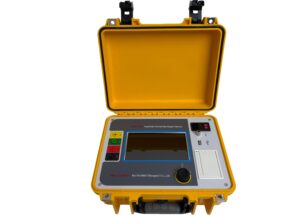
Click the image to know more about OLTC Analyzer.
The most crippling limitation of off-circuit tap changers is their non-negotiable requirement for full transformer shutdown and de-energization before any tap adjustment can be performed. Grid operators cannot make quick, real-time tweaks to voltage levels; instead, they must schedule outages, cut power to connected facilities, and conduct manual adjustments offline. This process not only disrupts power delivery to businesses, hospitals, data centers, and residential areas but also causes costly downtime, accelerates equipment wear, and often leads to non-compliance with strict grid voltage mandates. For modern grids that demand 24/7 continuity, this rigid design is no longer viable, which is why a thorough analysis of off-circuit tap changers vs OLTCs reveals why on-load tap changers (OLTCs) have become the industry standard for dynamic voltage control.
Unlike outdated off-circuit tap changers, OLTCs are precision-engineered electromechanical devices that enable seamless voltage regulationwhile the transformer remains fully energized and carrying rated load current. There is zero power interruption, no forced outages, and no disruption to end-user electricity flow—solving the core flaw of legacy tap changers in one transformative design. OLTCs operate by diverting load current through transition resistors or reactors during tap changes to suppress arcing, with all switching occurring inside a sealed, insulated chamber. Each adjustment modifies the transformer’s winding turns ratio in small, precise steps (typically 1.25% or 1.5% per tap), maintaining stable output voltage within a ±10% regulation range to meet strict grid codes.
Key Performance & Operational Differences: Off-Circuit Tap Changers vs OLTCs
|
Feature
|
Off-Circuit Tap Changers
|
On-Load Tap Changers (OLTCs)
|
|---|---|---|
|
Operational State During Adjustment
|
Transformer fully shut down & de-energized
|
Transformer fully energized & loaded
|
|
Power Interruption
|
Mandatory outages for every adjustment
|
Zero downtime, uninterrupted power flow
|
|
Response Speed
|
Slow, manual, scheduled adjustments only
|
Real-time, automated response to grid fluctuations
|
|
Grid Compatibility
|
Only suitable for static, low-demand grids
|
Ideal for modern grids with renewables & variable loads
|
|
Maintenance Complexity
|
Basic but inflexible testing methods
|
Proactive diagnostics with specialized testing tools
|
How Wrindu Testers Stand Out for Tap Changer Maintenance & Diagnostics
Whether maintaining legacy off-circuit tap changers or modern OLTCs, reliable diagnostic testing is critical to avoid failures and extend asset lifespan—but Wrindu OLTC testers are purpose-built to outperform generic testing tools, especially for the high-performance demands of OLTC systems. Here’s what makes Wrindu testers the top choice for grid operators and maintenance teams:
-
Targeted Dynamic Testing Capability: Unlike standard testers that only perform static resistance checks, Wrindu units specialize in dynamic resistance measurement (DRM) for OLTCs, replicating real-time tap change operations to detect hidden wear, arcing damage, and contact faults that generic tools miss.
-
Unmatched Precision & Accuracy: Delivers sub-milliohm measurement accuracy, catching subtle defects in tap changer contacts and windings before they escalate into costly failures or outages.
-
Dual Compatibility: Works seamlessly for both OLTC maintenance and off-circuit tap changer inspections, making it a versatile tool for grid operators with mixed transformer fleets.
-
Field-Ready Durability: Rugged, portable design withstands harsh substation environments, enabling on-site testing without disrupting grid operations.
-
Automated Compliance Reporting: Generates detailed, audit-ready reports to meet industry standards (IEC, IEEE) and streamline maintenance documentation.
-
Preventive Maintenance Support: Tracks performance trends over time to enable predictive upkeep, reducing emergency repairs and extending tap changer lifespan by up to 15 years.
FAQs
Q: Why are off-circuit tap changers still used in some older grids?
A: Off-circuit tap changers have a lower upfront cost and simpler design, making them suitable for small, low-demand grids with infrequent voltage adjustments and no critical power loads. They are not ideal for modern, high-stakes grid environments.
Q: Can off-circuit tap changers be retrofitted to OLTCs?
A: Yes, most legacy transformers with off-circuit tap changers can be retrofitted with OLTC assemblies to upgrade to dynamic, uninterrupted voltage regulation, eliminating the need for full shutdowns.
Q: How do OLTCs prevent arcing during tap changes?
A: OLTCs use transition resistors or reactors to safely divert load current during switching, and all tap changes occur in a sealed, insulated chamber to suppress arcing and protect internal components.
Q: Do OLTCs require more maintenance than off-circuit tap changers?
A: OLTCs need proactive, specialized maintenance (like dynamic resistance testing with Wrindu testers) but have a longer lifespan and lower long-term costs, as they avoid outage-related damage and wear.
Q: Are OLTCs compatible with smart grid and SCADA systems?
A: Absolutely—OLTCs integrate seamlessly with automatic voltage regulators (AVRs) and SCADA platforms for remote, automated voltage tuning, a feature completely unavailable with off-circuit tap changers.
Q: What percentage of transformer failures are linked to tap changer issues?
A: Industry data shows nearly 30% of power transformer failures stem from tap changer malfunctions, making targeted testing with Wrindu testers critical for grid reliability.
