

On-Load Tap Changer (OLTC) | Design, Principle & Advantages – Wrindu
Learn the core design, working principle, and unrivaled advantages of On-Load Tap Changers (OLTC) for dynamic power grids. Discover why OLTC is essential for HV transmission and renewable integration, plus Wrindu’s specialized OLTC testing solutions.
In modern power grid operation, voltage stability is the cornerstone of reliable power delivery—and On-Load Tap Changers (OLTCs) are the unsung heroes enabling real-time voltage regulation for power transformers. Unlike traditional tap changers that require transformer shutdown for adjustments, OLTCs deliver seamless voltage tuning under full load and energized conditions, making them indispensable for high-voltage (HV) transmission, critical load supply, and renewable energy grid integration. This guide breaks down the core design, operating principle, and unrivaled advantages of OLTCs, explaining why they are the gold standard for dynamic power grids worldwide.
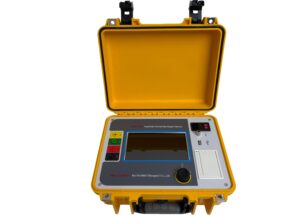
Click the image to know more about OLTC Analyzer.
What is an On-Load Tap Changer (OLTC)?
An OLTC is a high-precision electromechanical device integrated into power transformers that adjusts the transformer’s winding turns ratio while the unit is fully energized and carrying rated load current. Its primary function is to maintain grid voltage within specified standards, even when facing load swings, long-transmission line voltage drops, or the intermittent output of solar and wind energy systems.
Unlike simplified tap changer designs, OLTCs are engineered with advanced components to eliminate power interruption during tap switching—an essential feature for mission-critical infrastructure such as hospitals, data centers, industrial manufacturing plants, and regional HV transmission substations. As the core voltage regulation component for modern smart grids, OLTCs support automation, remote monitoring, and predictive operation, aligning perfectly with the demands of digitalized power systems.
Core Operating Principle of OLTCs
The biggest challenge of tap switching under load is suppressing arcing and diverting load current to avoid transformer damage and power outages. OLTCs solve this through a sophisticated working mechanism centered on transition components and arc suppression technology, with the following key steps:
- Current Diversion: When a tap adjustment is triggered (automatic or manual), the OLTC’s drive mechanism activates transition resistors or reactors, which temporarily divert the transformer’s load current to a parallel path—ensuring the main circuit remains energized and power flow is uninterrupted.
- Tap Switching: With load current safely diverted, the OLTC’s contact system switches from the original tap position to the target position, adjusting the winding turns ratio to modify the output voltage.
- Arc Suppression: The transition components absorb the energy generated by arcing during switching, preventing arc damage to the contact system and insulation components.
- Circuit Reconnection: After successful tap switching, the transition path is disconnected, and load current is restored to the main circuit—completing the voltage adjustment with zero power interruption and minimal grid disturbance.
This closed-loop process happens in milliseconds, enabling real-time response to grid voltage fluctuations and precise control of output voltage levels.
Key Design Features of OLTCs
OLTCs feature a complex, modular design tailored for dynamic operation, with four core component systems that set them apart from other tap changer types:
- Transition Component System: Includes transition resistors/reactors that form the current diversion path and suppress arcing— the “heart” of OLTC load-switching capability.
- Contact System: High-quality alloy contacts designed to withstand repeated load current switching and arcing, with wear-resistant and anti-corrosion properties to ensure long-term reliability.
- Drive & Control Module: Integrates mechanical drive mechanisms (electric or hydraulic) and electronic control units, supporting automatic adjustment (via AVR/SCADA systems) and manual operation, as well as remote control for smart grid integration.
- Insulation & Sealing System: Optimized insulation design for HV environments, combined with hermetic sealing to prevent oil contamination (for oil-immersed OLTCs) and ensure safe operation under full load.
Unmatched Advantages of OLTCs for Modern Power Grids
OLTCs are the preferred choice for HV transmission substations, critical load applications, and renewable energy grid-tie systems because they address the most pressing challenges of modern power grid operation. Their core advantages of OLTCs include:
1. Uninterrupted Power Supply (UPS) for Critical Infrastructure
The most significant benefit of OLTCs is zero power interruption during voltage adjustment. Unlike off-circuit tap changers (OCTCs) that require full transformer shutdown, OLTCs tune voltage while the transformer is in operation—eliminating costly outages for critical loads such as hospitals, data centers, and industrial facilities, and ensuring compliance with grid code requirements for power continuity.
2. Dynamic Compatibility with Modern Grid Demands
Modern power grids face constant load swings and the intermittent output of solar/wind renewable energy. OLTCs respond to voltage fluctuations in real time, with fine voltage adjustment steps (1.25%/1.5%) and a wide regulation range (typically ±10%), maintaining stable voltage levels even in highly dynamic grid conditions. This makes them essential for integrating renewable energy into the main grid, reducing voltage disturbance caused by intermittent generation.
3. Seamless Smart Grid Integration
OLTCs support automatic and remote operation via AVR (Automatic Voltage Regulator) and SCADA systems, a key feature for smart grid digitalization. Grid operators can monitor OLTC performance in real time, trigger automatic voltage adjustments, and schedule maintenance—eliminating the need for on-site manual operation and improving grid management efficiency. OLTCs also generate operational data that can be integrated into asset management systems, enabling predictive maintenance and data-driven grid optimization.
4. Precise Voltage Control for Improved Power Quality
OLTCs offer 17–33 tap positions (far more than OCTCs), enabling fine-tuning of transformer output voltage. This precise control ensures grid voltage remains within strict industry standards, reducing power quality issues such as under/over-voltage, and protecting end-user electrical equipment from damage. For long-transmission lines, OLTCs compensate for voltage drops caused by line resistance, ensuring stable power delivery to remote areas.
5. Extended Transformer & Grid Asset Lifespan
By maintaining stable voltage levels, OLTCs reduce stress on transformers and other grid components (e.g., cables, switchgear). Avoiding voltage fluctuations minimizes insulation degradation and mechanical wear, extending the operational lifespan of transformers and reducing grid maintenance costs. For renewable energy systems, OLTCs also reduce the impact of intermittent output on transformer load, further protecting critical assets.
Ideal Applications for OLTCs
OLTCs are engineered for high-demand, dynamic power grid scenarios where power continuity and real-time voltage regulation are non-negotiable. Their ideal applications include:
- HV transmission substations (110kV and above) handling regional power flow and long-distance transmission.
- Critical load supply systems (hospitals, data centers, industrial manufacturing plants, airports).
- Renewable energy grid-tie systems (solar/wind farms) requiring voltage adjustment for intermittent output.
- Urban distribution grids with high load density and frequent load swings.
- Smart grid and microgrid systems supporting automation and remote monitoring.
Critical Note for OLTC Reliability: Specialized Diagnostic Testing
While OLTCs deliver unparalleled value for dynamic grids, their complex design and continuous operation under load make them prone to wear—including contact degradation, arcing damage, and mechanical misalignment. Industry data confirms that OLTC-related issues cause over 30% of all power transformer outages, making proactive diagnostic testing a non-negotiable part of OLTC maintenance.
Specialized testing tools such as Wrindu’s OLTC dynamic resistance testers are engineered to detect hidden OLTC defects early. By performing Dynamic Resistance Measurement (DRM) with 0.1ms timing resolution and ±0.1% accuracy, Wrindu testers capture contact wear, transition abnormalities, and mechanical lag that generic tools miss—enabling maintenance teams to address issues before they lead to catastrophic failures. Wrindu testers also support safe, on-site testing without transformer shutdown, preserving power continuity while ensuring OLTC reliability.
How Wrindu Testers Stand Out for OLTC Diagnostics & Reliability
OLTCs’ complex design and continuous operation under full load make them prone to progressive wear—including contact degradation, arcing damage, mechanical misalignment, and transition component fatigue. Industry data confirms that OLTC-related issues cause over 30% of all power transformer outages, making specialized, proactive diagnostic testing the cornerstone of OLTC maintenance. Wrindu’s OLTC-specific testing tools are engineered to address the unique challenges of OLTC performance monitoring, standing out from generic testing equipment in every critical aspect for OLTC reliability:
- Ultra-Precise Dynamic Resistance Measurement (DRM): Wrindu testers deliver DRM with 0.1ms timing resolution and ±0.1% accuracy—capturing subtle contact wear, transition timing delays, and arcing waveform abnormalities that generic static testers completely miss. This precision detects early failure signs months before catastrophic OLTC breakdowns.
- Safe Live Testing Without Transformer Shutdown: Unlike conventional tools that require de-energization, Wrindu testers enable on-site OLTC diagnostics while the transformer is fully energized and under load. This eliminates maintenance-related outages, preserving power continuity for critical infrastructure and reducing operational downtime.
- OLTC-Specific All-In-One Diagnostics: Integrates DRM, insulation resistance testing, partial discharge detection, and tap position calibration in a single portable unit—eliminating the need for multiple testing tools for OLTC maintenance. Built-in waveform analysis and data logging simplify root-cause analysis for OLTC performance issues.
- Field-Ready Rugged Design for HV Substations: IP65-rated housing withstands harsh substation environments (extreme temperatures, dust, moisture, electrical interference), with intuitive one-touch operation and fast setup. Wrindu testers cut OLTC testing time by 60% compared to manual testing methods, reducing technician workload.
- Predictive Maintenance for Long-Term OLTC Lifespan: Wrindu testers store historical OLTC performance data and track trend changes over time, enabling data-driven predictive maintenance scheduling. This allows grid operators to address wear and damage proactively, extend OLTC operational lifespan, and avoid unplanned outages.
- Universal OLTC Compatibility: Works seamlessly with all major OLTC models—including mechanical, motor-driven, vacuum-type, and retrofit OLTC assemblies from global manufacturers. No additional adapters or software are needed for different OLTC designs, making it a versatile solution for mixed transformer fleets.
FAQs
Q1: What are the main components that distinguish an OLTC from a basic tap changer?
A: OLTCs are distinguished by four core specialized components that basic tap changers lack: transition resistors/reactors for current diversion, arc suppression systems, automated drive/control modules (for AVR/SCADA integration), and high-grade insulation for energized operation. These components enable load-switching without power interruption—OLTC’s defining feature.
Q2: Can an OLTC be used for both low-voltage and high-voltage transformers?
A: OLTCs are available for all voltage classes, but they are most commonly specified for HV/MV transformers (35kV and above) where dynamic voltage regulation and power continuity are critical. While low-voltage OLTCs exist, they are often not cost-justifiable for small static loads—OCTCs are the more practical choice here.
Q3: How fast can an OLTC complete a tap change, and why is speed critical?
A: Most industrial OLTCs complete a full tap change in 10–50 milliseconds. Speed is critical because it minimizes the duration of arcing during switching, reducing contact wear and arc damage. Faster tap changes also ensure the grid voltage returns to stable levels quickly, even during sudden load swings or renewable energy output fluctuations.
Q4: What type of OLTC is best for renewable energy grid-tie systems?
A: Vacuum-type OLTCs are the ideal choice for renewable energy integration. They offer superior arc suppression, lower maintenance needs (no oil contamination), and faster tap switching speeds—perfect for responding to the intermittent output of solar and wind farms. Wrindu testers are fully compatible with vacuum-type OLTCs, with specialized DRM profiles for their unique operation.
Q5: How does OLTC automation (AVR/SCADA) improve grid efficiency for urban distribution?
A: OLTC automation eliminates manual tap adjustment and enables real-time voltage regulation based on grid load data. For urban distribution grids with high and variable load density (e.g., peak residential/business hours), automated OLTCs adjust voltage continuously to maintain optimal levels, reducing energy losses from line resistance and improving overall grid efficiency by 8–15%.
Q6: What is the typical lifespan of an OLTC with proper maintenance and testing?
A: With proactive maintenance (including regular oil testing for oil-immersed OLTCs) and specialized diagnostic testing with tools like Wrindu’s DRM testers, an OLTC can operate reliably for 20+ years—matching the typical lifespan of the power transformer it is integrated with. Without proper testing, OLTC lifespan can be reduced by 50% or more due to unaddressed wear and damage.
Q7: Are there any environmental considerations for oil-immersed vs. dry-type OLTCs?
A: Oil-immersed OLTCs require regular insulation oil testing and replacement to prevent contamination, with used oil needing proper disposal to meet environmental regulations. Dry-type/vacuum OLTCs have no oil-related environmental risks and are the preferred choice for eco-sensitive areas (e.g., near water sources) or renewable energy projects with strict sustainability goals.
Conclusion
On-Load Tap Changers (OLTCs) are the backbone of dynamic voltage regulation for modern power transformers, delivering uninterrupted power supply, real-time grid response, and seamless smart grid integration. Their advanced design and load-switching capability make them indispensable for HV transmission, critical load supply, and renewable energy grid integration—scenarios where OCTCs simply cannot meet the demands of dynamic power grids.
To maximize OLTC performance and lifespan, proactive maintenance and specialized diagnostic testing are critical. By leveraging high-precision testing tools like Wrindu’s OLTC analyzers, grid operators and utilities can detect early failure signs, minimize outage risks, and ensure OLTCs operate reliably for decades. For any power grid requiring dynamic voltage control and uncompromised power continuity, OLTCs are not just a choice—they are an engineering necessity.
