

On-Site vs Factory No Load Loss Testing: Which Is Better for Transformer Efficiency?
Compare on-site vs factory no load loss testing for transformers. Learn pros, cons, scenarios, and how Wrindu testers support accurate results.
No load loss of transformer plays a key role in efficiency and lifetime energy cost. Engineers often test it during manufacturing, but more users now test it on site. Each method serves a different purpose. Understanding their differences helps users select the right test strategy and equipment.
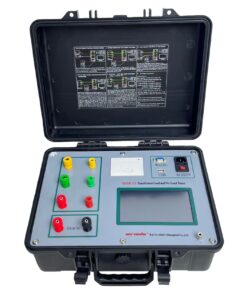
Click the image to know more about Wrindu Transformer No-load and Load Loss Tester.
What Does Factory No Load Loss Testing Really Show?
Factory no load loss testing takes place during transformer manufacturing. The test applies rated voltage in a controlled environment with stable power quality. This condition allows manufacturers to measure core loss with high repeatability and accuracy.
Factory testing works well for design verification and contract compliance. It helps OEMs prove that the transformer meets guaranteed loss values.
However, it does not reflect transport stress, installation impact, or real grid conditions. Once the transformer leaves the factory, the loss behavior may change.
What Does On-Site Transformer Testing Reveal?
On-site transformer testing measures no load loss after installation. The transformer connects to the actual grid and real operating voltage. This method reflects how the transformer behaves in service.
On-site results help utilities detect core damage, installation issues, or abnormal loss increase. They also support long-term efficiency tracking. The challenge lies in voltage fluctuation and background noise. This makes instrument performance and test experience critical during on-site transformer testing.
What Are the Pros and Cons of Factory Testing?
Factory testing offers high accuracy and easy comparison. It uses stable voltage and low interference. Engineers can quickly judge whether the transformer meets design targets.
The limitation is its scope. Factory testing cannot show how the transformer performs after transport or years of operation. It also provides little support for condition assessment once the unit enters service.
What Are the Pros and Cons of On-Site No Load Loss Testing?
On-site testing reflects real operating conditions. It allows users to monitor efficiency trends over time. Utilities use it to manage energy loss and operating cost.
The drawback is environmental uncertainty. Grid instability can affect results if the tester lacks control capability. This is why users prefer dedicated instruments such as the Wrindu No Load Loss Tester, which is designed to handle field conditions and improve measurement reliability.
In Which Scenarios Should You Choose Factory Testing?
Factory no load loss testing fits acceptance and procurement stages. OEMs rely on it during FAT to prove compliance. Buyers use factory data to compare suppliers and confirm guarantees. If your goal focuses on delivery quality and contractual verification, factory testing remains essential.
In Which Scenarios Is On-Site Testing the Better Choice?
On-site transformer testing suits operation and maintenance stages. It helps users evaluate real efficiency and detect abnormal loss. It also supports energy audits and preventive maintenance programs. For utilities and substations, on-site testing provides practical data that factory tests cannot deliver.
Why Do Users Prefer Dedicated Testers for On-Site Work?
Many engineers ask how to improve accuracy during on-site transformer testing. The answer often lies in the instrument. General power meters struggle with unstable voltage and harmonics. A professional solution like the Wrindu No Load Loss Tester offers controlled excitation and precise measurement. This allows users to obtain consistent results even under complex site conditions.
How Should You Combine Factory and On-Site Testing?
Factory testing defines the baseline. On-site testing shows real performance over time. Using both methods together creates a complete loss profile. This approach helps users reduce energy waste and improve transformer efficiency throughout its lifecycle.
Final Insight: Testing Strategy Matters as Much as the Test Itself
No load loss of transformer is not just a factory parameter. It is a long-term cost factor.
By choosing the right testing method and reliable tools from Wrindu, engineers can turn no load loss testing into real operational value.
This is why more users now invest in accurate, flexible on-site transformer testing solutions.
