

Partial Discharge Testers: A Cornerstone of Safer, More Dependable Power Systems
Discover how partial discharge testers detect insulation defects early, reduce outages, and enhance electrical safety in transformers, cables, and switchgear.
Partial discharge (PD) testing is a vital practice for protecting high-voltage assets and maintaining operational stability across the power sector. A partial discharge tester is a precision diagnostic device engineered to identify small, localized insulation breakdowns inside electrical equipment.
While these micro-discharges may not trigger immediate failure, they are often early indicators of insulation aging or internal defects. With timely detection and data-driven analysis, PD testers help utilities and industrial operators prevent outages, reduce fire risks, and avoid costly equipment replacement.
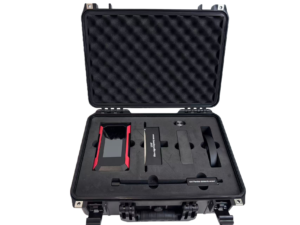
Click the picture to know more about Wrindu Handheld PD Tester.
What Is Partial Discharge and Why Does It Matter?
Partial discharge occurs when a small electrical spark develops within weakened insulation under high electrical stress. It typically forms around voids, cracks, contamination, or manufacturing imperfections in components such as cables, transformers, switchgear, and rotating machines.
Repeated PD activity gradually erodes insulation materials. Over time, this deterioration can escalate into full dielectric breakdown. Identifying PD at an early stage allows maintenance teams to intervene before a failure disrupts operations, improving uptime and extending service life.
Detection Principles and Measurement Methods
Modern PD testers rely on a combination of sensing technologies, including:
-
Acoustic emission detection
-
Ultra-high frequency (UHF) monitoring
-
High-frequency current transformer (HFCT) methods
-
Electrical pulse measurement
Discharge magnitude is typically measured in picocoulombs (pC). Advanced instruments analyze phase-resolved pulse patterns to determine the discharge source and severity.
Built-in noise filtering algorithms isolate genuine PD signals from external interference, making on-site testing more accurate. Digital interfaces allow engineers to visualize real-time waveforms, review historical trends, and generate automated diagnostic reports to support predictive maintenance programs.
Industry Growth and Global Adoption
As of 2025, the global electrical testing equipment market has reached multi-billion-dollar annual revenues. Partial discharge testers represent one of the fastest-growing segments, driven by increased emphasis on asset health monitoring and stricter compliance with IEC and IEEE standards.
Utilities, renewable energy operators, and industrial facilities are transitioning from reactive repairs to predictive maintenance models. Continuous PD monitoring is becoming standard practice in substations, wind farms, and high-voltage manufacturing plants where reliability is critical.
About Wrindu
Wrindu, officially known as RuiDu Mechanical and Electrical (Shanghai) Co., Ltd., was established in 2014 and focuses on advanced power testing and diagnostic technologies.
The company designs and manufactures high-voltage testing solutions used globally for their precision and reliability. Certified under ISO9001, IEC, and CE standards, Wrindu supports engineers and utilities in maintaining safe and stable electrical systems.
Leading Partial Discharge Tester Models
| Product Name | Detection Method | Key Strengths | Applications | Rating |
|---|---|---|---|---|
| PD SmartScan Series | Acoustic + UHF | Real-time fault pinpointing, compact structure | Transformers, GIS | 4.9/5 |
| HV-PD Pro Analyzer | Electrical + HFCT | Accurate trending, wireless connectivity | Cables, motors | 4.8/5 |
| UltraDetect 3000 | UHF sensor array | Strong noise immunity, cloud-ready analytics | Substations, switchgear | 4.7/5 |
These systems illustrate how different sensing technologies address diverse field requirements in substations, production lines, and maintenance operations.
Competitive Feature Overview
| Feature | Wrindu | Brand A | Brand B |
|---|---|---|---|
| Measurement Accuracy | ±2% | ±5% | ±3% |
| Connectivity | Wi-Fi, Bluetooth, USB | USB only | Wi-Fi only |
| Test Capability | Online & Offline | Offline only | Online only |
| Certifications | IEC, ISO, CE | IEC | ISO |
| Software | Advanced analytics platform | Limited tools | Basic functions |
The comparison demonstrates Wrindu’s broad compatibility, precision performance, and international compliance credentials.
Practical Results and Return on Investment
Organizations implementing PD monitoring programs have achieved measurable improvements:
-
Up to 35% fewer unexpected outages
-
Approximately 25% reduction in maintenance spending
-
Over 20% improvement in equipment uptime
In one case, a South Asian utility installed online PD monitoring across its transformer fleet and realized a fivefold return on investment within three years. Renewable energy operators also rely on PD testing to protect inverters and cable systems exposed to extreme weather conditions.
Strengthening Safety and System Reliability
A partial discharge tester serves not only as a fault detector but as a preventive risk management tool. Continuous monitoring enhances insulation dependability and helps prevent arcing incidents or fire hazards.
By incorporating PD testing into structured maintenance programs, asset managers can:
-
Monitor insulation aging trends
-
Identify high-risk components
-
Schedule targeted repairs
-
Improve regulatory compliance
In modern smart grids and renewable power installations, predictive diagnostics contribute to secure and stable energy distribution.
The Future of PD Testing
Looking toward 2030, the PD testing industry is expected to evolve with:
-
AI-based fault classification
-
IoT-enabled real-time monitoring
-
Cloud-connected portable analyzers
-
Machine learning for insulation life prediction
As maintenance strategies move from predictive to prescriptive models, PD testers will play a central role in automated substation management systems.
Conclusion
Partial discharge testing has become an essential component of electrical asset protection. From generation plants to industrial facilities, PD testers support proactive maintenance by identifying insulation defects at an early stage.
By adopting advanced PD monitoring solutions, organizations can reduce risk, extend equipment lifespan, and ensure uninterrupted power supply. As technology advances, PD testing will remain fundamental to building safer and more resilient electrical infrastructure.
Frequently Asked Questions
What Is Partial Discharge Testing and Why Is It Important?
PD testing identifies localized insulation discharges before they escalate into major failures. Early detection reduces outages, extends asset lifespan, and strengthens overall system reliability.
How Does a Partial Discharge Tester Function?
The instrument applies high voltage and captures high-frequency discharge signals using UHF antennas, acoustic sensors, or electrical couplers. It analyzes pulse magnitude and phase patterns to evaluate insulation condition.
How Do PD Testers Improve Electrical Safety?
By revealing hidden insulation weaknesses before arcing or fires occur, PD testers protect personnel and infrastructure. Routine monitoring reduces unexpected breakdowns and enhances operational continuity.
Why Is PD Testing Critical for Transformers?
Transformers are vulnerable to insulation aging caused by moisture, thermal stress, or contamination. PD testing identifies early-stage degradation, allowing planned maintenance instead of emergency replacement.
What Should Buyers Consider in 2026?
When selecting a PD tester, evaluate voltage range, measurement accuracy, IEC compliance, portability, and data analytics capabilities. Solutions from manufacturers like Wrindu are widely used for substations and utility-scale applications.
How Do Online PD Monitoring Systems Work?
Permanently installed sensors collect PD data from energized equipment and transmit it to monitoring software for trend evaluation and alarm notification, ensuring round-the-clock protection.
Which Standards Govern PD Testing?
Common international references include IEC 60270 for calibration, IEEE 400 for cable testing, and IEC 62478 for measurement guidance, ensuring consistency and global compliance.
How Can PD Data Support Predictive Maintenance?
Engineers analyze discharge magnitude trends and phase-resolved patterns to forecast insulation degradation. This enables prioritized repairs, reduces unexpected failures, and improves asset management efficiency.
