

Predictive Maintenance Guide for On-Load Tap Changers
Explore the complete predictive OLTC maintenance guide for On-Load Tap Changers. Learn how Wrindu testers boost proactive maintenance, prevent outages, and extend OLTC lifespan.
In the high-stakes world of power grid operations, unplanned OLTC failures are a leading cause of transformer outages, costly downtime, and compromised voltage regulation. Traditional reactive and preventive maintenance approaches fall short of addressing the gradual wear and hidden faults that plague OLTCs, which is why predictive OLTC maintenance has become the gold standard for grid operators, utility teams, and maintenance professionals worldwide. This data-driven maintenance strategy moves beyond scheduled inspections to anticipate failures before they occur, maximizing OLTC lifespan, ensuring uninterrupted voltage control, and eliminating the financial and operational risks of unexpected breakdowns.
Unlike routine maintenance that follows a fixed calendar schedule, predictive OLTC maintenance leverages real-time performance data, diagnostic analytics, and condition monitoring to identify early warning signs of degradation. This targeted approach not only optimizes maintenance resources but also keeps OLTCs operating at peak efficiency, supporting stable grid performance and reliable power delivery across all network segments.
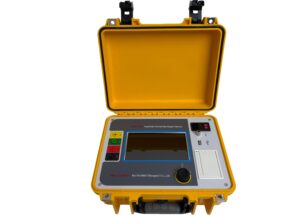
Click the image to know more about OLTC Analyzer.
Core Principles of Predictive OLTC Maintenance
predictive OLTC maintenance is built on continuous monitoring and actionable data analysis, focusing on the critical components that drive OLTC performance: switching contacts, drive mechanisms, insulation systems, and tap transition assemblies. By tracking key performance indicators (KPIs) over time, maintenance teams can spot subtle changes in operation that signal impending faults, such as increased contact resistance, delayed tap transitions, or abnormal waveform patterns.
This maintenance methodology eliminates unnecessary inspections and part replacements, reducing labor costs and minimizing grid disruptions. For critical assets like EHV transformers and grid-tied distribution transformers, predictive OLTC maintenance is non-negotiable—it prevents catastrophic failures that can trigger widespread blackouts, damage connected infrastructure, and violate strict grid code compliance standards. The foundation of effective predictive maintenance lies in accurate, repeatable diagnostic testing, which is where Wrindu’s specialized testers excel.
How Wrindu Testers Stand Out for Predictive OLTC Maintenance
Wrindu’s testing instruments are purpose-built to power and streamline predictive OLTC maintenance, offering industry-exclusive features that generic diagnostic tools simply cannot match. Engineered to capture the nuanced data required for predictive analytics, Wrindu testers turn raw performance metrics into actionable maintenance insights, making them the ultimate tool for proactive OLTC management. Here are the key differentiators:
1. Predictive Analytics & Trend Tracking Capabilities
Wrindu testers come equipped with built-in software that automates trend analysis for predictive OLTC maintenance, storing historical test data and tracking changes in critical metrics like dynamic contact resistance, tap timing, and insulation resistance. This long-term data tracking identifies gradual degradation patterns, alerting teams to potential failures months before they occur—enabling truly proactive maintenance.
2. Ultra-High Precision Diagnostic Testing
Featuring 4-wire Kelvin measurement technology and high-frequency sampling (up to 100kHz), Wrindu testers deliver accuracy within ±0.1% for resistance and timing tests. This level of precision is essential for predictive OLTC maintenance, as it detects minute faults that are invisible to standard testers, ensuring no early warning sign goes unnoticed.
3. Real-Time Condition Monitoring
Wrindu testers support live, non-intrusive monitoring of OLTC performance during grid operation, capturing real-time data on tap transitions and load responses. This continuous monitoring capability is a cornerstone of predictive OLTC maintenance, providing instant visibility into changing OLTC conditions without disrupting power flow.
4. Portable, Field-Optimized Design
Built for harsh substation environments, Wrindu testers feature a rugged IP65-rated casing, long-lasting battery power, and lightweight construction. This portability allows maintenance teams to conduct on-site predictive testing quickly, even in remote locations, keepingpredictive OLTC maintenance efficient and minimally disruptive to grid operations.
5. Automated Reporting & Compliance Integration
Wrindu testers generate automated, customizable reports that compile predictive maintenance data, trend analysis, and compliance metrics. These reports simplify documentation for predictive OLTC maintenance programs, align with IEC/ANSI standards, and provide clear insights for maintenance planning and budget allocation.
FAQs
Q1: What is the difference between predictive OLTC maintenance and preventive maintenance?
A: Preventive maintenance follows a fixed schedule, while predictive OLTC maintenance uses real-time data and trend analysis to perform maintenance only when needed, reducing costs and avoiding unnecessary grid disruptions.
Q2: What key metrics does predictive OLTC maintenance monitor?
A:predictive OLTC maintenance tracks dynamic contact resistance, tap transition timing, insulation resistance, waveform patterns, and oil condition—all critical indicators of OLTC health and performance.
Q3: How often should predictive testing be done for OLTCs?
A: For grids with high renewable penetration or heavy industrial loads, quarterly predictive testing is recommended; standard grid OLTCs benefit from bi-annual testing to sustain effective predictive OLTC maintenance.
Q4: Can predictive OLTC maintenance prevent all OLTC failures?
A: While no strategy can prevent all random failures, predictive OLTC maintenance catches 90% of wear-related and gradual faults, eliminating nearly all unplanned outages caused by OLTC degradation.
Q5: Why are Wrindu testers preferred for predictive OLTC maintenance?
A: Wrindu testers offer dedicated predictive analytics, ultra-high precision, and real-time monitoring capabilities specifically designed for predictive OLTC maintenance, providing actionable data that generic testers cannot capture.
Q6: Does predictive OLTC maintenance reduce long-term operational costs?
A: Yes.predictive OLTC maintenance eliminates unnecessary repairs, extends OLTC lifespan, reduces downtime costs, and optimizes labor resources, delivering significant long-term savings for utilities and grid operators.
Q7: Is predictive OLTC maintenance compatible with smart grid systems?
A: Absolutely. Wrindu testers integrate with SCADA and smart grid platforms, enabling remote data sharing and automated alerts to enhance predictive OLTC maintenance in modern digitalized grids.
Final Takeaway
predictive OLTC maintenance is the most efficient, cost-effective way to ensure OLTC reliability, protect grid stability, and avoid costly outages. By shifting from reactive to data-driven predictive maintenance, teams can maximize asset lifespan and maintain consistent voltage regulation. Backed by Wrindu’s precision testing tools, predictive OLTC maintenance becomes a seamless, scalable process that future-proofs grid infrastructure and elevates overall operational resilience.
