

Primary vs. Secondary Injection Testing: What’s the Difference?
This article compares testing depth, accuracy, cost, and safety. It explains when to choose primary injection over secondary injection and how each impacts commissioning quality.
Protective relay injection testing is one of the most important verification steps in power system commissioning and maintenance. However, many engineers still confuse primary injection and secondary injection testing. While both methods evaluate relay performance, their scope, risk level, and application scenarios are very different.
Understanding the difference helps utilities, OEM manufacturers, and maintenance teams choose the right approach.
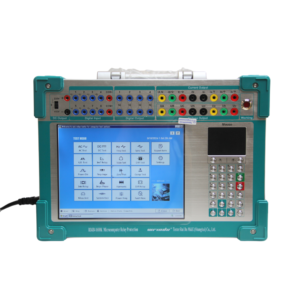
Click the picture to know more about Wrindu CT and PT Analyzer.
What Is Secondary Injection Testing?
Secondary injection testing applies controlled current or voltage directly to the relay’s secondary terminals. The primary system remains isolated.
What It Tests
-
Relay pickup value accuracy
-
Trip timing
-
Protection logic
-
Alarm output
-
Communication functions (digital relays)
Why It Is Widely Used
-
Safe testing environment
-
No need to energize primary conductors
-
Highly precise calibration
-
Ideal for digital and microprocessor-based relays
Because of its safety and flexibility, secondary injection is the most common test method during factory production and routine maintenance.
What Is Primary Injection Testing?
Primary injection testing introduces high current into the primary circuit. This means the test includes the entire protection path.
What It Covers
-
Current transformers (CT ratio and polarity)
-
Primary wiring
-
Relay performance
-
Trip circuit integrity
-
Circuit breaker operation
Unlike secondary injection, primary injection verifies the complete system under real electrical conditions.
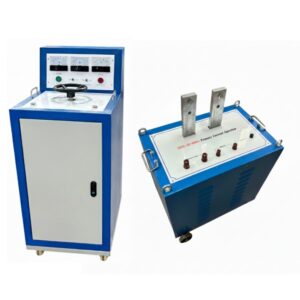
Click the picture to know more about High Current Injection Test Set Primary Current Injector 2000a.
Key Differences Comparison
| Feature | Secondary Injection | Primary Injection |
|---|---|---|
| Test Scope | Relay only | Entire protection system |
| Safety Level | High | Requires strict safety control |
| Current Level | Low | High |
| Best For | Maintenance & factory testing | Commissioning & system validation |
| CT Testing | No | Yes |
When Should Each Be Used?
-
Use secondary injection for calibration and periodic inspection.
-
Use primary injection during commissioning or after wiring modifications.
-
For critical substations, both methods should be performed.
