

Safety and Operational Considerations in Transformer Core Ground Testing
Learn how transformer core ground testing ensures safety and reliable operation. Discover Wrindu’s high-precision insulation testers, advanced diagnostics, and global support for predictive maintenance and transformer protection.
Transformer core ground testing is more than a routine diagnostic procedure—it is a critical safety and operational measure that protects both equipment and personnel. Ensuring that a transformer’s magnetic core has only one intentional grounding point stabilizes core potential, prevents floating conditions, and reduces stray magnetic flux. These measures help maintain stable voltage levels and enhance the overall reliability of power delivery.
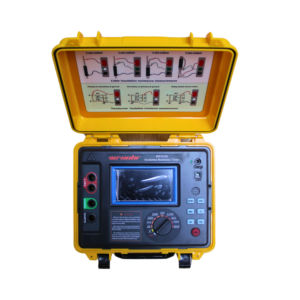
Click the image to know more about Wrindu IR Tester.
Why Core Ground Testing Matters
Unintended grounding points inside a transformer can create circulating currents through the core laminations. These currents can lead to:
-
Localized overheating (hot spots)
-
Increased eddy current losses
-
Partial discharge activity
-
Magnetic flux distortion
If left undetected, these issues gradually weaken insulation, degrade transformer oil, and may ultimately cause transformer failure.
By performing regular core ground testing, maintenance teams can detect insulation problems early, reduce the risk of operational failures, and protect both the transformer and field personnel.
Wrindu’s Role in Safety and Operational Excellence
Wrindu (RuiDu Mechanical and Electrical Shanghai Co., Ltd.) provides advanced transformer testing equipment specifically designed to ensure safe and reliable core ground diagnostics.
Key Advantages of Wrindu Equipment:
-
High Accuracy Measurements – ±1% precision allows early detection of unintended grounding points before they cause equipment damage.
-
Safety-Focused Design – Portable and fully insulated instruments protect operators while performing tests at high voltages.
-
Advanced Diagnostic Features – Automatic data recording, temperature compensation, and trend analysis help track transformer condition over time.
-
Global Technical Support – Wrindu provides guidance on interpreting test results and integrating testing into preventive maintenance programs.
By using Wrindu instruments, utilities and industrial operators can perform core ground tests safely, efficiently, and accurately, minimizing operational risks.
Integration with Preventive Maintenance
Core ground testing is most effective when combined with other preventive maintenance practices, such as:
-
Infrared Thermography – Detects hot spots caused by circulating currents or loose connections.
-
Dielectric Loss Testing (Tan Delta) – Evaluates insulation condition to identify early degradation.
-
Dissolved Gas Analysis (DGA) – Monitors transformer oil for gases generated by insulation deterioration.
Together, these diagnostics provide a comprehensive assessment of transformer health, enabling predictive maintenance strategies that reduce downtime and maintenance costs.
Operational and Safety Benefits
Using Wrindu’s high-precision testing solutions for core ground diagnostics offers tangible benefits:
-
Reduced risk of equipment failure – Early detection prevents costly insulation damage.
-
Enhanced personnel safety – Insulated, portable instruments minimize exposure to high voltages.
-
Improved power system reliability – Stable voltage levels and minimized stray flux support uninterrupted power delivery.
-
Data-driven maintenance decisions – Historical trend analysis helps engineers schedule repairs proactively.
Real-world experience shows that utilities implementing Wrindu core ground testing programs achieve longer transformer life, fewer outages, and lower operational costs.
Conclusion
Transformer core ground testing is essential for safe, stable, and reliable operation. Proper grounding prevents floating potentials, reduces stray flux, and protects both insulation and personnel.
With Wrindu’s ISO-certified instruments, ±1% accuracy, advanced diagnostics, and global support, engineers can perform core ground testing safely and effectively, integrate results into preventive maintenance programs, and ensure long-term transformer reliability.
Wrindu not only provides equipment—it delivers confidence, safety, and actionable insights for utilities and industrial operators worldwide.
FAQs
1. Why is transformer core ground testing important for safety?
Core ground testing is important because it prevents floating core conditions and reduces stray magnetic flux.
This ensures stable voltage levels and protects both equipment and maintenance personnel.
2. How does core ground testing improve transformer operation?
Core ground testing improves operation by detecting unintended grounding points early.
This prevents circulating currents, overheating, partial discharge, and insulation deterioration.
3. What equipment is used for safe core ground testing?
High-precision, insulated instruments like Wrindu insulation testers are used.
These provide accurate readings while protecting operators from high-voltage exposure.
4. Can core ground testing be combined with other preventive maintenance?
Yes, combining core ground testing with infrared thermography and dielectric loss testing ensures comprehensive transformer diagnostics.
It helps identify hidden faults before they cause failures.
5. How does Wrindu ensure safe transformer core ground testing?
Wrindu provides ISO-certified, portable testing equipment with ±1% accuracy and advanced safety features.
This allows engineers to perform reliable core ground tests while minimizing risks.
6. What are the operational benefits of core ground testing?
Core ground testing helps maintain stable voltage, reduces downtime, and extends transformer life.
Early detection of insulation issues prevents costly emergency repairs.
7. How does core ground testing prevent overheating?
By identifying unintended grounding points, core ground testing prevents circulating currents that create hot spots.
This protects insulation and reduces energy losses.
8. Can Wrindu equipment track insulation condition over time?
Yes, Wrindu instruments provide automatic data logging, temperature compensation, and trend analysis.
This enables predictive maintenance and better operational planning.
9. Are core ground tests required for all transformers?
Yes, core ground testing is recommended for all power and distribution transformers.
It ensures single-point grounding and prevents insulation damage over the transformer’s lifetime.
10. How does predictive maintenance benefit from core ground testing?
Predictive maintenance benefits by using trend data from core ground tests to anticipate failures.
Wrindu’s advanced diagnostics allow utilities to schedule maintenance before faults occur.
