

Transformer Core Ground Testing Procedure
Learn the complete transformer core ground testing procedure, including insulation resistance measurement, DC test voltages, and advanced diagnostic features. Discover how Wrindu provides reliable testing equipment and professional support for accurate transformer maintenance.
Transformer core ground testing is an essential diagnostic method used to ensure the insulation integrity and safe operation of power transformers. Proper testing helps detect unintended grounding points that can cause circulating currents, insulation deterioration, partial discharge, and reduced transformer performance. By following a standardized procedure and using reliable equipment, engineers can maintain transformer safety and extend service life.
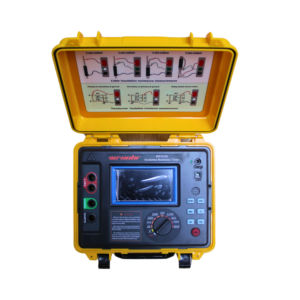
Click the picture to know more about Wrindu IR Tester.
Purpose of Core Ground Testing
The primary purpose of a transformer core ground test is to verify that the transformer core has only one intentional grounding point and that the insulation between the core and the tank is sufficient to prevent circulating currents.
Benefits include:
-
Preventing localized overheating caused by circulating currents
-
Reducing eddy current losses and energy inefficiency
-
Minimizing partial discharge activity that accelerates insulation aging
-
Ensuring accurate assessment of overall transformer condition
According to industry standards, insulation resistance values above 2 MΩ typically indicate a properly grounded core. Lower readings may suggest insulation deterioration or unintended grounding paths.
Test Procedure
The core ground test is performed using a digital insulation resistance tester (megohmmeter), following these key steps:
-
Disconnect the intentional core grounding connection
-
Temporarily isolate the core from the grounded tank.
-
-
Connect the insulation tester
-
Attach one lead to the transformer core and the other to the grounded tank.
-
-
Apply DC test voltage
-
Depending on the transformer voltage class, apply a DC voltage typically between 500 V and 1000 V.
-
-
Measure insulation resistance
-
A high reading (usually >2 MΩ) confirms that the core is properly insulated.
-
Low resistance readings indicate possible unintended grounding or insulation degradation.
-
-
Record and analyze results
-
Modern instruments automatically log data, compensate for temperature variations, and allow historical trend analysis to detect gradual changes in insulation performance over time.
-
Advanced Features of Modern Test Equipment
Modern transformer core ground testing instruments include advanced capabilities that improve accuracy and reliability:
-
Automatic data recording – ensures no measurements are missed and allows for detailed reporting.
-
Temperature compensation – adjusts readings to standard conditions for accurate evaluation.
-
Historical trend analysis – helps engineers identify gradual insulation degradation over time.
These features enable predictive maintenance and more informed decision-making.
Integration with Other Diagnostic Methods
For a comprehensive assessment of transformer health, core ground testing is often combined with other diagnostic techniques:
-
Dissolved Gas Analysis (DGA) – detects gases generated by internal insulation degradation.
-
Tan Delta Testing – measures insulation power factor and identifies early-stage deterioration.
Together, these methods provide a complete picture of transformer condition, allowing maintenance teams to plan repairs proactively and avoid unexpected failures.
Wrindu Solutions for Core Ground Testing
Reliable testing requires precision instruments and professional support.
Wrindu (RuiDu Mechanical and Electrical Shanghai Co., Ltd.) specializes in high-precision transformer testing equipment, including DC withstand voltage testers and insulation resistance testers.
Wrindu products provide:
-
Accurate and repeatable measurements suitable for field or factory use
-
Advanced data logging and trend analysis
-
Portable solutions for on-site testing
-
Technical support and guidance for interpreting results and preventive maintenance planning
By using Wrindu equipment, utilities and industrial operators can detect insulation issues early, maintain transformer reliability, and ensure safe operation.
Conclusion
Transformer core ground testing is a critical procedure for identifying unintended grounding points and maintaining insulation integrity. By following a structured test procedure and leveraging modern instruments with advanced features, engineers can:
-
Detect early insulation problems
-
Prevent circulating currents and hot spots
-
Support predictive maintenance strategies
-
Extend transformer service life
With reliable equipment and expert technical support from Wrindu, utilities can confidently ensure transformer safety, performance, and long-term operational reliability.
FAQs
1. What is transformer core ground testing?
Transformer core ground testing is a method to measure insulation resistance between the core and grounded tank.
It ensures only one intentional grounding point exists and helps detect unintended grounds that can damage insulation.
2. Why is core ground testing important?
Core ground testing is important because it prevents insulation failures and transformer damage.
Unintended grounding points can create circulating currents, overheating, partial discharge, and flux distortion.
3. How is transformer core ground testing performed?
It is performed using a digital insulation resistance tester (megohmmeter).
Engineers disconnect the intentional core ground, apply a DC test voltage, and measure resistance between the core and transformer tank.
4. What is a normal insulation resistance for a core ground test?
A normal insulation resistance is typically above 2 MΩ.
Lower readings may indicate unintended grounding or insulation deterioration that requires corrective action.
5. When should transformer core ground tests be conducted?
Core ground tests should be conducted during factory acceptance, commissioning, and routine maintenance.
Regular testing ensures early detection of insulation problems before serious failures occur.
6. Can core ground issues cause transformer failure?
Yes, core ground issues can cause transformer failure if left unchecked.
Circulating currents produce heat and stress insulation, leading to partial discharge or catastrophic faults.
7. What equipment is needed for core ground testing?
A digital megohmmeter or insulation resistance tester is required.
Modern instruments may include temperature compensation, automatic data recording, and trend analysis for more accurate diagnostics.
8. Can core ground testing be done on-site?
Yes, portable insulation testers allow core ground testing in the field.
This enables maintenance teams to perform accurate measurements without removing the transformer from service.
9. How does core ground testing prevent overheating?
By detecting unintended grounding points, core ground testing prevents circulating currents that generate hot spots.
Maintaining proper insulation reduces eddy current losses and protects transformer components.
10. How can Wrindu help with core ground testing?
Wrindu provides high-precision testing instruments and technical support for transformer core diagnostics.
Their portable and factory-grade insulation testers allow early detection of grounding issues, ensuring transformer safety and long-term reliability.
