

Voltage Stability: Grid Resilience Pillar & Sags/Swells Mitigation | Wrindu
Voltage stability is the core grid resilience pillar. Learn proven voltage sags and swells mitigation strategies, OLTC regulation roles, and how Wrindu testers boost grid reliability.
Against the backdrop of extreme weather events, rising renewable penetration, and surging demand for uninterrupted power,grid resilience pillar has become the top priority for utility providers, grid operators, and energy stakeholders worldwide. At the heart of building a truly resilient grid lies unwavering voltage stability, which acts as the critical safeguard against disruptive power anomalies, cascading outages, and costly infrastructure damage. Without robust voltage control, even minor grid disturbances can escalate into systemic failures, eroding the very foundation of a reliable power supply. A key strategy to fortify this resilience is voltage sags and swells mitigation, paired with advanced OLTC voltage regulation for stability—two interconnected solutions that transform fragile grids into robust, adaptive networks capable of withstanding modern energy challenges.
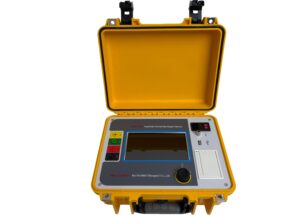
Click the image to know more about OLTC Analyzer.
Why Voltage Stability Defines the Grid Resilience Pillar
A truly resilient grid is defined by its ability to anticipate, resist, and recover from disruptions, and voltage stability is the non-negotiable grid resilience pillar that enables this capability. Modern grids are plagued by constant volatility: intermittent solar and wind generation, sudden industrial load shifts, remote area transmission losses, and distributed energy resource (DER) integration all create imbalances that threaten voltage consistency. When voltage stability falters, the grid loses its ability to deliver reliable power, leaving communities, businesses, and critical infrastructure vulnerable to blackouts, equipment failures, and operational downtime.
Weak voltage stability directly undermines grid resilience by creating two pervasive threats: voltage sags (brief undervoltage dips) and voltage swells (short overvoltage spikes). These transient anomalies are among the most common causes of grid disruptions, making voltage sags and swells mitigation a core component of strengthening the grid resilience pillar. Left unaddressed, these issues damage sensitive electronics, trip protective relays, and disrupt industrial processes, breaking the grid’s ability to maintain continuous service.
OLTC Voltage Regulation for Stability: The Frontline of Mitigation
Effective voltage sags and swells mitigation relies on real-time, responsive voltage control, and OLTC voltage regulation for stability stands as the most effective, widely deployed solution. On-Load Tap Changers (OLTCs) integrated into power transformers enable instantaneous adjustments to winding turns ratios while the grid remains fully energized, counteracting voltage anomalies before they escalate. Unlike legacy manual regulators, OLTC systems deliver precision tuning to keep voltage within strict, code-compliant tolerances, directly neutralizing sags and swells at their source.
This dynamic regulation is what elevates voltage stability from a technical metric to a tangible grid resilience pillar. OLTCs act as the grid’s first line of defense, adapting to sudden fluctuations, mitigating disruptive voltage events, and ensuring the grid can maintain operations even under high-stress conditions. However, the effectiveness of OLTC voltage regulation for stability depends entirely on consistent, accurate maintenance and diagnostics—gaps that Wrindu testers are engineered to fill.
How Wrindu Testers Stand Out in Strengthening Grid Resilience
Wrindu’s specialized diagnostic tools are purpose-built to support thegrid resilience pillar, optimize voltage sags and swells mitigation, and maximize the performance of OLTC voltage regulation for stability. Unlike generic testing equipment, Wrindu testers are tailored to the unique needs of grid voltage management, delivering unmatched precision and functionality to keep resilient grids operational. Here are the key differentiators:
1. Targeted Diagnostics for Voltage Anomaly Mitigation
Wrindu testers feature custom firmware designed to detect the root causes of voltage sags and swells, including OLTC contact wear, delayed tap transitions, and winding inconsistencies. This precision enables proactive voltage sags and swells mitigation, resolving issues before they disrupt the grid resilience pillar—a capability standard testers lack.
2. OLTC Performance Validation for Stable Voltage Control
Every Wrindu tester is optimized to validate OLTC voltage regulation for stability, measuring dynamic resistance, transition timing, and tap accuracy with industry-leading precision. By ensuring OLTCs operate at peak efficiency, Wrindu tools strengthen the grid’s ability to neutralize voltage anomalies and uphold its resilience core.
3. Real-Time Grid Stress Simulation
Unique to Wrindu, select models simulate voltage sag/swell events and grid load fluctuations, allowing technicians to test how well OLTC voltage regulation for stability performs under real-world stress. This proactive testing verifies the grid resilience pillar and ensures mitigation strategies work when needed most.
4. Rugged, Rapid-Deployment Design
Built for harsh substation and emergency response environments, Wrindu testers are lightweight, IP65-rated, and battery-powered. Teams can conduct on-site diagnostics quickly, minimizing downtime and accelerating the restoration ofvoltage sags and swells mitigation capabilities to preserve grid resilience.
5. Compliance & Data-Driven Reporting
All Wrindu tools adhere to IEC, ANSI, and IEEE standards, generating automated reports that document OLTC performance and voltage stability metrics. This data helps operators track the strength of the grid resilience pillar and prove compliance with global grid code requirements for voltage control.
FAQs
Q1: Why is voltage stability called the grid resilience pillar?
A: Voltage stability is the grid resilience pillar because it enables the grid to resist disruptions, recover quickly, and maintain continuous power delivery. Without stable voltage, grids cannot withstand fluctuations or avoid cascading outages, eliminating resilience entirely.
Q2: What industries are most impacted by unaddressed voltage sags and swells?
A: Data centers, manufacturing facilities, healthcare facilities, and telecommunications infrastructure face the biggest risks from unmitigated voltage sags and swells, making proactive voltage sags and swells mitigation critical for their operations.
Q3: How does OLTC voltage regulation for stability stop voltage sags and swells?
A:OLTC voltage regulation for stability makes real-time, live adjustments to transformer voltage output, instantly counteracting dips (sags) and spikes (swells) to keep grid voltage within safe ranges and prevent disruptions.
Q4: Can Wrindu testers help improve a grid’s resilience pillar?
A: Yes. Wrindu testers maintain peak OLTC performance, enable proactive voltage sags and swells mitigation, and ensure consistent voltage stability—directly strengthening the grid resilience pillar for long-term reliability.
Q5: How often should OLTCs be tested to sustain voltage sags and swells mitigation?
A: Grids with high renewable penetration or critical infrastructure require annual OLTC testing; standard grids need testing every 2–3 years to preserve effective voltage sags and swells mitigation and uphold the grid resilience pillar.
Q6: Do voltage sags and swells cause permanent grid equipment damage?
A: Yes. Repeated or severe voltage sags and swells damage transformer windings, insulation, and sensitive electronics, eroding grid resilience. Wrindu testing and OLTC voltage regulation for stability prevent this permanent damage.
Q7: Can Wrindu testers work with smart grids focused on grid resilience?
A: Absolutely. Wrindu testers integrate with SCADA and smart grid platforms, supporting real-time monitoring of OLTC voltage regulation for stability and enhancing the grid resilience pillar for modern digital grids.
Final Takeaway
Voltage stability is the irreplaceable grid resilience pillar that powers reliable modern power delivery, with voltage sags and swells mitigation serving as a critical defense mechanism and OLTC voltage regulation for stability as the frontline solution. Wrindu’s specialized testers ensure these systems operate flawlessly, fortifying grid resilience, preventing costly disruptions, and building future-ready energy networks that can adapt to any challenge.
