

What are Common Insulation Defects Detected by DC Testing?
Prevent transformer failures with DC leakage testing. Detect insulation defects, moisture, and aging oil early for safe, reliable preventive maintenance.
Insulation in transformers can degrade in several ways over time. Common types of defects include:
-
Cracks in solid insulation: Porcelain or epoxy cracks reduce dielectric strength and create local weak points.
-
Moisture penetration: Water in insulation lowers resistance and increases DC leakage, making transformers more prone to failure.
-
Loose interlayer insulation: Separation between insulation layers causes uneven current distribution and local heating.
-
Oil deterioration or carbonization: Aging insulating oil can lose dielectric properties, increasing leakage current and reducing transformer efficiency.
-
Surface contamination: Dust, dirt, or conductive residues on insulation surfaces can create leakage paths and partial discharges.
Understanding these defect types is crucial for maintenance engineers who rely on transformer testing to prevent failures.
How Do Insulation Defects Affect Transformer Performance?
Insulation defects directly impact transformer safety and operation:
-
Increased DC leakage: Defective insulation allows current to bypass, which is often the first sign detected in DC testing.
-
Partial discharge activity: Localized breakdown can degrade insulation further and generate heat.
-
Overheating and aging: Weak insulation cannot handle full operational stress, accelerating aging.
-
Unexpected shutdowns or failures: Severe defects can trigger short circuits or catastrophic transformer failure.
For operators, monitoring DC leakage helps identify defects before they compromise transformer performance.
How Have Case Studies Shown the Effectiveness of DC Testing?
DC testing provides real insight into insulation health. Examples include:
| Case | Problem / Insulation Defect | How It Was Detected | Solution Implemented | Result Analysis | Preventive Measures |
|---|---|---|---|---|---|
| 1 | Moisture in paper insulation | Rising DC leakage during routine DC testing | Drying the insulation using controlled heating and moisture removal | Leakage current returned to normal, potential breakdown avoided | Schedule regular DC leakage tests and monitor insulation moisture |
| 2 | Loose interlayer insulation | Uneven DC leakage across three phases | Re-tightened interlayer insulation and repaired affected sections | Balanced leakage currents across phases, prevented localized overheating | Perform multi-phase DC leakage measurements and inspect interlayer bonding |
| 3 | Aging insulating oil | High DC leakage detected in transformer windings | Replaced old insulating oil with new, high-dielectric-strength oil | Insulation resistance restored, transformer performance stabilized | Implement scheduled oil testing and replacement based on leakage trends |
| 4 | Partial discharge in bushings | Abnormal DC leakage trends indicated localized defects | Bushing inspection and targeted maintenance, replaced or repaired defective parts | Partial discharge eliminated, transformer failure prevented | Combine DC leakage monitoring with periodic bushing PD testing and visual inspection |
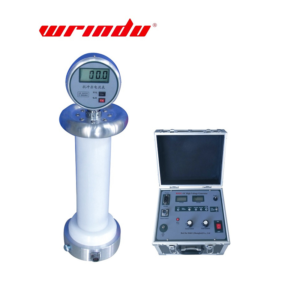
Click the picture to know more about Wrindu DC Leakage Current Tester.
How Can Operators Use DC Testing for Preventive Maintenance?
-
Schedule regular DC leakage tests for high-voltage transformers.
-
Compare results over time to detect trends or abnormal increases in leakage.
-
Combine DC testing with visual inspection and oil analysis to locate defects accurately.
-
Document results and corrective actions to support long-term transformer reliability.
Regular DC testing allows early detection of insulation defects, reduces downtime, and improves transformer safety.
