

What Are Common Types of Partial Discharge?
Learn the common types of partial discharge—internal, surface, corona, cavity, and treeing—in transformers, cables, and switchgear. Discover causes, risks, and advanced detection methods to improve reliability and prevent insulation failures.
Partial discharge (PD) is a key indicator of insulation degradation in electrical equipment. It refers to small electrical sparks that occur within insulation voids, cracks, or surfaces when high voltage stresses exceed local dielectric strength. While PD may not cause immediate failure, repeated discharges weaken insulation and can eventually lead to catastrophic breakdowns in transformers, switchgear, cables, and other high-voltage equipment.
Understanding the types of partial discharge is essential for predictive maintenance, improving equipment reliability, and preventing costly outages.
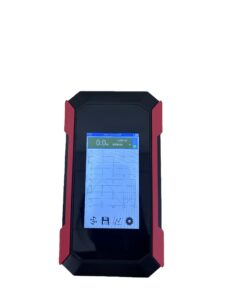
Click the image to know more about Wrindu Handheld PD Tester.
1. Internal Partial Discharge
Internal PD occurs inside voids or imperfections within solid insulation, such as in transformer windings or motor coils.
-
Cause: Microscopic air pockets or gaps within solid insulation.
-
Effect: Repeated discharges generate heat and chemical byproducts, accelerating insulation aging.
-
Detection: Typically detected with electrical PD sensors or UHF methods in transformers.
Internal PD is particularly dangerous because it is hidden and can progressively weaken insulation until a full breakdown occurs.
2. Surface Partial Discharge
Surface PD happens along the surface of insulation materials.
-
Cause: Moisture, dirt, or contamination on the insulation surface, often near bushings, cable terminations, or switchgear.
-
Effect: Can erode insulation surface, reduce dielectric strength, and lead to arcing.
-
Detection: Acoustic sensors or surface potential monitoring can locate and quantify PD activity.
Surface PD is common in outdoor equipment exposed to pollution or high humidity.
3. Corona Discharge
Corona discharge appears when air around sharp points, edges, or conductors becomes ionized.
-
Cause: High-voltage equipment like overhead lines or transformers with uneven electric fields.
-
Effect: Produces ozone, audible noise, and partial insulation degradation.
-
Detection: Visual inspection, UHF sensors, or corona cameras.
Although sometimes visible, corona can silently degrade insulation over time, particularly in power transmission systems.
4. Cavity or Gas-Filled Discharge
Cavity PD occurs in gas-filled gaps within insulation materials.
-
Cause: Gas pockets trapped inside solid or liquid insulation.
-
Effect: Localized chemical reactions weaken insulation, potentially forming treeing patterns.
-
Detection: Electrical pulse measurement and phase-resolved PD analysis.
This type is typical in oil-paper insulation systems, where tiny bubbles or voids can develop during operation.
5. Treeing Discharge
Treeing PD is a branching, dendritic discharge pattern that grows through insulation under sustained electrical stress.
-
Cause: Repeated partial discharges or localized stress points in solid insulation.
-
Effect: Can fully penetrate insulation, causing complete failure.
-
Detection: High-resolution PD analyzers, sometimes combined with visual inspections.
Treeing is especially common in high-voltage cables and aged polymer insulation.
Why Understanding PD Types Matters
Recognizing the different types of partial discharge helps engineers and maintenance teams:
-
Identify early-stage insulation damage.
-
Implement corrective measures before catastrophic failure.
-
Extend equipment lifespan and improve operational reliability.
-
Reduce unplanned downtime and maintenance costs.
PD monitoring is a cornerstone of predictive maintenance programs, particularly for transformers, high-voltage switchgear, and underground cable systems.
Testing and Detection Methods
Common PD testing techniques include:
-
Electrical Detection: Measures PD pulses and phase-resolved patterns.
-
Acoustic Emission: Uses ultrasonic sensors to detect discharges inside transformers or switchgear.
-
Ultra-High Frequency (UHF) Sensing: Captures electromagnetic waves from fast PD events, ideal for GIS.
-
Optical & Chemical Methods: Detect PD by observing light or chemical byproducts.
Modern PD analyzers integrate signal filtering, noise suppression, and smart data logging to isolate true discharges from background interference, providing actionable insights for maintenance teams.
Real-World Benefits
Utilities and industrial operators who adopt PD monitoring report:
-
40–60% fewer insulation failures.
-
Reduced maintenance costs and extended equipment life.
-
Early fault detection in cables, transformers, and switchgear.
Manufacturers and suppliers, such as Wrindu, provide portable and fixed PD detection equipment that combines accuracy with field convenience, making PD testing more effective and reliable.
Wrindu Expert Review
Partial discharge can silently degrade electrical insulation, posing risks to reliability, safety, and efficiency. By understanding the common types of PD—internal, surface, corona, cavity, and treeing—engineers can implement effective monitoring and preventive strategies.
Routine PD testing ensures early detection, minimizes downtime, and extends the lifespan of critical electrical assets. In today’s high-voltage systems, integrating PD diagnostics into maintenance programs is no longer optional—it’s essential.
