

What Are Common Types of Underground Cable Faults?
Understand common underground cable faults, their characteristics, and why a complete cable fault testing system is essential for accurate fault location in the field.
Underground power cables often fail due to insulation aging, moisture ingress, and mechanical stress. Because these cables remain buried, engineers cannot rely on visual inspection. They must understand common underground cable faults before selecting proper test methods. This knowledge directly affects fault location accuracy and repair efficiency. So it’s essential to use Wrindu Cable Fault Testing System.
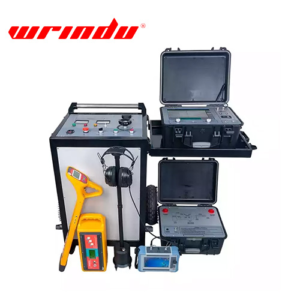
Click the picture to know more about Wrindu Cable Fault Testing System.
What Are Underground Cable Faults?
Underground cable faults refer to electrical or mechanical failures inside the cable insulation or conductor. These faults interrupt normal power transmission and often develop over time. Early-stage faults remain hidden and only appear during testing or breakdown. This makes underground cable fault detection more complex than overhead line inspection.
What Are the Most Common Types of Underground Cable Faults?
Underground cable faults show different electrical behaviors, which affects how engineers test and locate them. Short circuit faults occur when conductors touch each other or ground. They generate strong signals and respond well to basic pulse testing. Open circuit and broken conductor faults stop current flow completely and allow distance measurement through reflection methods.
High-resistance leakage faults develop due to moisture, insulation aging, or contamination. These faults produce weak and unstable signals, which makes them difficult to detect with low-voltage methods. High-resistance flashover faults only appear under high voltage. At low voltage, the cable may seem normal, which often leads to misjudgment during testing.
Why Are High-Resistance Underground Cable Faults Difficult to Detect?
High-resistance underground cable faults do not behave consistently. Their electrical characteristics change with voltage level, temperature, and humidity. Low-energy signals fail to trigger clear responses at the fault point. As a result, distance measurement alone cannot provide reliable results. These challenges explain why engineers need controlled high-voltage excitation and advanced pinpointing methods.
How Do Different Underground Cable Faults Affect Testing Methods?
Each type of underground cable fault requires a different testing approach. Short circuit faults respond well to low-voltage pulse testing. High-resistance faults need high-voltage impulse signals to activate the fault point. Accurate pinpointing relies on acoustic or acoustic-magnetic methods. Route and depth detection help prevent positioning errors during excavation.
A complete cable fault testing system integrates these methods into one workflow. Wrindu follows this system-based concept to help engineers adapt to different underground cable fault conditions in the field.
Why Is a Complete Cable Fault Testing System Necessary?
Underground cable faults often change over time and may combine multiple fault characteristics. A single test device cannot cover all scenarios. Pre-location without proper excitation leads to inaccurate distance results. Pinpointing without route confirmation increases the risk of deviation. A complete underground cable fault testing system connects all testing stages and improves overall accuracy while reducing repeat work.
Common Questions About Underground Cable Faults
Q: Are underground cable faults easy to locate?
A: No. Underground cable faults remain hidden and complex. Soil conditions and insulation aging increase uncertainty and testing difficulty.
Q: Which underground cable faults cause the most testing problems?
A: High-resistance leakage and flashover faults. These faults require high-voltage activation and precise pinpointing methods.
Q: Can one device detect all underground cable faults?
A: No. Different fault types require different test methods. A system approach works better than a single instrument.
Q: Why do underground cable fault location results vary on site?
A: The testing method does not always match the fault type. A complete system improves consistency and reliability.
