

What Are Differences Between Cable Fault Pre-Location and Pinpointing?
Learn the difference between cable fault pre-location and pinpointing, and how RDCD-502 and RDCD-503D improve accuracy, reduce digging errors, and speed underground cable repair.
Fast cable repair depends on clear cable fault pre locator results and accurate pinpointing in the field. Many engineers mix these two stages, but each stage solves a different problem. Pre-location finds the fault distance, while pinpointing finds the exact ground position. Understanding this difference helps reduce outage time, avoid repeated digging, and improve maintenance efficiency. Modern systems such as the RDCD-502 and RDCD-503D support the full workflow from rough distance measurement to precise fault confirmation.
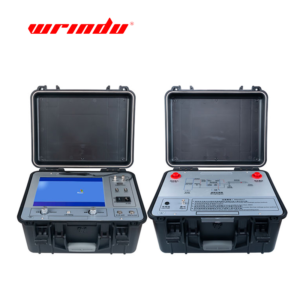
Click the picture to know more about Wrindu RDCD-502 Cable Fault Pre-locator.
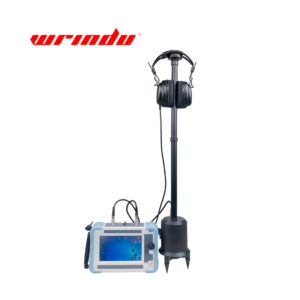
Click the picture to know more about Wrindu RDCD-503D Cable Fault Locator.
What Is Cable Fault Pre-Location?
Cable fault pre-location estimates how far the fault sits from the test point. Engineers use a cable fault pre locator like the RDCD-502 to narrow the search range before field tracing begins. The RDCD-502 uses low-voltage pulse, high-voltage flashover, and multiple-pulse methods to calculate distance quickly and accurately. It supports high sampling rates up to 240 MHz, a measuring distance up to 60 km, and distance resolution of 0.1 m. The system also compares fault waveforms with healthy phase waveforms on the same screen to improve judgment accuracy. Pre-location does not give the digging point, but it defines the correct fault zone and removes blind searching.
What Is Cable Fault Pinpointing?
Pinpointing determines the exact physical position of the cable fault on the ground. Engineers perform this step after pre-location confirms the distance range. The RDCD-503D cable fault locator uses acoustic-magnetic synchronization to calculate the time difference between sound and magnetic signals. This method gives fixed-point accuracy up to 0.1 m and reduces dependence on human hearing. Built-in noise reduction filters environmental interference and highlights real discharge sound. Adjustable gain, trigger thresholds, and path indication help operators lock onto the true fault position quickly. Pinpointing ensures precise excavation and prevents unnecessary surface damage.
How Do RDCD-502 and RDCD-503D Work Together?
Efficient cable testing requires both distance estimation and exact positioning. The RDCD-502 completes pre-location with fast waveform analysis, automatic sampling, and accurate ranging. Its portable design, touch control, and built-in battery support field work for more than four hours. After engineers identify the fault zone, the RDCD-503D performs precise localization using acoustic-magnetic time difference technology and background noise reduction. Its lightweight structure, long battery life, and clear LCD display allow easy outdoor operation. Together, these instruments create a complete cable fault pre locator to pinpointing solution that improves repair speed and system reliability.
Why Is It Important to Separate Pre-Location From Pinpointing?
Each stage answers a different technical question. Pre-location answers “how far,” while pinpointing answers “where exactly.” Mixing the stages leads to wrong digging points, longer outages, and higher labor cost. A structured workflow using dedicated tools ensures faster troubleshooting, safer maintenance, and better power network stability.
What Questions Do Instrument Users Often Ask?
Q1: Is pre-location enough to repair a cable fault?
No. Pre-location only gives distance. Pinpointing gives the exact digging point.
Q2: Why choose a professional cable fault pre locator like RDCD-502?
Because it provides high-accuracy ranging, waveform comparison, and multiple pulse methods for reliable fault distance judgment.
Q3: What makes RDCD-503D accurate for pinpointing?
Acoustic-magnetic time difference calculation and noise reduction deliver up to 0.1 m positioning accuracy.
Q4: Do engineers need both instruments in real projects?
Yes. Pre-location and pinpointing must work together for fast and precise repair.
Q5: How does this workflow improve maintenance efficiency?
It reduces blind digging, shortens outage time, and increases repair success on the first attempt.
Wrindu Expert Review
The difference between pre-location and pinpointing defines the success of cable fault repair. A cable fault pre locator such as the RDCD-502 identifies the fault distance, while the RDCD-503D confirms the exact ground position with acoustic-magnetic precision. Using both stages in sequence creates a faster, safer, and more reliable underground cable maintenance process.
