

What Are Differences Between Direct, Coupling, and Induction Methods?
Learn the difference between direct, coupling, and induction cable detection methods and how the Wrindu RDCD-Ⅱ/507 improves underground cable route locating accuracy and safety.
Engineers use several cable detection methods to find underground cable routes. Among them, direct connection, coupling, and induction remain the most common. Each method suits different field conditions, signal strengths, and safety needs.
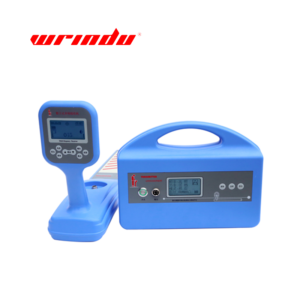
This article explains the key differences and shows how the Wrindu RDCD-Ⅱ/507 Cable Pipeline Detector supports accurate underground cable locating.
What Are the Main Cable Detection Methods?
Three basic underground cable detection methods exist:
-
Direct connection method
-
Coupling method
-
Induction method
All three send a tracing signal into or near the cable. A receiver then follows the electromagnetic field to identify the underground cable path. However, their accuracy, signal strength, and safety differ.
How Does the Direct Connection Method Work?
The direct connection method links the transmitter directly to the target cable.
Key features
-
Strong and stable tracing signal
-
High locating accuracy
-
Clear depth measurement
Best use cases
-
Exposed cable ends in substations
-
Maintenance sites with safe grounding points
Limitation
-
Requires physical access to the conductor
Because of its precision, engineers often treat this as the preferred cable route detection method when access is available.
What Is the Coupling Method in Cable Detection?
The coupling method uses a clamp or coupler around the cable.
The transmitter injects signal without direct metal contact.
Advantages
-
No need to disconnect the cable
-
Safe for energized systems
-
Moderate tracing accuracy
Typical applications
-
Live cable identification
-
Urban distribution maintenance
Signal strength remains lower than direct connection, but safety improves.
How Does the Induction Method Locate Underground Cables?
The induction method places the transmitter on the ground above the cable route. The signal enters the cable through electromagnetic induction.
Benefits
-
No cable access required
-
Fast setup in unknown areas
-
Useful for preliminary scanning
Drawbacks
-
Weak signal strength
-
Possible interference from nearby utilities
-
Lower locating accuracy
Engineers often use induction for initial underground cable path searching, then switch to stronger methods.
Which Method Provides the Best Overall Detection Result?
Comparison of the three cable detection methods:
-
Accuracy: Direct > Coupling > Induction
-
Safety on energized cables: Coupling > Induction > Direct
-
Ease of use without access: Induction > Coupling > Direct
So the best method depends on:
-
Cable accessibility
-
Safety requirements
-
Required locating precision
Professional tools like the Wrindu RDCD-Ⅱ/507 Cable Pipeline Detector allow engineers to apply multiple detection modes in one device, which improves flexibility in complex sites.
How Does the Wrindu RDCD-Ⅱ/507 Improve Cable Route Detection?
The Wrindu RDCD-Ⅱ/507 Cable Pipeline Detector supports efficient underground cable locating with:
-
Multiple signal injection methods for different field conditions
-
Accurate path tracing and depth measurement
-
Stable long-distance detection performance
-
Portable design for fast on-site operation
These features help engineers choose the right cable detection method and complete route locating safely and quickly.
Common Questions About Cable Detection Methods
Q1: Which cable detection method is the most accurate?
Direct connection gives the highest accuracy. It delivers the strongest and clearest tracing signal.
Q2: Which method is safest for energized cables?
The coupling method is the safest choice. It injects signal without direct electrical contact.
Q3: When should engineers use the induction method?
Use induction for quick scanning when cable access is not available. Then switch to a stronger method for precise locating.
Q4: Why choose the Wrindu RDCD-Ⅱ/507 detector?
It supports multiple detection methods in one instrument. This improves efficiency and flexibility in the field.
Wrindu Expert Review
Understanding the difference between direct, coupling, and induction cable detection methods helps engineers select the correct locating strategy.
-
Direct connection delivers maximum accuracy.
-
Coupling provides safe tracing on energized cables.
-
Induction enables fast scanning without access.
With the Wrindu RDCD-Ⅱ/507 Cable Pipeline Detector, teams gain:
-
Flexible detection modes
-
Reliable underground cable path tracing
-
Faster and safer maintenance work
Choosing the proper cable detection method ensures precise locating, reduced excavation risk, and stable power system operation.
