

What Are Different Types of Partial Discharge and Their Impact on Electrical Systems?
Learn the main types of partial discharge in electrical systems, including corona, surface, and internal PD. Discover how PD testing and monitoring help detect insulation defects in transformers, cables, and switchgear to improve power system reliability.
Partial discharge (PD) is a localized electrical event that occurs when insulation in high-voltage equipment begins to weaken. Small electrical sparks form in tiny voids, cracks, or gaps inside insulating materials. These discharges may not cause immediate failure, but repeated activity gradually damages insulation and can eventually lead to serious breakdowns.
PD is commonly found in power equipment such as transformers, cables, switchgear, and circuit breakers. Understanding the different types of partial discharge helps engineers detect insulation problems early, improve maintenance planning, and maintain reliable power system operation.
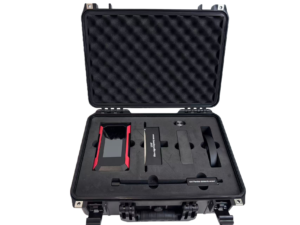
Click the picture to learn more about the Wrindu Handheld Partial Discharge Tester.
Common Types of Partial Discharge
Partial discharge can occur in several forms depending on the location and conditions of the insulation.
Internal partial discharge happens inside solid insulation materials where small air gaps or defects exist. These tiny voids act like miniature spark gaps when exposed to high voltage.
Surface discharge appears along the surface of insulation. It is often caused by contamination, moisture, or poor surface conditions.
Corona discharge occurs in air when the electric field around a conductor becomes strong enough to ionize the surrounding air. It usually appears around sharp points, connectors, or overhead conductors.
Another form is cavity discharge, which occurs in gas-filled pockets inside solid insulation. Electrical treeing is also a serious form of discharge where branching conductive paths slowly grow through insulation under high electric stress.
Although each type develops differently, they all indicate that insulation is under stress and beginning to deteriorate.
Internal discharge is particularly dangerous because it occurs inside solid insulation where damage cannot easily be seen. Continuous micro-sparks cause chemical and thermal reactions that slowly destroy the dielectric material.
Surface discharge is commonly found near cable terminations, bushings, and connectors. These areas are often affected by humidity, pollution, or uneven insulation surfaces.
Corona discharge is frequently observed in high-voltage substations and overhead transmission systems. It occurs when strong electric fields form around sharp edges or conductors.
By identifying the discharge type, engineers can determine the source of insulation damage and select the correct testing or repair strategy.
Measuring and Detecting Partial Discharge
Today, partial discharge detection plays an important role in power equipment maintenance. Several technologies are used to monitor PD activity.
Electrical detection methods measure the magnitude and pattern of PD pulses and analyze their phase relationship with the power frequency.
Acoustic detection uses ultrasonic sensors to capture sound waves produced by discharge activity inside transformers or switchgear.
Ultra-high frequency (UHF) detection is widely used in gas-insulated switchgear (GIS). UHF sensors detect electromagnetic waves generated by PD pulses.
Other methods include optical monitoring and chemical analysis.
Accurate PD measurement allows utilities to adopt predictive maintenance instead of waiting for failures. Studies in the power industry show that systems using continuous PD monitoring can reduce insulation failures by 40–60% compared with traditional maintenance methods.
How Partial Discharge Affects Electrical System Performance
The impact of partial discharge goes beyond simple insulation damage. Over time, PD activity can affect equipment reliability, safety, and power system performance.
Continuous discharges create chemical reactions that generate ozone, nitric compounds, and other byproducts. These substances can corrode metal parts and weaken insulation materials.
In high-voltage cables, PD speeds up the aging of cross-linked polyethylene (XLPE) insulation, increasing dielectric losses and potentially leading to overheating.
In transformers, PD inside oil-paper insulation produces gases that can be detected through dissolved gas analysis (DGA).
If PD activity remains undetected, insulation gradually loses its dielectric strength. Carbonization may develop inside the insulation, eventually causing complete breakdown. This can result in arc faults, equipment explosions, long outages, and expensive repairs.
Therefore, managing partial discharge is essential for maintaining long-term system reliability and safety.
Market Trends and Technology Development
The market for partial discharge monitoring systems continues to grow as utilities move toward condition-based maintenance and digital asset management.
Aging power infrastructure, increasing renewable energy integration, and the expansion of electric transportation are all driving demand for advanced monitoring solutions.
Manufacturers are developing smaller sensors, intelligent data analysis tools, and cloud-based monitoring platforms that turn PD signals into practical maintenance insights.
Companies such as Wrindu (RuiDu Mechanical and Electrical Shanghai Co., Ltd.) contribute to this progress by developing high-precision testing and diagnostic equipment. Wrindu focuses on research and development to produce reliable PD detectors, high-voltage testing instruments, and portable diagnostic tools used by utilities, equipment manufacturers, and renewable energy operators around the world.
Core Technology and Equipment Applications
Modern partial discharge analyzers use advanced signal processing and noise filtering technologies. These systems can distinguish real PD signals from electrical interference.
Many PD analyzers synchronize with the power frequency to generate phase-resolved partial discharge (PRPD) patterns, which help engineers identify different discharge sources.
For power cables, PD testing combined with time-domain reflectometry can locate defects and determine the exact position of insulation faults.
For transformers, online PD monitoring systems track discharge activity continuously while the equipment is operating.
For gas-insulated switchgear (GIS), UHF sensors installed inside the enclosure detect internal discharge signals that cannot be seen externally.
These technologies help utilities evaluate equipment health without interrupting normal operation.
Real Industry Applications and Economic Benefits
Many energy companies have already experienced significant benefits from using partial discharge monitoring systems.
For example, a 400 kV transmission substation in Southeast Asia reduced insulation failures by about 70% after installing continuous PD monitoring. The system helped engineers detect problems early and avoid costly emergency repairs.
Wind farm operators also use cable PD monitoring to prevent underground cable failures. By reducing downtime, they can increase annual energy production and improve project profitability.
These real-world cases show that PD diagnostics not only improve reliability but also create measurable economic value.
Future Development and Industry Outlook
The future of partial discharge management will rely heavily on automation, digital monitoring systems, and artificial intelligence.
Advanced platforms will combine multiple sensor signals with cloud-based analytics to automatically identify fault patterns and predict equipment failures.
IoT sensors and edge computing technologies will allow near real-time monitoring and faster maintenance decisions.
As global power networks operate at higher voltages and handle more complex energy flows, maintaining insulation reliability becomes increasingly important.
By using advanced PD detection technologies and high-quality testing equipment, engineers can protect electrical assets, extend equipment life, and maintain stable power supply for modern energy systems.
FAQs
What Are the Main Types of Partial Discharge in Electrical Systems?
The most common types include corona discharge, surface discharge, internal void discharge, and arcing discharge. Each type indicates insulation stress and may lead to equipment failure if not addressed.
How Is Partial Discharge Testing Performed and Why Is It Important?
PD testing can be performed using ultrasonic sensors, UHF sensors, TEV sensors, or HFCT sensors. These technologies detect high-frequency signals or sound waves generated by discharge activity. The test helps identify insulation defects early and prevents unexpected failures in transformers and cables.
How Does Partial Discharge Cause Insulation Failure?
Repeated PD activity produces heat, chemical reactions, and electrical erosion. Over time, this damages insulation materials and creates conductive paths that eventually lead to complete breakdown.
What Are the Advantages of Continuous PD Monitoring?
Continuous monitoring detects insulation defects at an early stage. It supports predictive maintenance, reduces downtime, and helps extend the service life of power equipment.
What Type of PD Detection Equipment Should Be Used?
Portable TEV and ultrasonic detectors are suitable for field inspections. HFCT and UHF sensors are often used for cable systems and GIS equipment. Fixed monitoring systems are commonly installed on transformers and critical substations.
Why Does Partial Discharge Occur in Cables and Switchgear?
In cables, PD often originates from insulation voids or moisture contamination. In switchgear, it may be caused by surface contamination, insulation aging, or loose connections.
How Are Partial Discharge Patterns Interpreted?
Engineers analyze PD patterns based on phase position, pulse magnitude, and repetition rate. Different patterns help identify the type and location of insulation defects.
How Can Partial Discharge Be Prevented?
PD risks can be reduced by using high-quality insulation materials, controlling manufacturing defects, maintaining clean insulation surfaces, applying proper stress grading, and performing regular testing and monitoring.
