

What Are the Common Current Transformer Testing Problems and How to Solve Them?
Learn common current transformer testing problems, including ratio errors, polarity issues, saturation, resistance, and burden problems with practical solutions.
Why Do Current Transformer Problems Matter?
Current transformers (CTs) provide important current signals for protection relays and measurement systems.
A CT problem may cause:
- Incorrect current measurement
- Protection relay errors
- Equipment operation problems
- Unnecessary maintenance costs
Many CT failures do not happen suddenly. They usually develop because of aging, installation mistakes, overload, or incorrect testing.
Regular CT inspection helps engineers find problems before they affect power system operation.
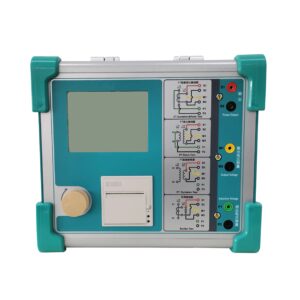
Click the image to know more about Wrindu CT and PT Analyzer.
What Are the Most Common CT Testing Problems?
Engineers usually find several types of CT problems during testing.
Common issues include:
- Incorrect CT ratio
- Wrong polarity connection
- Abnormal excitation curve
- Low knee point voltage
- High secondary resistance
- Excessive burden
- Poor insulation condition
Each problem affects CT performance in a different way.
Why Does a CT Ratio Test Show Incorrect Results?
What Causes CT Ratio Errors?
The CT ratio should match the value on the nameplate.
For example, a 1000/5A CT should provide a 200:1 transformation ratio.
A wrong ratio result may come from:
- Incorrect terminal connection
- Wrong CT nameplate information
- Internal winding damage
- Shorted turns inside the core
How Can Engineers Check a CT Ratio Problem?
Engineers should:
- Confirm the CT nameplate data.
- Check primary and secondary wiring.
- Repeat the ratio test.
- Compare results between phases.
A CT analyzer can measure the actual ratio and compare it with the expected value automatically.
What Happens When CT Polarity Is Wrong?
Why Is CT Polarity Important?
CT polarity controls the direction of the secondary current signal.
Incorrect polarity can affect:
- Differential protection
- Directional protection
- Power measurement
When polarity changes, the relay receives the opposite current direction.
How Can Engineers Fix CT Polarity Problems?
Engineers should check:
- P1 and P2 primary terminals
- S1 and S2 secondary terminals
- Wiring diagrams
- Relay connection points
A polarity test during commissioning helps prevent future protection problems.
Why Does CT Saturation Become a Problem?
What Causes CT Saturation?
CT saturation happens when the magnetic core cannot follow the increasing current.
Common causes include:
- Low knee point voltage
- High secondary burden
- Large fault current
- Aging magnetic core
When saturation occurs, the secondary current becomes distorted.
How Can Engineers Detect CT Saturation?
Engineers can use:
- Excitation testing
- Knee point testing
- Burden testing
The test results show whether the CT can provide a correct signal during fault conditions.
Why Is High Secondary Resistance Dangerous?
What Causes Secondary Resistance Increase?
Secondary resistance may increase because of:
- Loose connections
- Corrosion
- Damaged cables
- Aging terminals
Higher resistance increases voltage loss in the secondary circuit.
How Can Engineers Find Resistance Problems?
A winding resistance test helps engineers check:
- Secondary winding condition
- Terminal connection quality
- Phase differences
If one phase shows a much higher value, engineers should inspect the wiring and connection points.
How Does Excessive Burden Affect CT Performance?
What Is CT Burden?
CT burden is the total load connected to the secondary circuit.
It includes:
- Protection relays
- Meters
- Terminal blocks
- Secondary cables
What Problems Can High Burden Cause?
High burden can lead to:
- Increased measurement error
- Earlier CT saturation
- Reduced protection performance
Engineers should compare actual burden with the rated burden of the CT.
What CT Testing Mistakes Cause Wrong Results?
Testing Without Checking Wiring
Incorrect wiring creates unreliable results.
Before testing, engineers should confirm:
- Terminal connection
- Test lead direction
- Grounding condition
Ignoring Temperature During Resistance Testing
Temperature affects winding resistance.
A higher temperature usually increases resistance.
Engineers should record temperature and correct the result when necessary.
Testing Only One CT Parameter
A ratio test alone cannot show all CT problems.
A complete evaluation should include:
- Ratio test
- Polarity test
- Excitation test
- Knee point test
- Resistance test
- Burden test
Different tests show different CT conditions.
How Can a CT Analyzer Help Troubleshoot Problems?
A modern CT analyzer combines multiple testing functions in one device.
It helps engineers:
- Find incorrect wiring
- Check CT performance
- Identify saturation risks
- Compare test results
- Create maintenance reports
The analyzer reduces manual calculation work and improves troubleshooting efficiency.
How Does Preventive CT Testing Reduce Failures?
Regular testing helps engineers identify early warning signs.
Maintenance teams can track:
- Ratio changes
- Resistance increases
- Excitation curve changes
- Burden variations
This allows teams to repair problems before they affect system operation.
CT Troubleshooting FAQs
Why does a CT fail a ratio test?
A CT may fail because of incorrect wiring, internal damage, or wrong nameplate information.
Can CT saturation cause relay problems?
Yes. CT saturation can distort the current signal and affect relay operation.
What test can detect CT core problems?
Excitation and knee point tests can help identify CT core performance problems.
Why does CT resistance increase over time?
Loose connections, corrosion, and aging components can increase secondary resistance.
Can a CT analyzer find all CT problems?
A CT analyzer can identify many electrical performance issues, but engineers should also check installation conditions and system operation.
