

IEC 61869 vs IEEE C57.13 – Key Differences Explained
Compare IEC 61869 and IEEE C57.13 standards. Learn key differences in CT accuracy classes, knee-point voltage, burden rating, and protection methods.
Introduction
Instrument transformers play a critical role in metering and protection systems. To ensure accuracy and safety, engineers follow internationally recognized standards.
Two of the most widely used standards are:
-
IEC 61869
-
IEEE C57.13
Although both standards define performance requirements for current transformers (CTs) and voltage transformers (VTs), they differ in terminology, accuracy classes, testing philosophy, and regional adoption.
This guide explains the key differences in clear and practical terms.
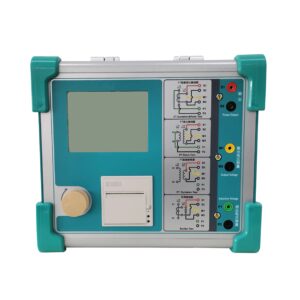
Click the image to learn more about CT and PT analyzer.
1. Geographic Adoption
IEC 61869
-
Widely used in Europe, Asia, the Middle East, Africa, and many international projects
-
Common in global EPC contracts and export-oriented manufacturing
IEEE C57.13
-
Primarily used in the United States, Canada, and parts of Latin America
-
Preferred by North American utilities
If you design equipment for global markets, you must understand both standards.
2. Structure and Scope
IEC 61869
IEC 61869 replaced older IEC 60044 standards and uses a modular structure:
-
Part 1: General requirements
-
Part 2: Current transformers
-
Part 3: Voltage transformers
-
Additional parts for electronic and low-power transformers
This structure allows easier updates and digital transformer integration.
IEEE C57.13
IEEE C57.13 covers:
-
Requirements for CTs and VTs
-
Accuracy classification
-
Thermal and mechanical performance
-
Testing procedures
IEEE combines most requirements into a single framework.
3. Accuracy Class Differences
This area creates the most confusion.
IEC Accuracy Classes (CT Examples)
Metering classes:
-
0.1
-
0.2
-
0.2S
-
0.5
-
0.5S
-
1.0
Protection classes:
-
5P
-
10P
-
PX (special protection class)
IEC focuses on percentage error limits at rated burden and current levels.
IEEE Accuracy Classes (CT Examples)
Metering classes:
-
0.3
-
0.6
-
1.2
Protection classes:
-
C100
-
C200
-
C400
-
C800
IEEE protection classes define performance based on voltage capability at 20 times rated current.
Key Difference:
-
IEC uses “P” and “PX” system.
-
IEEE uses “C” class with voltage ratings.
4. Knee-Point Voltage Definition
IEC and IEEE define saturation differently.
IEC Approach
IEC clearly defines knee-point voltage.
It identifies the voltage at which a 10% increase in voltage causes a 50% increase in excitation current.
Protection CT performance depends heavily on this parameter.
IEEE Approach
IEEE does not use the same knee-point definition.
Instead, it defines performance based on terminal voltage under high fault current conditions.
This creates differences when comparing protection CT ratings.
5. Burden Representation
IEC
IEC expresses burden in:
-
VA (Volt-Amps)
-
Power factor
Example: 15 VA at 0.8 PF
IEEE
IEEE often expresses burden in:
-
Ohms
-
Standardized burden designations
This difference affects how engineers size CTs for protection schemes.
6. Testing Philosophy
IEC Testing Focus
-
Ratio error
-
Phase displacement
-
Knee-point verification
-
Thermal limits
-
Short-time current withstand
IEC emphasizes detailed performance validation across multiple operating points.
IEEE Testing Focus
-
Accuracy at 20× rated current
-
Terminal voltage performance
-
Thermal and mechanical stress tests
IEEE emphasizes real-world fault performance.
7. Digital and Electronic Instrument Transformers
IEC 61869 includes dedicated sections for:
-
Low-power instrument transformers
-
Electronic transformers
-
Digital output (IEC 61850 process bus compatibility)
IEEE C57.13 mainly focuses on conventional instrument transformers, though additional IEEE standards address digital systems separately.
IEC currently leads in digital integration frameworks.
8. Nameplate Marking Differences
You can quickly identify which standard a CT follows by reading the nameplate:
IEC example:
-
1000/5 A
-
Class 0.2S
-
15 VA
-
5P20
IEEE example:
-
1000:5
-
0.3B1.8
-
C200
The marking format reflects each standard’s rating philosophy.
9. Application Differences in Protection Systems
IEC Systems
Engineers calculate protection settings based on:
-
Knee-point voltage
-
Accuracy limit factor (ALF)
-
Composite error
IEEE Systems
Engineers select CTs based on:
-
Voltage class (C100, C200, etc.)
-
Maximum relay burden
-
Fault current level
Both approaches aim to prevent CT saturation during faults but use different methods.
10. Which Standard Should You Choose?
Choose based on project location and client requirements:
-
Use IEC 61869 for international EPC projects.
-
Use IEEE C57.13 for North American utilities.
-
For multinational manufacturers, design CTs that comply with both standards where possible.
Always confirm project specifications before equipment selection.
Summary Table: IEC 61869 vs IEEE C57.13
| Feature | IEC 61869 | IEEE C57.13 |
|---|---|---|
| Main Region | Global | North America |
| Accuracy Format | 0.2, 0.5, 5P, PX | 0.3, C200, C400 |
| Saturation Metric | Knee-point voltage | Voltage class rating |
| Burden Expression | VA and power factor | Ohms / burden designation |
| Digital Support | Integrated sections | Covered in separate standards |
| Protection Method | ALF & composite error | 20× rated current voltage |
Wrindu Expert Review
IEC 61869 and IEEE C57.13 both ensure safe and accurate instrument transformer performance. However, they differ in classification systems, saturation definitions, and burden calculations.
Engineers working in global power markets must understand these differences to avoid specification errors, relay misoperation, and compliance issues.
Clear knowledge of both standards improves equipment selection, testing accuracy, and protection system reliability.
