

What Is a Cable Fault Testing System and How Does It Work?
Learn what a cable fault testing system is, how it works, and why a complete system is essential for accurate underground cable fault location in field applications.
Cable faults often cause power outages and long repair times.
Engineers need accurate tools to locate faults before excavation.
This is why a cable fault testing system is widely used in power utilities and maintenance teams.
This article explains what a cable fault testing system is, how it works, and why a complete system concept matters in real field conditions.
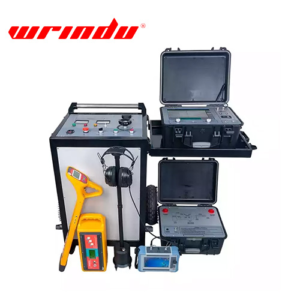
Click the picture to know more about Wrindu Cable Fault Testing System.
What Is a Cable Fault Testing System?
A cable fault testing system is a group of instruments designed to locate faults in power cables.
It supports the entire fault location process instead of a single test step.
Q: Is a cable fault testing system just a distance meter?
A: No. It is a complete workflow solution.
A complete system usually includes fault pre-location, high-voltage signal generation, fault pinpointing, and cable route detection.
Wrindu follows this system-based design to help engineers handle complex underground cable faults more efficiently.
Why Is a Complete Cable Fault Testing System Necessary?
Many engineers try to locate faults using only one device.
This approach often leads to inaccurate results or repeated testing.
Q: Can one device locate all cable faults accurately?
A: No. Different faults need different methods.
High-resistance faults require high-voltage excitation.
Pinpointing needs acoustic or acoustic-magnetic signals.
Route detection prevents position offset.
A complete cable fault testing system connects these steps into one logical process and improves overall accuracy.
How Does a Cable Fault Testing System Work in Practice?
Cable fault location follows a clear sequence.
Each step prepares the conditions for the next one.
Q: What is the standard cable fault testing process?
A: Pre-location, excitation, pinpointing, and confirmation.
First, pre-location estimates the fault distance.
Next, a high-voltage signal activates the fault point.
Then, pinpointing tools locate the exact position.
Finally, route and depth detection confirm the cable path.
The Wrindu Cable Fault Testing System integrates all these steps into one coordinated workflow.
What Types of Cable Faults Can a Cable Fault Testing System Detect?
Power cables fail in many ways, especially underground.
A system must cover more than simple short circuits.
Q: Which faults can a cable fault testing system handle?
A: Most common power cable faults.
These include short circuits, open circuits, broken conductors, high-resistance leakage faults, and flashover faults.
A complete cable fault testing system adapts its test method to each fault type, which single-function tools cannot do.
Why Do Cable Fault Location Results Often Go Wrong?
Inaccurate results usually come from missing steps, not bad equipment.
Many field errors happen before pinpointing even starts.
Q: Why do engineers misjudge cable fault locations?
A: Because the testing process is incomplete.
Without high-voltage excitation, flashover faults stay hidden.
Without route detection, pinpointing shifts off the cable path.
Without noise control, acoustic signals become unreliable.
A full cable fault testing system reduces these risks by design.
What Should You Consider When Choosing a Cable Fault Testing System?
Choosing a system is not about one parameter.
It is about real field performance.
Q: What matters most when selecting a system?
A: Coverage, accuracy, and efficiency.
The system should handle different fault types, support acoustic-magnetic pinpointing, and confirm cable routes.
It should also work reliably on-site.
This is why utilities prefer complete solutions like those developed by Wrindu.
Wrindu Expert Review
Cable fault location is a process, not a single test.
Accuracy depends on how well each step connects.
A cable fault testing system should support the full workflow from fault estimation to final confirmation.
This approach saves time, reduces excavation, and improves repair efficiency.
Wrindu focuses on complete system design to help engineers locate cable faults with confidence.
