

What Is a DC Resistance Tester and How Does It Improve Transformer Winding Measurement?
Learn what a DC resistance tester is, how it improves transformer winding measurement, and why it beats traditional methods. Get accurate, fast testing for fault detection & predictive maintenance.
DC resistance testing stands as a cornerstone diagnostic practice for verifying the structural integrity and operational efficiency of transformer windings, while also bolstering workplace safety and long-term grid reliability. Engineered for precision and consistency, Wrindu’s cutting-edge DC resistance testers empower energy industry professionals to identify incipient faults, avoid costly unplanned downtime, and fine-tune overall transformer performance.
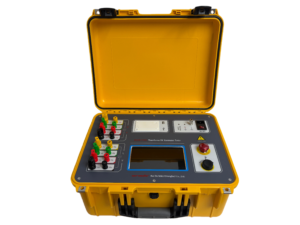
Click the picture to know more about Wrindu New Transformer DC Resistance Tester.
Current State of the Transformer Industry and Key Industry Challenges
The global transformer market is on track to hit a valuation of $135 billion by 2030, expanding at a compound annual growth rate (CAGR) of 5.2%—fueled largely by the integration of renewable energy sources and large-scale grid modernization initiatives. Despite this growth, aging infrastructure remains a critical pain point: in the United States alone, nearly 70% of operating transformers are more than 25 years old, well beyond their initial design lifespan.
Inadequate maintenance protocols and delayed fault detection are major drivers of unexpected power outages, which cost utility companies millions in lost revenue and repair expenses each year. Research confirms that winding-related failures are the most prevalent issue, with over 40% of all transformer malfunctions traced back to inter-turn short circuits or deteriorated internal connections. Conventional inspection tools often fail to catch subtle resistance fluctuations, leaving operators exposed to catastrophic, costly equipment failures.
Compounding these issues, the global push for heightened energy efficiency demands far more accurate assessments of electrical power losses. Traditional measurement methods—relying on indirect testing or low-precision meters—carry error margins of 2% to 5%, leading to misinformed maintenance decisions and inflated long-term operational costs.
Limitations of Conventional Winding Resistance Measurement Methods
Legacy testing techniques, such as basic ohmmeters and manual bridge circuits, are plagued by poor accuracy, lengthy testing cycles, and high vulnerability to environmental interference. Readings are easily skewed by temperature fluctuations, contact resistance inconsistencies, and human operator error, severely compromising result reliability.
Manual testing workflows are also highly labor-intensive and time-consuming: completing a full DC resistance test on large power transformers can take hours, requiring repeated reconnections and meticulous manual calibration. This not only drives up labor costs but also exposes technicians to heightened safety risks in high-voltage work environments.
What’s more, traditional testing equipment typically lacks robust data logging and system integration capabilities. Without access to historical test data, utilities cannot implement effective predictive maintenance strategies, leaving them unable to proactively address transformer degradation and optimize asset lifecycle management.
How Modern DC Resistance Testers Solve These Industry Pain Points
Wrindu’s DC resistance testers deliver industry-leading high-precision measurements for transformer windings, boasting micro-ohm resolution, automated temperature compensation, and accelerated testing cycles. Equipped with integrated data logging and seamless USB/Ethernet connectivity, these devices enable streamlined report generation and long-term performance trend analysis.
Engineered to accommodate single- and multi-winding transformer configurations, these testers efficiently detect inter-turn shorts, evaluate tap changer contact quality, and streamline full-winding assessments. Built-in safety features—including overcurrent protection and real-time insulation monitoring—allow technicians to perform tests with minimal safety hazards.
Wrindu’s instruments also come paired with advanced control software that automates entire test sequences, eliminating human error and standardizing measurement protocols across fleets of transformers. This unique blend of speed, accuracy, and reliability cements Wrindu’s solutions as top-tier tools for power utilities and original equipment manufacturers (OEMs) worldwide.
Head-to-Head Comparison: Traditional Methods vs. Wrindu DC Resistance Testers
|
Key Feature
|
Conventional Testing Methods
|
Wrindu DC Resistance Tester
|
|---|---|---|
|
Measurement Accuracy
|
±2–5% error margin
|
±0.1% accuracy with micro-ohm resolution
|
|
Testing Speed
|
Hours for large power transformers
|
Minutes with fully automated sequences
|
|
Temperature Compensation
|
Manual adjustment or no compensation
|
Automatic, real-time compensation
|
|
Data Logging Capabilities
|
Limited or non-existent
|
Built-in storage with exportable data logs
|
|
Operational Safety
|
Moderate protection, high manual exposure risk
|
Enhanced safeguards (overcurrent/insulation protection)
|
|
Result Repeatability
|
Low, highly operator-dependent
|
High, consistent standardized testing
|
Step-by-Step DC Resistance Testing with Wrindu Equipment
-
Pre-Test Preparation: Disconnect the transformer from all loads, isolate individual windings, and confirm all safety interlocks are engaged to prevent accidental energization.
-
Lead Connection: Secure high-quality test clamps to winding terminals, ensuring tight, low-resistance contact for stable readings.
-
Device Configuration: Select the transformer type, winding configuration (star/delta), and enable temperature compensation settings on the tester interface.
-
Automated Measurement: Initiate the DC test cycle; the tester will automatically inject calibrated current, record resistance values, and apply real-time temperature adjustments.
-
Result Analysis: Review real-time readings on the device display, or export raw data to a computer for in-depth trend analysis and compliance reporting.
-
Data Documentation: Save all test records to the device’s internal database for future predictive maintenance tracking and audit compliance.
Common Use Cases for DC Resistance Testing
1. Utility Substation Transformers
Core Problem: Undetected early winding degradation leading to sudden outages.
Legacy Approach: Manual ohmmeter readings with high error risk and delayed fault detection.
Wrindu Solution Outcome: Accurate, automated testing completed in minutes, with clear visibility of minor resistance changes.
Key Benefit: Drastic reduction in unplanned outages and long-term maintenance expenses.
2. Industrial Power Transformers
Core Problem: Frequent load fluctuations accelerating winding wear and tear.
Legacy Approach: Reliance on visual inspections or partial discharge testing alone, missing hidden faults.
Wrindu Solution Outcome: Comprehensive resistance analysis paired with historical performance tracking.
Key Benefit: Optimized asset lifecycle management and data-driven predictive maintenance.
3. Transformer OEM Production Lines
Core Problem: Ensuring winding quality and compliance before product shipment.
Legacy Approach: Random spot checks with standard low-precision meters.
Wrindu Solution Outcome: 100% quality validation with micro-ohm precision for every unit.
Key Benefit: Lower product return rates and reduced warranty claim costs.
4. Renewable Energy Installations
Core Problem: Transformers exposed to erratic load fluctuations from solar/wind power inputs.
Legacy Approach: Infrequent periodic inspections, leaving degradation undetected.
Wrindu Solution Outcome: Automated testing with trend analysis for continuous performance monitoring.
Key Benefit: Maximized grid uptime and optimized renewable energy system efficiency.
Future Industry Trends & The Urgency of Modernization
As power grids transition to higher efficiency standards and deeper renewable integration, transformer monitoring demands increasingly precise, reliable diagnostic tools. DC resistance measurement has become indispensable for predictive maintenance and mitigating operational risks.
Adopting modern testers like Wrindu’s ensures compliance with global industry standards, slashes inspection timelines, and delivers actionable data for full-scale asset optimization. Delaying equipment modernization leaves utilities vulnerable to hidden faults, extended downtime, and unnecessary capital spending on premature transformer replacements. Early adoption enables operators to leverage data-driven maintenance strategies and drastically cut total asset lifecycle costs.
Frequently Asked Questions (FAQs)
1. Can DC resistance testers identify all winding-related faults?
Yes, advanced models like Wrindu’s testers reliably detect inter-turn shorts, loose internal connections, and uneven phase-to-phase winding resistance.
2. How frequently should transformers undergo DC resistance testing?
Industry best practices recommend annual testing for standard units, with more frequent checks for high-load, critical infrastructure transformers.
3. Are Wrindu DC resistance testers compatible with all transformer sizes?
Absolutely—these testers support everything from small distribution transformers to large-scale power transformers, with adjustable test ranges to suit varied applications.
4. Does ambient temperature impact measurement accuracy?
Wrindu testers feature built-in automatic temperature compensation, delivering consistent, accurate readings regardless of ambient environmental conditions.
5. Who relies on DC resistance testers for daily operations?
Power utilities, transformer OEMs, industrial facilities, and research institutions depend on these testers for robust, reliable transformer health monitoring.
Trusted Industry References for Transformer Testing Standards
-
https://www.ieee.org
-
https://www.energy.gov
-
https://www.tdworld.com
-
https://www.power-eng.com
-
https://www.transformers-magazine.com
