

What is Freezing Point Test for Transformer Oil?
Learn how to test oil pour point and freezing point accurately. Discover methods, standards, and how Wrindu testers improve transformer oil performance in low temperatures.
How to Test Oil Freezing Point Accurately in Electrical Equipment?
After understanding the boiling and freezing points of different oils, the next important step is learning how to accurately test these properties in real-world applications—especially for transformer and insulating oils.
In power systems, freezing point (or pour point) testing helps engineers determine whether oil can flow and perform properly under low-temperature conditions.
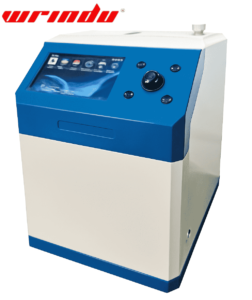
Click the image to know more about Wrindu Automatic Pour Point Freezing Point Tester.
What Is Oil Pour Point and Why Does It Matter?
The pour point is the lowest temperature at which oil can still flow.
This is critical because:
- If oil becomes too thick, it cannot circulate properly
- Poor circulation leads to inefficient cooling
- In extreme cases, it may cause equipment overheating or failure
👉 For transformers operating in cold climates, this parameter is just as important as dielectric strength.
How Is Oil Freezing Point Tested?
Oil freezing or pour point is typically tested using standardized methods:
Step-by-Step Testing Process:
- Sample Preparation
The oil sample is placed into a test jar. - Controlled Cooling
The sample is gradually cooled at a controlled rate. - Observation
At specific temperature intervals, the oil is checked for flow. - Result Recording
The lowest temperature at which the oil still flows is recorded as the pour point.
👉 Modern testing eliminates manual observation errors through automation.
What Are the Challenges in Traditional Testing?
Manual testing methods often face several issues:
- ❌ Human observation errors
- ❌ Inconsistent cooling rates
- ❌ Time-consuming procedures
- ❌ Limited repeatability
These challenges can lead to inaccurate results, which may impact maintenance decisions.
Why Use Automatic Pour Point Testers?
Automatic testers significantly improve testing reliability and efficiency:
- ✅ Precise temperature control
- ✅ Automated detection of flow point
- ✅ Reduced human error
- ✅ Faster testing process
This makes them ideal for utilities, substations, and industrial labs.
How Wrindu Automatic Pour Point Tester Improves Accuracy?
Wrindu’s Automatic Pour Point & Freezing Point Tester is designed for high-performance oil analysis:
- High Sensitivity Sensors: Detect minimal flow changes
- Stable Cooling System: Ensures consistent temperature drop
- Digital Control Interface: Easy operation and data recording
- Repeatable Results: Ideal for trend analysis and preventive maintenance
👉 This allows engineers to make data-driven decisions and avoid unexpected failures in cold environments.
When Should You Perform Pour Point Testing?
Regular testing is recommended in the following scenarios:
- Before commissioning new transformers
- During routine maintenance cycles
- When operating in low-temperature regions
- After oil replacement or filtration
FAQs About Oil Pour Point Testing
Q1: What is the difference between freezing point and pour point?
A: Freezing point is when oil solidifies, while pour point is when it stops flowing. Pour point is more practical for industrial applications.
Q2: How often should transformer oil be tested?
A: Typically every 6–12 months, depending on operating conditions and criticality.
Q3: Can low pour point improve transformer performance?
A: Yes. Lower pour point ensures better oil circulation, especially in cold environments.
Q4: Is pour point testing necessary for all oils?
A: It is essential for oils used in outdoor or low-temperature applications, such as transformers and cables.
Q5: What happens if oil fails the pour point test?
A: The oil may need treatment, replacement, or blending to improve its low-temperature performance.
