

2-Wire vs 4-Wire Resistance Measurement: Which Is Better?
Compare 2-wire vs 4-wire resistance measurement: accuracy, applications, pros and cons. Learn when to use 4-wire Kelvin method over traditional 2-wire testing.
When it comes to resistance testing, the debate between2-wire vs 4-wire resistance measurement is common among technicians, engineers and industrial teams. Neither method is universally “better” — the right choice depends on your accuracy needs, testing scenario, budget and compliance requirements. This guide breaks down their core differences across key dimensions, clarifies pros, cons and ideal use cases, and helps you pick the optimal method for every application, with helpful internal links to deepen your expertise.
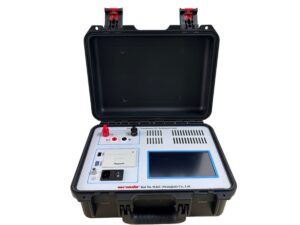
Click the image to know more about Wrindu DC Resistance Tester.
Core Differences: 2-Wire vs 4-Wire Resistance Measurement
1. Measurement Accuracy & Error Sources
2-Wire Testing: Delivers low-to-moderate accuracy, plagued by inherent errors from test lead resistance, contact resistance and wire voltage drops. These extra resistances are bundled with the Device Under Test (DUT) reading, making it unreliable for low-resistance samples. This is one of the most notable 4-wire Kelvin measurement mistakes to avoid when misapplying 2-wire logic.
4-Wire Kelvin Testing: Offers industrial-grade high precision, eliminating lead and contact resistance entirely via separate current (force) and voltage (sense) leads. It isolates the DUT’s true resistance, delivering consistent, error-free results — a key reason behind the benefits of Kelvin resistance testing for critical applications.
2. Cost & Equipment Requirements
2-wire testing is budget-friendly, working with standard multimeters and basic test leads, with minimal setup cost. 4-wire Kelvin testing requires specialized, compatible testers and dedicated Kelvin test leads, carrying a higher upfront cost, but delivers long-term value via accurate, compliant results.
3. Setup Complexity
2-wire testing is ultra-simple, using one pair of leads for fast, plug-and-play testing. 4-wire testing needs slightly more effort to follow proper wiring norms (sense leads inside force leads), but the precision payoff is substantial for demanding use cases.
Ideal Applications & Selection Logic
Choose 2-Wire Testing If:
-
You need quick, rough preliminary checks with no strict accuracy demands
-
Testing high-resistance components (above 1kΩ), where lead resistance is negligible
-
Budget is limited, and testing is for basic, non-critical electrical tasks
-
Routine, low-stakes inspections with no regulatory compliance requirements
Choose 4-Wire Kelvin Testing If:
-
Measuring ultra-low resistances (milliohm/microohm range: batteries, cables, welds)
-
Needing repeatable, audit-ready data for industrial OEM or regulatory compliance
-
Testing critical components in EV manufacturing, power utilities or electronics production
-
Prioritizing long-term accuracy and avoiding costly errors from faulty readings
Final Verdict: Which Is Better?
For casual, low-precision, budget-limited testing, 2-wire measurement is sufficient. For high-precision, industrial, compliance-focused or low-resistance testing, 4-wire Kelvin measurement is the only reliable choice — its error elimination and accuracy make it worth the investment. Align your choice with your testing goals, and refer to our pillar content for full guidance.
Wrindu Expert Review
Wrindu (Rui Du Mechanical and Electrical (Shanghai) Co., Ltd.), established in 2014, is a professional global manufacturer and system solution provider specializing in high-voltage power testing equipment, with all products certified by ISO9001, IEC and CE international standards. Our technical team has deep practical experience in resistance testing for industrial OEM, power utilities, EV battery and electronics manufacturing scenarios, and we give targeted professional advice on 2-wire vs 4-wire resistance measurement selection.
Our experts emphasize that the core of choosing the right resistance measurement method lies in matching application scenarios, not blindly pursuing high-cost equipment. 2-wire testing is suitable for rapid preliminary screening and high-resistance routine testing, which can effectively control costs; while 4-wire Kelvin testing is irreplaceable for ultra-low resistance measurement and high-precision compliance testing, which can avoid huge losses caused by inaccurate data. We also remind teams to avoid common 4-wire Kelvin measurement mistakes such as improper wiring and using inferior test leads, and fully leverage the benefits of Kelvin resistance testing with standardized operation and professional equipment. Wrindu provides full-range resistance testing equipment covering both 2-wire and 4-wire modes, tailored to meet diverse testing needs of different industries.
FAQs: 2-Wire vs 4-Wire Resistance Measurement
Q1: Can I use 4-wire Kelvin measurement for high-resistance component testing?
Conclusion first: It is not recommended to use 4-wire Kelvin measurement for high-resistance (above 1kΩ) testing, because the lead and contact resistance have negligible impact on high-resistance readings, and 2-wire testing is more cost-effective and efficient, with no need for complex 4-wire setup.
Q2: Will using ordinary test leads affect 4-wire Kelvin measurement results?
Conclusion first: Yes, ordinary test leads will completely weaken the precision advantage of 4-wire Kelvin measurement, even lead to large errors. Dedicated Kelvin test leads must be used to separate current and voltage paths, ensuring accurate and stable readings.
Q3: How to judge whether my project needs 4-wire Kelvin testing instead of 2-wire?
Conclusion first: If you need to measure milliohm/microohm-level resistance, require compliance certification data, or conduct industrial/OEM critical component testing, you must choose 4-wire Kelvin testing; for rough quick checks and high-resistance routine tests, 2-wire testing is enough.
Q4: Does Wrindu provide customized 4-wire Kelvin testing solutions for industrial users?
Conclusion first: Yes, Wrindu provides customized 4-wire Kelvin testing solutions and supporting equipment for industrial, power utility and EV battery users, combining scenario needs to optimize equipment parameters and operation processes, ensuring testing accuracy and compliance.
Explore More Resources:
Powered by Wrindu — your trusted partner for certified, high-performance power testing equipment for industrial and OEM applications.
