

What is Multiple Pulse Method in Cable Fault Testing?
Learn how the multiple pulse method improves cable fault testing accuracy. Discover how RDCD-Ⅱ/502 enables clear waveform analysis, high-resistance fault detection, and reliable pre-location.
Accurate cable fault location reduces outage time and repair cost. Engineers often face difficulty when faults show high resistance or unstable discharge.
The multiple pulse method solves this problem and improves pre-location accuracy.
Modern instruments such as RDCD-Ⅱ/502 Cable Fault Pre-locator (multiple pulse) apply this method to deliver clear waveforms and reliable distance measurement in underground cable testing.
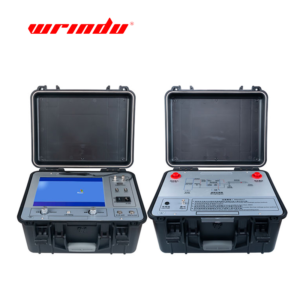
Click the picture to know more about Wrindu Cable Fault Pre-locator.
What Is the Multiple Pulse Method in Cable Fault Testing?
The multiple pulse method combines low-voltage pulse testing with controlled high-voltage breakdown. The system injects repeated pulses into the cable after a brief flashover at the fault point. Each pulse produces a clear reflection that shows the true fault distance.
Key characteristics
-
Uses repeated measurement to stabilize the waveform
-
Improves detection of high-resistance cable faults
-
Provides clear reflection comparison before and after breakdown
-
Supports accurate pre-location before pinpointing
Because of these advantages, engineers widely use the multiple pulse method in cable fault testing.
Why Does the Multiple Pulse Method Improve Fault Location Accuracy?
Single pulse reflection often appears weak or distorted. High resistance and insulation leakage absorb signal energy.
The multiple pulse method solves this issue through:
1. Repeated discharge stabilization
Controlled flashover creates a temporary conductive path.
Later pulses travel through the same path and return strong reflections.
2. Waveform comparison
Technicians compare normal and fault waveforms.
The difference clearly marks the fault position.
3. Noise reduction
Multiple measurements reduce random interference.
The final result becomes more reliable.
This process greatly improves pre-location accuracy in underground cable fault detection.
How Does RDCD-Ⅱ/502 Support the Multiple Pulse Method?
RDCD-Ⅱ/502 integrates pulse generation, waveform capture, and intelligent analysis. The device helps engineers perform stable multiple pulse testing in field conditions.
Practical benefits
-
Fast fault distance calculation
-
Clear high-resolution waveform display
-
Reliable detection of high-resistance and complex faults
-
Simple portable operation for on-site testing
With RDCD-Ⅱ/502, technicians complete pre-location and analysis before precise acoustic pinpointing.
When Should Engineers Use the Multiple Pulse Method?
Engineers select this method when:
-
TDR shows unclear or missing reflection
-
The cable fault has high resistance or intermittent discharge
-
Long cables create signal attenuation or noise
-
Accurate pre-location becomes critical before excavation
In these scenarios, the multiple pulse method offers clear technical value.
What Problems Occur Without the Multiple Pulse Method?
Without this technique, teams may face:
-
Incorrect fault distance estimation
-
Repeated excavation attempts
-
Longer power outage duration
-
Higher maintenance cost
These risks highlight the importance of advanced cable fault testing technology.
Common Questions About the Multiple Pulse Method
Q1: Is the multiple pulse method better than TDR alone?
Yes. It detects high-resistance faults that TDR may miss.
Q2: Does the method damage cable insulation?
No. Controlled discharge keeps testing safe when used correctly.
Q3: Why choose RDCD-Ⅱ/502 for this test?
Because it delivers stable pulses, clear waveforms, and accurate distance results.
Q4: Is acoustic pinpointing still required?
Yes. Multiple pulse testing finds distance, while acoustic methods find the exact ground point.
Wrindu Expert Review
The multiple pulse method in cable fault testing provides clear advantages for locating difficult underground cable faults.
It stabilizes reflections, reduces noise, and improves distance accuracy.
Combined with professional instruments like RDCD-Ⅱ/502, this method enables:
-
Reliable high-resistance fault detection
-
Faster repair decisions
-
Lower maintenance cost
-
Improved power system reliability
For modern cable maintenance, the multiple pulse method has become an essential diagnostic solution.
