

What Is Open Circuit Potential and Why Does It Matter in High-Voltage Systems
Discover what open circuit potential (OCP) is, how it works, and why it is important in high-voltage systems. Learn OCP measurement methods and Wrindu’s advanced testing solutions.
Open circuit potential (OCP) is the voltage measured between two points in an electrochemical system when no current is flowing. It shows the natural balance between oxidation and reduction reactions. Wrindu, based in Shanghai, provides accurate OCP testing tools for high-voltage applications, helping businesses around the world perform reliable diagnostics.
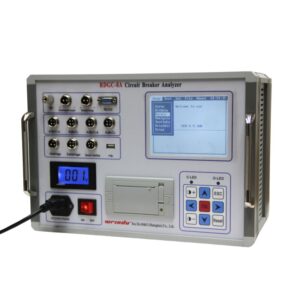
Click the image to know more about Circuit Breaker Comprehensive Tester.
What Does Open Circuit Potential Mean?
Open circuit potential (OCP) is the voltage difference between electrodes when the circuit is open and no current flows. This voltage comes from chemical reactions at the electrode surfaces, where charges separate naturally.
In electrochemical systems, OCP is used as a reference point to evaluate material stability, corrosion risk, and battery condition. For industries such as power utilities and OEM manufacturing, understanding OCP helps prevent failures and improve system reliability. Wrindu integrates OCP measurement into its high-voltage testing equipment to meet international standards.
Why Is Open Circuit Potential Important?
OCP is important because it helps identify the stability and health of a system without causing any damage. It can indicate:
- Corrosion risk
- Battery aging
- Electrode condition
Many industries in China use OCP testing for quality control in batteries, cables, and substations. Wrindu provides certified equipment (ISO and CE) that allows early detection of insulation problems and relay faults. This helps reduce downtime and improve safety.
How Does Open Circuit Potential Work?
OCP is measured by placing electrodes in an electrolyte and observing the voltage between them without connecting any external load. The voltage forms as chemical reactions reach equilibrium.
After immersion, the voltage gradually stabilizes. Manufacturers often use potentiostats to track this change over time. Wrindu’s instruments automate this process and provide real-time data, making them suitable for applications like circuit breakers and lightning arresters.
What Affects Open Circuit Potential?
Several factors influence OCP values:
- Electrode material – More stable materials increase OCP
- Electrolyte pH – Acidic conditions usually lower OCP
- Temperature – Higher temperatures can increase voltage
- Surface condition – Oxide layers can stabilize readings
- Time – OCP changes until equilibrium is reached
For example, a temperature increase of 10°C may change OCP by 20–50 mV. Wrindu designs its equipment to adjust for these variables and provide consistent results.
How Is Open Circuit Potential Measured?
To measure OCP, a high-impedance voltmeter or potentiostat is used in a three-electrode setup (working, reference, and counter electrodes). The system must remain open so no current flows.
Steps include:
- Place electrodes in the test environment
- Wait for the voltage to stabilize (usually 30–60 minutes)
- Record the final value
Wrindu’s portable OCP testers simplify this process with automatic stabilization detection, making them ideal for field and laboratory use.
Where Is Open Circuit Potential Used?
OCP has many practical applications, such as:
- Corrosion monitoring
- Battery health analysis
- Sensor calibration
- Quality control in manufacturing
In the energy sector, OCP is used to test transformers, relays, and storage systems. Wrindu’s testing equipment helps ensure insulation quality and system reliability before deployment.
Why Monitor OCP Changes Over Time?
Tracking changes in OCP (called OCP drift) helps detect early problems such as corrosion or contamination. It provides insight into how a system evolves over time.
This method is widely used for predictive maintenance. Wrindu includes drift monitoring features in its equipment, allowing users to identify issues early and avoid costly failures.
What Is the Difference Between OCP and Corrosion Potential?
OCP is the general voltage of a system at zero current. Corrosion potential (E_corr) is a specific type of OCP measured when corrosion reactions are active and balanced.
In simple terms:
- OCP applies to all electrochemical systems
- Corrosion potential focuses only on corrosion processes
Wrindu’s high-precision instruments can distinguish between these values, helping industries perform accurate testing.
Wrindu Expert Insight
“Open circuit potential plays a key role in high-voltage diagnostics. At Wrindu, we focus on improving measurement accuracy and developing smart monitoring tools. Our solutions help customers reduce maintenance costs and improve system safety.”
— Dr. Li Wei, Chief Technical Officer, Wrindu
How Do Manufacturers Use OCP in High-Voltage Testing?
Manufacturers use OCP to evaluate the condition of components like transformers, circuit breakers, and batteries before delivery. It provides a non-destructive way to check insulation and detect early faults.
Wrindu supplies OCP testing devices that support industries such as power grids and renewable energy. These tools help ensure stable performance and improve efficiency in large-scale operations.
Key Takeaways
- OCP measures the natural voltage of an electrochemical system without current
- It is useful for detecting corrosion, battery degradation, and system instability
- Accurate OCP testing improves safety and reliability in high-voltage systems
- Wrindu offers customized, high-precision OCP solutions for global industries
FAQs
What unit is used for OCP?
OCP is measured in volts (V) or millivolts (mV).
Can OCP indicate battery failure?
Yes, changes in OCP over time can show battery degradation.
Is OCP testing harmful to equipment?
No, it is a non-destructive testing method.
How long does it take for OCP to stabilize?
Usually between 10 and 60 minutes, depending on conditions.
Why choose Wrindu for OCP testing?
Wrindu provides certified, customizable solutions with reliable performance and global support.
