

What Is Tan Delta Testing and Why Is It Important for Cables?
Tan Delta testing helps detect insulation issues in cables, preventing failures and extending lifespan. Learn about its importance for cable diagnostics and the Wrindu Tan Delta Tester.
Cables are essential components in electrical systems, and their insulation plays a crucial role in ensuring safe and efficient operation. Over time, insulation can degrade due to various factors such as environmental conditions, aging, or mechanical stress. When this happens, the risk of electrical faults, outages, or even fires increases significantly. This is where Tan Delta testing comes in. It’s an effective and non-destructive method for diagnosing insulation issues in cables, providing valuable insights that help prevent unexpected failures and extend the life of your cables.
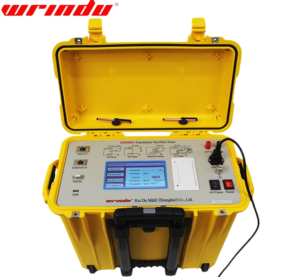
Click the image to know more about Wrindu Tan Delta Tester.
What Is Tan Delta Testing?
Tan Delta testing is a method used to measure the dielectric loss factor of insulation materials, such as those used in cables. This factor indicates how much electrical energy is lost as heat when an electrical field is applied to the insulation. The formula for Tan Delta is the ratio of the resistive current to the capacitive current. A higher Tan Delta value indicates greater losses and suggests that the insulation is deteriorating.
The test is often performed at high voltage to simulate the conditions under which the cable operates in real-world applications. A low Tan Delta value (usually below a certain threshold) indicates healthy insulation, while a high value signals potential insulation problems.
Why Is Tan Delta Testing Important for Cables?
Early Detection of Insulation Deterioration
One of the primary benefits of Tan Delta testing is its ability to detect early signs of insulation breakdown. Unlike traditional methods, which may require the disconnection of cables or cause disruptions, Tan Delta testing is non-invasive and quick. By identifying issues early, you can prevent more serious failures down the line, saving on costly repairs and downtime.
Assessing Cable Performance
Tan Delta testing helps you monitor the ongoing health of cable insulation, especially in high-voltage systems where insulation is vital for safe operation. As cables age, their insulation tends to lose its original properties, such as moisture resistance and dielectric strength. Regular Tan Delta tests provide insight into whether the insulation is still capable of performing as required or if it’s starting to deteriorate.
Predicting Cable Lifespan
Knowing the Tan Delta values of cables allows you to predict their lifespan more accurately. If the values start to increase significantly, it may indicate that the insulation is degrading and could soon lead to a failure. Instead of waiting for a failure to occur, you can plan preventive maintenance and potentially replace cables before they pose a risk. This proactive approach helps avoid unplanned outages, which can be particularly costly for industrial plants and power utilities.
Non-Destructive Testing
Tan Delta testing is a non-destructive diagnostic method. This means you don’t need to cut or disturb the cables to perform the test. The test can be conducted while the cable remains fully operational, making it a convenient and efficient way to assess the health of insulation without downtime. This is particularly important for mission-critical systems where even short disruptions can lead to significant losses.
Useful for Cables in Complex Systems
For cables in complex systems, such as power grids, telecommunications, and industrial environments, Tan Delta testing is essential. The test can be performed on cables with complex insulation systems or those with long service lives. In applications where traditional methods might be difficult or impossible to apply, Tan Delta testing provides an effective alternative.
Common Questions About Tan Delta Testing
Can Tan Delta testing be done on any type of cable?
Yes, Tan Delta testing can be used on most types of cables, including medium and high-voltage cables. However, the testing parameters may vary depending on the cable’s material and the environment in which it operates. It’s important to follow manufacturer recommendations and standards for each specific cable type.
How often should Tan Delta testing be performed?
The frequency of Tan Delta testing depends on the application and the criticality of the system. For high-voltage cables or those used in sensitive environments, testing should be done regularly, often annually or semi-annually. For cables in less critical systems, testing can be done less frequently, but it’s important to monitor the trend in Tan Delta values over time.
What is considered a normal Tan Delta value?
Normal Tan Delta values are typically low, with values ranging from 0.001 to 0.005 in well-maintained cables. Higher values (typically above 0.01) may indicate insulation degradation and warrant further investigation. The acceptable value depends on the specific cable type and its application.
What happens if the Tan Delta value increases over time?
An increasing Tan Delta value indicates that the insulation is experiencing greater losses, usually due to aging or moisture ingress. This suggests that the insulation is deteriorating and may be at risk of failure. When Tan Delta values rise beyond acceptable thresholds, maintenance or replacement of the cable may be necessary.
Wrindu Tan Delta Tester: The Ideal Tool for Cable Insulation Testing
For accurate and reliable Tan Delta testing, the Wrindu Tan Delta Tester is an excellent choice. Designed for both field and laboratory use, the Wrindu tester offers precise measurements of dielectric loss factors in cables and other electrical components. The Wrindu Tan Delta Tester is user-friendly, durable, and provides rapid results, making it the go-to tool for professionals who require regular cable diagnostics.
With its wide range of features, including advanced processing algorithms and digital integration technology, the Wrindu tester ensures high-precision readings, even in challenging environments. Whether you’re performing a Tan Delta Test of Transformer or inspecting cables, Wrindu’s reliable equipment helps you maintain the integrity of your electrical systems.
Conclusion
Tan Delta testing is a crucial tool for diagnosing insulation problems in cables. By measuring the dielectric loss factor, this test provides valuable insights into the health of cable insulation, helping to prevent failures and extend the lifespan of cables. Regular testing with reliable tools, like the Wrindu Tan Delta Tester, ensures that you can maintain the safety and performance of your electrical systems. Whether for power cables, telecommunications cables, or high-voltage systems, Tan Delta testing is an essential part of a proactive maintenance strategy.
