What Is the AC High-Voltage Dry-Type Test Transformer?
Wrindu AC high-voltage dry-type test transformer is oil-free design with compact size, high safety, stable output, and easy operation for labs, workshops, and on-site testing.
The AC High-Voltage Dry-Type Test Transformer is an oil-free solution for power frequency withstand voltage testing. It suits laboratories, workshops, and on-site testing. The compact design makes transport and operation easy.
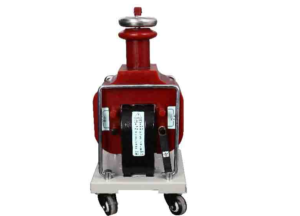
Click the picture to know more about Wrindu AC HV Dry-Type Tester.
Why Choose This Dry-Type Test Transformer?
-
Small size and light weight
-
Compact structure
-
Oil-free design with no leakage
-
Maintenance-free operation
-
Environmentally friendly
-
Simple and intuitive wiring
-
Easy to use, even for new operators
-
High safety and reliable performance
-
Clean and modern appearance
What Are the Main Technical Features of dry-type test transformer?
-
Dry-type solid insulation
-
Stable output voltage
-
Low noise during operation
-
Safe operation without oil or gas
-
Suitable for power frequency AC tests
What Are the Technical Specificationsof dry-type test transformer?
| Capacity (kVA) | Low Voltage (V) | Low Current (A) | High Voltage (kV) | High Current (mA) | Weight (kg) |
|---|---|---|---|---|---|
| 5 / 50 | 200 | 25 | 50 | 110 | 30 |
| 10 / 50 | 200 | 50 | 50 | 200 | 40 |
| 15 / 50 | 200 | 75 | 50 | 300 | 50 |
| 20 / 50 | 200 | 100 | 50 | 400 | 55 |
| 25 / 50 | 200 | 125 | 50 | 500 | 60 |
| 30 / 50 | 200 | 150 | 50 | 600 | 65 |
| 5 / 100 | 400 | 12.5 | 100 | 50 | 60 |
| 10 / 100 | 400 | 25 | 100 | 100 | 65 |
| 15 / 100 | 400 | 37.5 | 100 | 150 | 70 |
| 20 / 100 | 400 | 50 | 100 | 200 | 75 |
| 25 / 100 | 400 | 62.5 | 100 | 250 | 80 |
| 15 / 120 | 400 | 37.5 | 120 | 125 | 85 |
| 20 / 120 | 400 | 50 | 120 | 160 | 90 |
| 25 / 150 | 400 | 62.5 | 120 | 200 | 95 |
| 30 / 120 | 400 | 75 | 120 | 250 | 100 |
Where Can Dry-type Test Transformer Be Used?
-
Power equipment insulation tests
-
Cable and switchgear testing
-
Factory quality inspections
-
Laboratory and workshop testing
FAQs
What is the primary purpose of a dry-type test transformer?
A: Its main purpose is insulation performance testing of electrical equipment. It supports AC and DC high-voltage tests with small current and helps find hidden problems such as damaged insulation or poor contacts before equipment goes into service.
What are the main advantages over oil-immersed models?
A: Dry-type test transformers are safer, easier to maintain, and more portable. They contain no flammable oil, need no oil replacement or chemical testing, are lighter for field work, and avoid environmental pollution from oil leaks.
What are the typical limitations?
A: Dry-type test transformers have lower voltage limits and heat tolerance. They usually work below 35 kV, generate more heat during long overloads, and often produce more noise than oil-filled transformers.
How should a dry-type transformer be tested?
A: Testing focuses on visual condition, insulation quality, and electrical integrity. This includes visual inspection, insulation resistance testing, dielectric strength testing, and DC winding resistance measurement.
Where are they most commonly used?
A: Dry-type test transformers are best for indoor and high-safety environments. Common applications include hospitals, schools, shopping malls, subways, airports, data centers, chemical plants, and renewable energy sites such as solar and wind farms.
You might be interested in
What do you know about insulation test equipment?
Which Test Transformer is Best for You: Dry-Type, Oil-Immersed, or Gas-Insulated?