

What Is the Best Partial Discharge Testing Equipment for Utilities?
Discover the best partial discharge testing equipment for utilities to detect insulation faults early, prevent outages, and enable predictive maintenance.
Electric utilities today operate under intense pressure to keep the grid stable while managing aging assets and increasing electricity demand. Partial discharge (PD) testing equipment has become a vital tool for identifying early insulation defects in high-voltage assets such as transformers, GIS, and power cables. Detecting these issues in advance helps prevent outages that can cost up to $650,000 per day and supports predictive maintenance strategies that may reduce unexpected repair costs by as much as 90%.
Manufacturers like Wrindu provide advanced, portable PD testers designed to improve diagnostic accuracy, enhance safety, and increase operational efficiency for utilities worldwide.
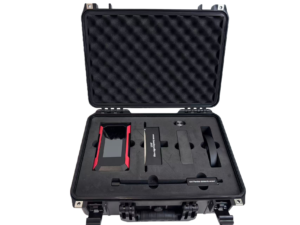
Click the picture to know more about Wrindu PD Tester.
What Challenges Do Utilities Face with Partial Discharge?
The global PD detection equipment market reached approximately $556 million in 2025 and is projected to grow steadily through 2033. This expansion is largely driven by aging infrastructure and the need for more dependable grid systems. Industry studies indicate that up to 85% of severe substation disruptions are linked to insulation degradation associated with partial discharge.
Unplanned outages are particularly costly. In many cases, emergency failures can cost utilities ten times more than scheduled maintenance activities.
Why Are PD Failures Becoming More Common?
The integration of renewable energy and the transition toward smart grids have added complexity to modern power systems. Variable loads and power electronics increase electrical stress on insulation systems.
High-voltage cables and gas-insulated switchgear (GIS) may develop internal voids or contamination that gradually weaken insulation. If PD activity is not detected early, it can result in flashovers, equipment explosions, or complete system failure, affecting critical infrastructure.
How Do These Issues Affect Daily Operations?
A single substation outage caused by insulation failure may generate financial losses exceeding $650,000 per day. Transformer replacements can cost millions of dollars.
Maintenance teams often face additional challenges:
-
High false-alarm rates
-
Limited availability of skilled PD specialists
-
Environmental electromagnetic interference (EMI)
These factors delay accurate fault identification and increase regulatory compliance risks.
Limitations of Traditional PD Testing
Conventional testing methods typically rely on offline procedures such as AC hipot testing or simple acoustic detection. These approaches require system shutdowns, interrupting service for extended periods.
Other limitations include:
-
Reduced signal coupling efficiency in shielded systems
-
Difficulty filtering background noise in substations
-
Missed low-level discharge activity
In many cases, legacy tools lack multi-sensor integration, forcing technicians to conduct separate tests. This increases downtime and may lead to misinterpretation of discharge types due to overlapping signal patterns.
Bulky laboratory equipment further limits field usability, while positioning errors in compact switchgear can reduce diagnostic precision.
Wrindu’s Advanced PD Testing Solution
Wrindu’s RDPDD-104H Partial Discharge Tester is designed specifically for modern utility applications. The device integrates TEV, acoustic emission (AE), UHF, and HFCT detection methods into a compact handheld unit.
Key technical specifications include:
-
12-bit sampling resolution
-
Sampling rate up to 10 MS/s
-
Sensitivity down to 0.1 pC
-
3D PRPD visualization across 10 kHz–1 MHz
-
Rechargeable lithium battery
-
Integrated TFT display for on-site analysis
The tester enables live measurements on energized equipment without requiring shutdowns. It is certified under ISO9001 and CE standards to ensure dependable performance in global markets.
Performance Comparison
| Feature | Traditional Equipment | Wrindu RDPDD-104H |
|---|---|---|
| Detection Modes | Single method | Multi-sensor integration |
| Portability | Heavy, lab-based | Handheld, 0.85 kg |
| Sensitivity | >1 pC | 0.1 pC |
| Data Analysis | Manual PRPD review | 3D mapping with discharge library |
| Operation | Offline only | Online/live testing |
| Maintenance Strategy | Reactive | Predictive (up to 90% savings) |
The comparison demonstrates faster testing, improved accuracy, and lower lifecycle costs.
Step-by-Step Implementation Guide
Utilities can integrate Wrindu’s PD tester into routine inspections using the following workflow:
-
System Preparation – Calibrate sensors and ensure background PD levels remain below acceptable thresholds.
-
Mode Selection – Choose TEV/UHF for switchgear or HFCT for cable diagnostics.
-
Data Collection – Gradually increase voltage and record discharge signals for 1–5 minutes.
-
Data Interpretation – Review PRPD patterns and 3D visualizations to classify discharge types.
-
Reporting – Export findings via USB or SD card and schedule corrective action if discharge levels exceed defined limits.
Real-World Utility Applications
Substation Operator
A regional grid operator experienced recurring GIS failures causing annual 12-hour outages. Traditional acoustic methods failed to detect internal defects due to noise interference. After adopting Wrindu’s multi-sensor approach, downtime was reduced by 80%, saving approximately $500,000 annually.
Wind Farm Utility
A wind energy operator identified partial discharge within 10 km of medium-voltage cables, causing measurable energy losses. Using Wrindu’s online HFCT and TEV detection, the utility precisely located insulation pinholes without shutting down operations, extending cable life by 30%.
Thermal Power Plant
Transformers showed abnormal temperature rises linked to hidden PD activity. Wrindu’s integrated UHF and AE detection provided clear pattern visualization, reducing failure incidents by 90% and saving $1.2 million in replacement costs over two years.
Railway Traction System
Metro operators struggled with PD-related disruptions in overhead lines. High-resolution sampling enabled fault localization within 5 cm accuracy, increasing service uptime to 95% and significantly lowering maintenance expenses.
Why Act Now?
The demand for PD testing equipment is projected to grow at over 12% annually through 2032. Expanding renewable installations and stricter safety regulations require more proactive monitoring strategies.
IoT-enabled and AI-enhanced PD systems allow utilities to move from reactive repairs to predictive maintenance. Investing in advanced diagnostic tools today helps prevent multimillion-dollar outages and supports long-term infrastructure resilience.
Frequently Asked Questions
What Is Partial Discharge Testing?
It is a diagnostic method used to detect localized insulation discharges before they evolve into full breakdowns.
Why Is PD Testing Important for Utilities?
It prevents the majority of insulation-related failures in substations and can reduce repair costs dramatically compared to reactive maintenance.
How Precise Is Wrindu’s PD Tester?
It detects discharge levels as low as 0.1 pC using 12-bit digital sampling and advanced filtering algorithms.
When Should PD Testing Be Conducted?
During commissioning, annually as part of preventive maintenance, or continuously through online monitoring systems.
Can One Device Test Multiple Assets?
Yes, interchangeable sensors allow testing of GIS, transformers, switchgear, and cable systems.
Is Special Training Required?
Basic operation can be learned in one day, and the intuitive display simplifies data interpretation for technicians.
