

What Is the Difference Between No Load Loss and Load Loss?
Compare no load loss vs load loss in transformers, explore their impact on efficiency, and discover how Wrindu testers help measure losses accurately on-site and in the lab.
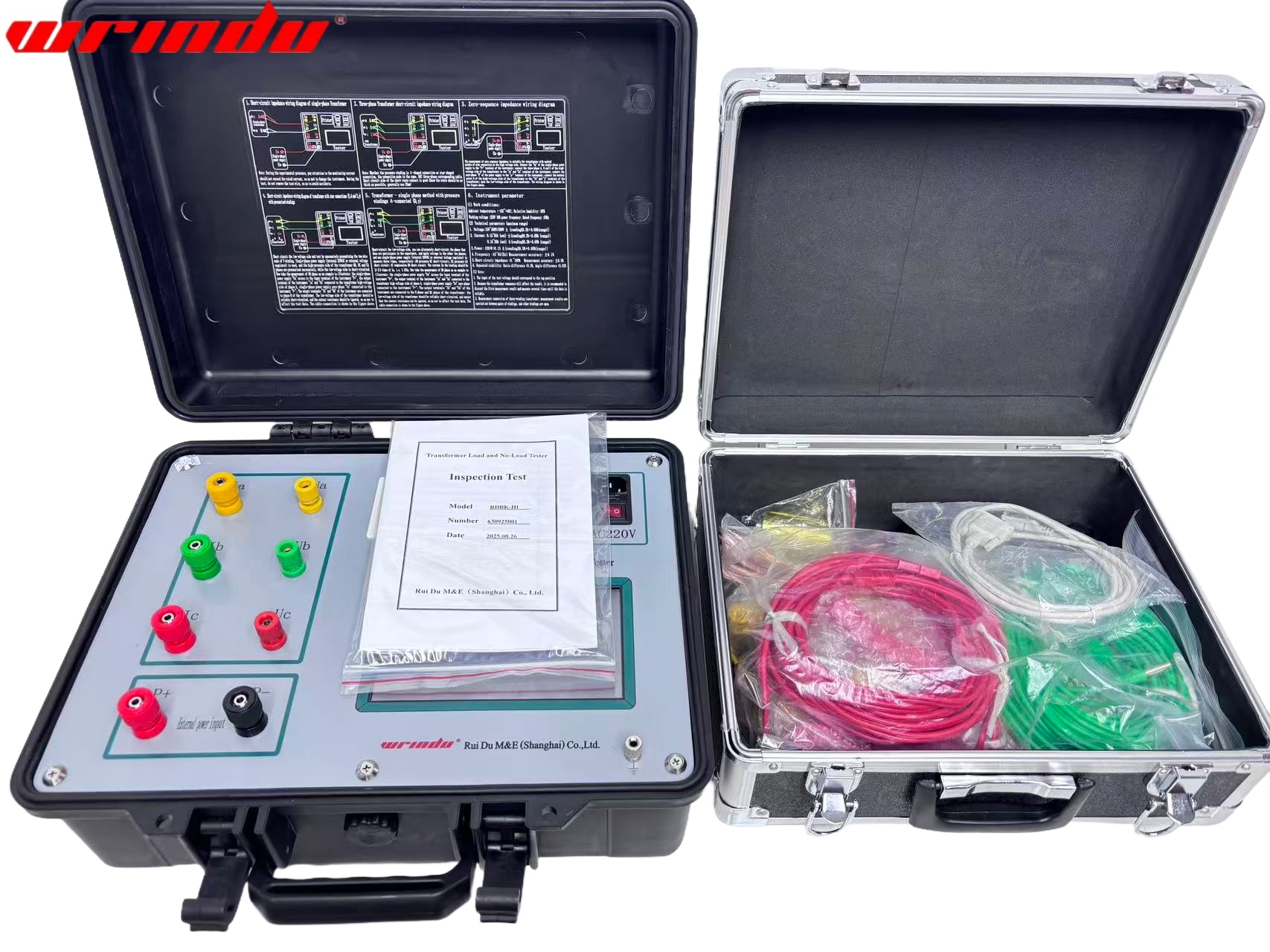
Understanding no load loss vs load loss is essential for transformer efficiency analysis and maintenance planning. No load loss occurs in the transformer core when the secondary is open and rated voltage is applied to the primary. It mainly comes from core hysteresis and eddy currents. Load loss, on the other hand, occurs when the transformer supplies current to a load and includes copper losses in windings and connections.
By knowing the difference, engineers can optimize transformer design, reduce energy costs, and schedule maintenance more effectively.
How Do No Load Loss and Load Loss Compare?
Here is a clear comparison table to highlight the differences:
| Feature | No Load Loss | Load Loss |
|---|---|---|
| Source of Loss | Core (hysteresis and eddy currents) | Windings and connections (copper losses) |
| Occurrence | When secondary winding is open | When transformer supplies current to a load |
| Dependence | Voltage and frequency | Load current and resistance |
| Measurement | Rated voltage applied, secondary open | Full load or partial load conditions |
| Impact on Efficiency | Constant, independent of load | Varies with load |
| Testing Tools | Wrindu no load loss testers | Wrindu load and no-load loss testers |
| Application | Evaluate core quality and design efficiency | Estimate operational efficiency and energy cost |
This table makes it easy to see how each type of loss affects transformer performance and which tests are required.
What Are Typical Application Scenarios?
-
No load loss testing is often used in transformer commissioning, factory inspections, and efficiency verification. Wrindu portable testers simplify on-site testing of core losses.
-
Load loss testing helps utilities measure energy losses under normal operating conditions and plan maintenance schedules. Wrindu testers allow accurate copper loss measurement for different load scenarios.
-
Comparing no load loss vs load loss helps engineers select the right transformer for industrial, utility, or renewable energy applications and ensures compliance with efficiency standards.
Common Questions from Testing Engineers
Why is no load loss sometimes higher than expected?
High no load loss may result from core material defects, residual magnetism, or incorrect voltage during testing. Wrindu testers help reduce these errors with precise voltage control.
Can load loss be measured on-site?
Yes, Wrindu load loss testers support field measurement, allowing engineers to calculate energy loss under actual operating conditions.
How do no load and load loss affect transformer efficiency?
No load loss affects efficiency at low or zero load, while load loss dominates efficiency at full load. Monitoring both helps optimize transformer performance.
Why Use Wrindu Test Equipment?
Wrindu instruments integrate voltage application, current measurement, and data logging. They allow engineers to evaluate both no load loss and load loss accurately. With portable and precise testing systems, engineers can optimize transformer design, reduce energy costs, and maintain compliance with efficiency standards.
