

What Is the Difference Between Pour Point and Cloud Point
Discover the key differences between pour point and cloud point of oil. Learn how they affect low-temperature performance, diesel fuel flow, and lubrication systems, and how Wrindu testers ensure accurate oil analysis.
The pour point and cloud point are two critical temperature parameters used to evaluate the behavior of oils under changing thermal oil conditions. While both relate to how oil reacts to temperature, they serve different purposes and reflect distinct physical changes.
In simple terms:
- Pour point indicates how well an oil can still flow at low temperatures.
- Cloud point indicates when oil begins to form wax crystals and turn cloudy.
Understanding the difference is essential for selecting the right oil in applications such as transformers, lubricating systems, and fuel operations in cold environments.
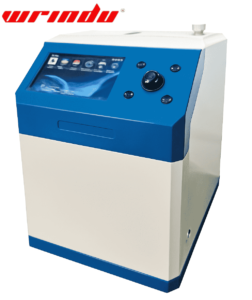
Click the image to know more about Wrindu Automatic Pour Point Freezing Point Tester.
What Is the Pour Point of Oil?
The pour point is the lowest temperature at which an oil remains fluid enough to flow under specified test conditions.
Key Characteristics:
- Occurs during the cooling process
- Indicates when oil becomes semi-solid or highly viscous
- Measured by gradually cooling a heated oil sample and observing flow behavior
Why It Matters:
- Determines pumpability in cold climates
- Impacts startup performance of engines and equipment
- Critical for lubricating oils, transformer oils, and diesel fuels
👉 If the temperature drops below the pour point, oil may stop flowing completely, leading to system failure or startup issues.
What Is the Cloud Point of Oil?
The cloud point is the temperature at which oil begins to appear cloudy due to the formation of wax crystals.
Key Characteristics:
- Also occurs during the cooling process (not heating)
- Marks the initial stage of wax crystallization
- Measured by cooling the oil and detecting the first sign of turbidity
Why It Matters:
- Affects filterability of fuels
- Can cause blockages in pipelines and fuel systems
- Important for diesel fuel performance in cold weather
👉 The cloud point occurs before the pour point and serves as an early warning of low-temperature issues.
How Do Pour Point and Cloud Point Compare?
| Parameter | Pour Point | Cloud Point |
|---|---|---|
| Definition | Lowest temperature oil can still flow | तापमान when oil becomes cloudy |
| Process | Cooling | Cooling |
| Physical Change | Oil becomes thick or semi-solid | Wax crystals begin to form |
| Impact | Flowability and pumpability | Filterability and system blockage risk |
| Occurrence | After cloud point | Before pour point |
👉 In practice, cloud point = early warning, while pour point = operational limit.
Why Are These Parameters Important in Industrial Applications?
In industries like power systems, petrochemicals, and transportation, oil performance at low temperatures is critical.
- Transformer Oil: Must remain fluid for proper cooling and insulation
- Diesel Fuel: Needs low cloud point to prevent fuel line clogging
- Lubricants: Require low pour points for smooth startup in cold environments
Failure to consider these parameters can lead to:
- Equipment damage
- Reduced efficiency
- Unexpected downtime
How Wrindu Testers Stand Out in Oil Temperature Testing?
Wrindu provides advanced testing solutions designed for precise evaluation of oil low-temperature properties.
Key Advantages:
- High Accuracy Detection
Precisely identifies both cloud point and pour point for reliable analysis - Automated Testing System
Ensures consistent results with minimal operator intervention - Wide Industry Application
Suitable for transformer oil, diesel fuel, lubricants, and industrial oils - Fast and Efficient Testing
Reduces testing time while maintaining high repeatability - Supports Preventive Maintenance
Helps detect oil degradation early and avoid costly failures
👉 Wrindu testers are ideal for utilities and industrial users focused on improving system reliability and reducing maintenance risks.
FAQs About Pour Point and Cloud Point
Q1: What is the main difference between pour point and cloud point in oil testing?
A: The cloud point is when wax crystals first appear and oil becomes cloudy, while the pour point is the lowest temperature at which the oil can still flow.
Q2: Why is cloud point important for diesel fuel in cold climates?
A: Because wax crystals formed at the cloud point can clog fuel filters and lines, affecting engine performance.
Q3: Can oil still be used below its cloud point?
A: Yes, but with caution. Oil can still flow until it reaches the pour point, though performance may be affected.
Q4: How is pour point measured in laboratory conditions?
A: The oil sample is cooled under controlled conditions, and the temperature at which it stops flowing is recorded.
Q5: Which is more critical: pour point or cloud point?
A: Both are important. Cloud point provides early warning, while pour point defines the operational limit.
Q6: How can I improve low-temperature performance of oil?
A: By using additives, selecting appropriate oil grades, or choosing oils with naturally lower pour and cloud points.
Q7: What industries rely most on pour point and cloud point testing?
A: Power utilities, oil & gas, transportation, and heavy industries all depend on these parameters for reliable operation.
