

What Is the Flash Point of Gasoline
Learn the flash point of gasoline (~-46°C), how it compares to diesel, and why it matters for safety and fuel handling. Discover key properties and how Wrindu testers support accurate oil analysis.
The flash point of gasoline is typically around -46°C (± a few degrees) under standard atmospheric pressure. This extremely low flash point means gasoline can produce flammable vapors even at very low temperatures, making it highly volatile and dangerous if not handled properly.
What Does Flash Point Mean?
The flash point is the lowest temperature at which a liquid produces enough vapor to ignite momentarily (flash) when exposed to an ignition source.
- It does not mean continuous burning
- Only the vapor-air mixture ignites, not the liquid itself
- At this temperature, evaporation is just sufficient for ignition
👉 Because gasoline evaporates easily, it can ignite even in cold environments, which is why strict storage and handling precautions are necessary.
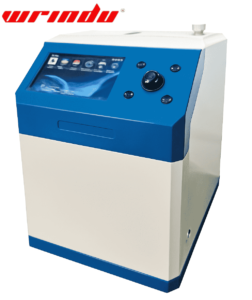
Click the image to know more about Wrindu Automatic Pour Point Freezing Point Tester.
How Does Gasoline Compare to Diesel in Flash Point?
- Gasoline: ~ -46°C (very low, highly flammable)
- Diesel: ~ 55°C (much higher, safer to store and transport)
Key Insight:
Gasoline is far more hazardous than diesel because it forms flammable vapor at much lower temperatures. Diesel requires higher temperatures to reach ignition conditions.
What Are the Key Characteristics of Gasoline?
Gasoline is a volatile liquid hydrocarbon mixture derived from petroleum through distillation and cracking processes.
Main Properties:
- Distillation Range: Approximately 30°C to 220°C
- Appearance: Transparent liquid
- Highly Flammable: Due to low flash point
- Strong Volatility: Evaporates quickly
Important Performance Characteristics:
- Evaporation: Affects engine start and combustion efficiency
- Stability: Resistance to oxidation and degradation
- Anti-knock Performance: Prevents engine knocking (octane rating)
- Corrosion Resistance: Protects engine components
- Cleanliness: Reduces deposits in fuel systems
Why Is Flash Point Important in Industrial Applications?
Understanding flash point is critical for:
- Safety Management: Prevent fire and explosion risks
- Storage & Transport: Determine safe handling conditions
- Fuel Classification: Differentiate between gasoline, diesel, and other fuels
- Equipment Design: Ensure proper ventilation and ignition control
👉 In power systems and industrial environments, improper handling of low flash point fuels like gasoline can lead to serious hazards.
How Wrindu Testers Stand Out in Oil Testing?
The Wrindu RDQN-361D Automatic Pour Point & Freezing Point Tester is designed to deliver precise and reliable temperature-related oil analysis, supporting industrial safety and performance.
Key Advantages:
- Fully Automated Testing
No manual intervention required, improving efficiency and consistency - High-Precision Temperature Control
Uses advanced PID self-tuning technology for accurate measurements - Wide Measuring Range
Covers room temperature down to -68°C, suitable for various oil types - User-Friendly Interface
Large color LCD with bilingual (Chinese/English) interactive menu - Reliable and Safe Operation
Built-in protection for cooling system and stable performance in industrial environments - Strong Anti-Interference Capability
Ensures accurate results even in complex testing conditions
Technical Highlights:
- Temperature accuracy: ±0.4°C
- Repeatability: ±1°C
- Power consumption: < 500 W
- Operating environment: 0–40°C, humidity ≤85%
👉 Wrindu testers are widely used in transformer oil, fuel oil, and lubricating oil analysis, helping industries achieve accurate diagnostics and preventive maintenance.
FAQs About Gasoline Flash Point
Q1: Why does gasoline have such a low flash point?
A: Because it contains light hydrocarbons that evaporate easily, forming flammable vapor at very low temperatures.
Q2: Is gasoline more dangerous than diesel?
A: Yes. Gasoline’s low flash point makes it much easier to ignite, increasing fire and explosion risks.
Q3: Can gasoline ignite below 0°C?
A: Yes. Since its flash point is around -46°C, gasoline can ignite even in freezing conditions.
Q4: What is the difference between flash point and ignition point?
A: Flash point is the temperature for brief ignition, while ignition point (autoignition) is when the substance burns continuously without an external flame.
Q5: How is flash point tested?
A: It is measured by heating the sample and introducing an ignition source at intervals to detect the lowest temperature at which vapor ignites.
Q6: Why is flash point important for fuel storage?
A: It determines safe storage temperatures and helps prevent accidental fires during handling and transportation.
Q7: Can flash point change over time?
A: Yes. Contamination or composition changes can alter the flash point, affecting safety and performance.
