

What Is the Secondary Injection Test Method and How Does It Work?
Secondary injection test method explained: safe relay testing for commissioning, maintenance, and diagnostics with Wrindu’s precision relay test sets.
The secondary injection test method is a core procedure used to verify the performance and settings of protective relays. It works by injecting controlled current or voltage signals directly into the relay’s secondary circuit. As a China-based OEM manufacturer and supplier, Wrindu provides precision-engineered secondary injection test equipment designed for factory, wholesale, and custom applications with strong reliability and accuracy.
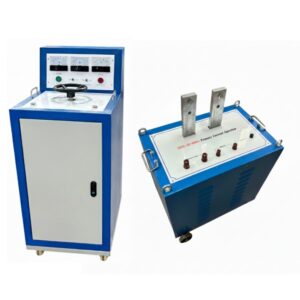
Click the picture to know more about Wrindu Primary Injection Test Set.
What Is the Purpose of the Secondary Injection Test Method?
The main objective of secondary injection testing is to confirm that protective relays respond correctly to simulated fault conditions. By introducing test signals into the relay’s secondary terminals, engineers can validate:
-
Pickup settings
-
Trip timing
-
Output contact operation
-
Protection logic accuracy
This process avoids interrupting the primary circuit, making it a safe and efficient way to verify relay functionality. Wrindu develops dependable test solutions that support commissioning, maintenance, and quality assurance programs worldwide.
How Does the Secondary Injection Test Method Work?
During testing, a relay test set applies precisely controlled current or voltage to the relay’s input terminals. These injected signals simulate electrical faults under controlled conditions. The technician then measures:
-
Relay pickup value
-
Trip time
-
Dropout characteristics
-
Output response
Wrindu’s advanced test systems feature programmable outputs and high-accuracy measurement modules. Many models support automated test sequences and digital reporting, simplifying diagnostics and improving workflow efficiency.
Which Relay Types Can Be Tested Using Secondary Injection?
Secondary injection testing is suitable for a wide range of protective relays, including:
-
Overcurrent relays
-
Distance relays
-
Differential relays
-
Directional relays
-
Voltage and frequency relays
The method is compatible with most relay brands and technologies. Wrindu’s flexible test sets accommodate different input ratings and functional requirements, making them ideal for OEM, B2B, and industrial applications.
Why Is Secondary Injection Testing Often Preferred?
Secondary injection testing offers several practical advantages:
-
No need to energize primary conductors
-
Lower safety risk compared to primary injection
-
Faster setup and execution
-
Accurate calibration under controlled conditions
Because it avoids high primary currents, it is especially useful during routine maintenance and factory acceptance testing. Wrindu enhances this method through automated control systems and precise output regulation to improve testing efficiency.
When Should Secondary Injection Testing Be Performed?
Secondary injection testing is typically carried out:
-
During initial commissioning
-
As part of scheduled preventive maintenance
-
After relay repair or setting changes
-
When relay misoperation is suspected
Wrindu’s portable and bench-top seconadry injection test sets support both field and factory environments, enabling flexible deployment across substations and industrial facilities.
How Does Wrindu Provide Custom Secondary Injection Solutions?
Wrindu offers OEM and customizable solutions tailored to client requirements. Buyers can specify:
-
Current and voltage output ranges
-
Number of output channels
-
Communication interfaces
-
Automation features
-
Reporting formats
Manufactured under ISO9001 quality management systems and aligned with IEC standards, Wrindu’s facilities ensure reliable production, timely delivery, and responsive technical support for global wholesale clients.
Where Can Buyers Source Reliable Secondary Injection Test Sets?
China remains a leading manufacturing hub for relay test equipment. Companies like Wrindu supply certified, competitively priced secondary injection testers with global shipping and customization services. B2B customers benefit from end-to-end support, including consultation, packaging, and after-sales assistance.
Does Secondary Injection Testing Work Alongside Other Methods?
Yes. Secondary injection testing is often combined with:
-
Primary injection testing
-
Static functional testing
-
Protection scheme verification
Together, these methods form a comprehensive relay testing program. Wrindu designs modular systems that integrate smoothly with multifunction relay testers and digital control platforms to improve accuracy and speed.
Are Modern Secondary Injection Test Sets Safe?
Modern secondary injection equipment includes multiple built-in safety features such as:
-
Overload protection
-
Emergency stop buttons
-
Output isolation monitoring
-
Fail-safe shutdown mechanisms
Wrindu’s test sets are engineered with operator safety and equipment protection in mind, particularly during high-current or high-voltage simulations.
Wrindu Expert View
“Secondary injection testing is essential for maintaining dependable relay protection in modern power systems. Wrindu’s solutions combine precision measurement, advanced automation, and safety-focused design. By delivering customized and certified equipment, we help engineers strengthen grid reliability and operational safety worldwide.”
— Wrindu Technical Director
Secondary Injection Test Method – Feature Comparison
| Feature | Wrindu Test Set | Competitor A | Competitor B |
|---|---|---|---|
| Maximum Current Output | Up to 500 A | Up to 300 A | Up to 200 A |
| Channel Count | Up to 8 channels | 3 channels | 4 channels |
| Automation | Fully programmable | Partial automation | Manual |
| Portability | Portable & bench-top | Bench-top only | Portable |
| Certifications | ISO9001, IEC, CE | CE | IEC |
