

What Is the Transformer Winding Resistance Test Standard and How Is It Used in Real Projects?
Complete guide to transformer winding resistance test: definition, purpose, IEEE/IEC standards, step-by-step procedure, result evaluation, temperature correction & demagnetization. Wrindu provides OEM winding resistance testers for utilities & manufacturers.
- BYwrindu
- On
- InTechnical FAQs
Transformer winding resistance testing is a basic but essential electrical test. It measures the DC resistance of transformer windings using low voltage and controlled high current. The purpose is to confirm winding integrity, detect connection problems, and calculate copper (I²R) losses.
International standards such as IEEE and International Electrotechnical Commission define how the test should be performed. In most cases:
-
Test current must be below 15% of rated current
-
Results must be corrected to a reference temperature of 75°C
-
Readings must be stable before recording
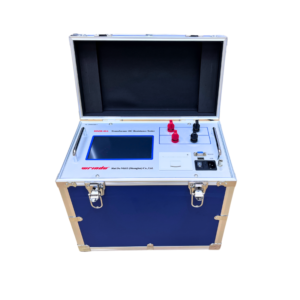
Wrindu provides OEM winding resistance testers widely used by utilities, substations, and transformer manufacturers worldwide.
Click the image to know more about Wrindu DC Resistance Tester 40A.
How Is a Winding Resistance Test Defined?
A winding resistance test measures the DC resistance of each transformer winding to check for:
-
Open circuits
-
Shorted turns
-
Loose or corroded connections
-
Tap changer contact issues
During testing:
-
DC voltage (typically above 40V) is applied
-
Current ranges from 1% to 15% of rated current
-
Voltage drop is measured
-
Resistance is calculated using R = V / I
Engineers compare field results with factory baseline data. Normally:
-
Deviation within 1%–2% is acceptable
-
Higher differences require investigation
Modern testers often support dual-channel measurement, allowing simultaneous high-voltage and low-voltage winding testing — especially useful for large transformers above 100 MVA.
Why Is Winding Resistance Testing Important?
This test plays a critical role in preventive maintenance and factory acceptance testing.
It helps to:
-
Confirm winding continuity
-
Detect poor joints or corrosion
-
Identify shorted turns
-
Evaluate on-load tap changer (OLTC) condition
-
Establish long-term trend data
Power plants (hydro, wind, thermal), substations, and OEM manufacturers rely on this test to reduce unexpected outages.
Interpretation basics:
-
High resistance → possible loose connections or oxidation
-
Low resistance → possible shorted turns
-
Delta winding → multiply line-to-line reading by 1.5 for per-phase value
How Is the Test Performed in Practice?
Step 1: Preparation
-
De-energize the transformer
-
Allow 3–4 hours cooling time
-
Connect test leads securely (Kelvin connection recommended)
Step 2: Measurement
-
Star (Y): measure line-to-neutral
-
Delta (Δ): measure line-to-line
-
Inject DC current (below 15% rated)
-
Wait until readings stabilize
-
Record resistance
Step 3: Temperature Correction
Measured resistance must be corrected to 75°C using oil temperature formulas to allow standard comparison.
Step 4: Demagnetization
After testing, demagnetize the core to remove residual magnetism and prevent inrush current issues during re-energization.
Advanced testers now include:
-
Automatic temperature correction
-
Guided testing procedures
-
Automatic demagnetization
-
High compliance voltage for faster stabilization
What Standards Apply to Winding Resistance Testing?
The main international standards include:
-
IEEE C57.12.90
-
IEEE C57.152
-
IEC 60076-1
-
IS 2026
These standards specify:
-
DC measurement method
-
Test current limitations
-
Stability criteria (typically <0.5% variation)
-
Temperature correction to 75°C
-
Acceptable tolerance (usually within ±2%)
Compliance with these standards ensures accurate and comparable results worldwide.
How Are Results Evaluated?
After correcting values to 75°C:
-
Compare with factory test reports
-
Check phase balance
-
Analyze differences between tap positions
General guidelines:
-
<1% deviation → normal
-
1–2% deviation → monitor
-
2% deviation → further inspection required
Trending data over time is especially useful for predictive maintenance. Gradual changes may indicate corrosion, uneven winding aging, or tap changer wear.
What Precautions Improve Test Accuracy?
To ensure reliable results:
-
Always test when the transformer is fully de-energized
-
Allow sufficient cooling time
-
Use correct current direction
-
Avoid excessive current that may heat the winding
-
Ensure solid terminal contact
-
Always demagnetize after testing
These steps reduce measurement errors and improve repeatability.
Why Many Utilities Choose Chinese Test Equipment Manufacturers
Many Chinese manufacturers provide cost-effective, certified transformer test equipment for global markets. Companies like Wrindu combine:
-
ISO9001 quality systems
-
CE certification
-
OEM customization
-
Integrated data analysis software
-
Rapid production and global supply
By integrating both hardware and intelligent software, modern testers support faster diagnostics and long-term condition monitoring.
Conclusion
Transformer winding resistance testing is a fundamental diagnostic tool. To ensure accurate and meaningful results:
-
Keep test current below 15% rated
-
Correct all readings to 75°C
-
Compare with baseline data
-
Monitor trends over time
Following recognized international standards ensures safe transformer operation and reduces the risk of costly failures.
FAQs
How often should winding resistance be tested?
Annually for critical transformers, after installation, and after fault events.
Can this test check OLTC performance?
Yes. Testing across all tap positions verifies contact quality and continuity.
What does a high resistance value mean?
Possible loose connections, corrosion, or oxidation.
Why is temperature correction necessary?
Resistance changes with temperature. Standard correction to 75°C allows proper comparison with factory data.
Is demagnetization really necessary?
Yes. It prevents residual flux that may cause inrush current during re-energization.
