What is the Wrindu Handheld Relay Protection Tester?
"Discover the RDJB-802H Handheld Relay Protection Tester, a portable and versatile tool for testing and maintaining protection devices in power systems. Ideal for field use."
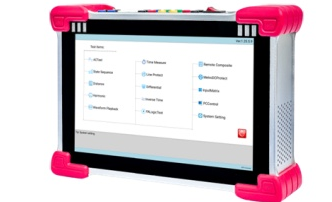
The RDJB-802H Handheld Relay Protection Tester is a versatile and portable device designed for testing and maintaining protection devices in power systems. Whether you work in power grid companies, power plants, construction firms, or other electrical equipment operations, this tester is built to help you quickly and effectively perform tests on a variety of protection devices.
Key Features of Wrindu Handheld Relay Protection Tester
| Feature | Description |
|---|---|
| 10-inch HD LCD Touch Screen | Large, high-definition screen for easy touch operation with no physical buttons. Simple and convenient to use. |
| Portable and Lightweight | Weighs only 3 kg, making it ideal for fieldwork and outdoor maintenance. |
| Multiple Connection Options | Supports RS232 serial port, RJ45 Ethernet, and wireless WiFi control for flexible testing setups. |
| Long Battery Life | Built-in rechargeable lithium battery (12,800mAh) provides up to 8 hours of standby time and 4 hours of continuous use. |
| Self-Protection Features | Includes current overheat alarm, voltage short-circuit protection, overload protection, and overheat protection for safe operation. |
| Voltage and Current Testing | Supports testing of overcurrent protection, zero-sequence current protection, and voltage protection, with adjustable amplitude, phase, and frequency in manual mode. |
| Status Sequence Menu | Customizable test modes with up to 50 test states. Allows full control over voltage, current, amplitude, phase, and frequency. |
| Group Test Menu | Supports phase-ground, phase-phase, and sequence component inputs, enabling testing of impedance characteristics and fault simulations. |
| Harmonic Test Function | Adds DC and harmonics from the 1st to 20th order for simulating real-world power system conditions. |
| Waveform Playback | Can replay fault recording data in COMTRADE format for detailed analysis of past events. |
| DC Voltage and Current Testing | Capable of testing DC voltage and current, as well as intermediate relays and three-phase unbalanced relays. |
Technical Specifications
| Feature | Specification |
|---|---|
| Power Supply | DC16.8V, Built-in rechargeable lithium battery |
| Voltage Output Range | Phase voltage: 0 ~ 125V AC/DC; Line voltage: 0 ~ 250V AC/DC |
| Current Output Range | 0 ~ 12.5A AC, 0 ~ 6A DC |
| Output Response Time | < 100μs |
| Output Frequency Range | 10 ~ 1000Hz |
| Phase Range | ±360º, Accuracy: < 0.2º, Resolution: 0.1º |
| Voltage and Current Synchronicity | < 20µs |
| Communication Ports | 2×Ethernet, 1×RS232, WiFi, 2×USB, 1×HDMI |
| Unit Size | 190mm × 270mm × 60mm |
| Unit Weight | ≤3kg |
Why Choose Wrindu Handheld Relay Protection Tester?
| Feature | Description |
|---|---|
| Portable and Versatile | Lightweight and compact design, ideal for field testing and maintenance tasks. |
| Powerful and Reliable | Equipped with robust features like multiple connection methods, long battery life, and safety protections, ensuring readiness for various challenging testing scenarios. |
| Comprehensive Testing Capabilities | Supports a wide range of tests, from basic protection functions to advanced fault simulations, making it a valuable tool for professionals in the power industry. |
FAQs
Can a Handheld Tester Perform Complex Industrial Relay Calibration?
Industrial Handheld Testers:
No, they usually cannot perform complex relay calibration. While they are portable and battery-powered, handheld testers are typically limited to single-phase or three-phase outputs. They are best used for routine maintenance and action logic tests in distribution networks, not for complex differential protection calibration, which requires more channels and higher power capacity.
Automotive Handheld Testers:
No, these testers are designed for basic “pass/fail” tests of vehicle electrical components, not for complex industrial applications.
How Long Does a Typical Test Take with a Handheld Unit?
A standard functional test typically takes anywhere from 30 minutes to several hours, depending on the complexity of the relay. However, automotive handheld testers provide much quicker results, usually in seconds, with LED indicators showing the pass/fail status.
What Are the 2025 Trends for These Portable Devices?
In 2025, we can expect more IoT integration, wireless connectivity to cloud platforms for data analysis, and the use of AI for predictive diagnostics. Portable testers will increasingly support digital communication standards like IEC 61850, enhancing their capabilities in modern power systems.
How Often Should Relays Be Tested Using These Tools?
Relays in industrial settings should be tested every two years, according to 2025 standards (ANSI/NFPA 70B). Some IEC standards suggest a maximum of three years between tests.
Comparison Table: Handheld vs. Desktop Testers
| Feature | Handheld/Portable Tester | Desktop/Full-Size Tester |
|---|---|---|
| Primary Advantage | Mobility, battery-powered for field use | High precision, high power (VA) output |
| Channel Count | Typically 1-phase or 3-phase | Up to 6-phase current/voltage |
| Complexity | Best for routine logic & functional tests | Required for complex differential protection |
| Calibration | Needed every 1–2 years | Needed every 1–2 years |
| Typical 2025 Use | Remote substations & troubleshooting | Laboratory planning & commissioning |