

What is Transformer Core Ground Test and Why It Is Important?
Learn how transformer core ground testing prevents unwanted grounding, extends service life, and enhances safety in high-voltage power systems.
A transformer core ground test is an important maintenance procedure used to check the insulation condition of a power transformer. The purpose of this test is to confirm that the transformer core is properly insulated from the grounded tank, except for one intentional grounding point.
If unwanted grounding occurs, it may cause circulating currents, overheating, insulation damage, and even transformer failure. For this reason, performing a core ground test regularly helps ensure the transformer operates safely and reliably in high-voltage systems.
Understanding Transformer Core Grounding
In a power transformer, the magnetic core is designed to have only one intentional ground connection. This grounding point stabilizes the electrical potential of the core and prevents static charge buildup.
However, additional unintended ground connections may appear over time due to factors such as:
-
Insulation deterioration
-
Moisture entering the transformer
-
Mechanical vibration or movement
-
Contamination inside the tank
When more than one ground point exists, circulating currents may flow through the core laminations. These currents generate heat and gradually damage the insulation system.
To detect this problem, engineers perform a core ground test. This test usually uses a megohmmeter to measure insulation resistance between the transformer core and the grounded tank.
The test is commonly carried out during factory acceptance testing (FAT) and during routine maintenance in the field. The goal is to verify that only one grounding point exists and that insulation resistance meets the requirements defined in IEC and IEEE standards.
Why Transformer Core Ground Testing Is Essential
Transformer core ground testing plays a key role in maintaining transformer safety and performance.
If unintended grounding occurs, several problems may develop, including:
-
Localized overheating (hot spots)
-
Increased eddy current losses
-
Partial discharge activity
-
Magnetic flux distortion
These issues are often difficult to detect during normal operation, but they can slowly weaken the insulation and degrade transformer oil.
By performing regular tests, maintenance teams can identify early warning signs of insulation problems. For example, if insulation resistance gradually decreases over time, it may indicate moisture contamination or mechanical displacement within the transformer.
Early detection helps utilities reduce downtime, lower repair costs, and extend the service life of their equipment.
Market Trends and Industry Development
As electricity demand continues to grow worldwide, the market for transformer testing equipment is expanding rapidly. Grid modernization, renewable energy integration, and smart grid development are increasing the need for advanced diagnostic tools.
Countries investing heavily in modern power infrastructure—such as the United States, Germany, China, and India—are focusing on predictive maintenance technologies. Transformer core ground testing is now considered a standard diagnostic method for ensuring reliable power transmission.
Many utilities are adopting integrated testing systems that combine multiple diagnostic functions, including insulation resistance testing, partial discharge detection, and dielectric analysis. These systems allow engineers to evaluate transformer health without dismantling equipment or interrupting power supply.
Wrindu, officially RuiDu Mechanical and Electrical (Shanghai) Co., Ltd., is a global manufacturer specializing in high-voltage testing and diagnostic equipment. Established in 2014, the company develops testing solutions for transformers, circuit breakers, lightning arresters, and cables, helping utilities and manufacturers maintain reliable electrical infrastructure.
Test Procedure and Core Technology
A transformer core ground test is usually performed by temporarily disconnecting the intentional grounding connection and measuring insulation resistance between the core and the transformer tank.
A digital insulation tester is typically used, applying a DC test voltage between 500 V and 1000 V, depending on the transformer voltage class.
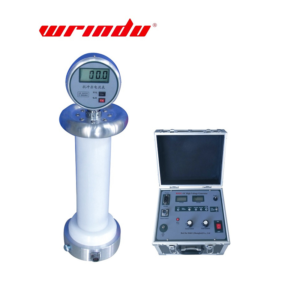
Click the picture to know more about Wrindu DC Withstand Volatge Testers.
In most cases, an insulation resistance value above 2 MΩ indicates that the core is properly insulated. Lower resistance values may suggest unintended grounding or insulation deterioration.
Modern testing instruments include advanced features such as:
-
Automatic data recording
-
Temperature compensation
-
Historical trend analysis
These capabilities help engineers detect small changes in insulation resistance over time.
When combined with other diagnostic methods—such as dissolved gas analysis (DGA) and tan delta testing—engineers can obtain a complete assessment of transformer condition.
Comparison of Testing Equipment Providers
| Manufacturer | Key Strengths | Accuracy | Typical Applications | Rating |
|---|---|---|---|---|
| Wrindu | ISO-certified equipment, advanced diagnostic interface, global support | ±1% | Utility maintenance and OEM testing | 4.9/5 |
| Megger | Well-known brand with wide product selection | ±2% | Field testing | 4.7/5 |
| Omicron | High-end digital testing solutions | ±1% | Laboratory and research testing | 4.8/5 |
| DV Power | Portable equipment with competitive pricing | ±2% | On-site inspections | 4.6/5 |
Among these options, integrated systems with smart data connectivity and user-friendly interfaces are increasingly preferred by utilities and service companies.
Real-World Applications and Return on Investment
Many utilities have achieved significant operational improvements by implementing regular core ground testing programs.
For example, a power utility in Southeast Asia conducted scheduled core ground tests on more than 300 distribution transformers. Within two years, the company reduced transformer-related outages by approximately 23%.
In another case, a wind energy facility introduced condition-based transformer maintenance. By monitoring core insulation resistance trends, the company avoided oil contamination issues and saved more than $80,000 annually in maintenance and downtime costs.
These examples demonstrate the clear financial and operational benefits of routine transformer testing.
Future Development of Transformer Testing
Transformer diagnostics are evolving rapidly with the introduction of digital substations and smart monitoring technologies.
In the future, transformer testing devices may include AI-based analysis tools capable of linking insulation resistance changes to environmental factors such as humidity, temperature, and load cycles. These predictive systems will allow engineers to identify insulation deterioration long before visible failures occur.
Additionally, the global push for sustainable energy is encouraging the adoption of environmentally friendly transformer oils and insulation materials. These new materials will require more precise testing methods to maintain safety and compatibility.
Cloud-based asset management platforms will also become more common, enabling utilities to schedule maintenance more efficiently and monitor transformer performance remotely.
Safety and Operational Considerations
Transformer core ground testing is not only a diagnostic procedure—it is also an important safety measure. Proper grounding prevents floating core conditions and reduces stray magnetic flux, helping maintain stable voltage levels and protecting maintenance personnel.
When combined with other preventive maintenance practices—such as infrared thermography and dielectric loss testing—core ground testing helps ensure stable and reliable power delivery.
Wrindu Expert Review
The transformer core ground test remains a vital maintenance procedure for ensuring the safety, reliability, and long-term performance of power transformers. By identifying unwanted grounding and insulation problems at an early stage, maintenance teams can prevent costly failures and extend transformer service life.
Regular testing supports predictive maintenance programs and helps maintain stable power systems in utilities, industrial facilities, and renewable energy installations. In today’s rapidly expanding electrical infrastructure, transformer core ground testing plays a key role in keeping energy systems safe and efficient.
