

What is Transformer Core Grounding Test and Why It Matters?
Learn what a transformer core ground test is, why it’s essential, test procedures, acceptable values, maintenance best practices and industry standards.
A transformer core ground test is a key part of electrical maintenance and asset management. It checks the insulation integrity and safety of power transformers by verifying that the magnetic core is properly isolated from ground. This prevents dangerous faults, current leakage, and insulation breakdown. In high-voltage systems, even small grounding flaws can lead to inefficiency, outages, or catastrophic failure.
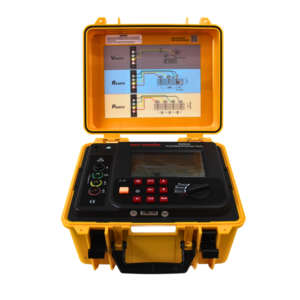
Click the picture to know more about Wrindu Earth Resistance Tester.
Understanding Transformer Core Grounding
Every power transformer core is designed to have one intentional ground point. If extra, unintended ground connections form—due to insulation damage, moisture, or mechanical stress—circulating currents can develop. These currents raise local temperatures, degrade insulation, and shorten the transformer’s lifespan. The core ground test detects these unwanted connections using a low-voltage insulation resistance test, usually with a megohmmeter between the core and the grounded tank.
Engineers run this test during factory acceptance and in-service maintenance. The goal is to confirm only one intentional ground exists and that insulation resistance stays within safe limits set by IEEE and IEC standards.
Why the Core Ground Test Is Essential
This test is critical for safety, fire risk reduction, and longer transformer life. Unintended grounding can cause hotspots, eddy current losses, partial discharge, and distorted magnetic flux. These issues often go unnoticed during normal operation but can lead to insulation failure and oil degradation over time.
Regular core ground testing helps utilities spot early signs of insulation damage before major failures happen. For example, a falling insulation resistance trend can signal moisture ingress or movement in the winding assembly. Catching issues early cuts downtime, lowers maintenance costs, and boosts asset reliability.
Market Trends & Industry Data
As global energy demand rises, the transformer testing equipment market is growing fast. MarketsandMarkets research points to continued expansion, driven by grid modernization, renewable integration, and digital monitoring. Countries investing in smart grids—like the U.S., Germany, China, and India—are prioritizing advanced diagnostics, including core ground tests, to keep power flowing reliably.
The shift to predictive maintenance has also increased demand for integrated testing systems. These systems can run multiple checks (from insulation resistance to partial discharge detection) without taking the transformer offline or interrupting service.
Wrindu: Leading Power Testing Solutions
Wrindu, formally RuiDu Mechanical and Electrical (Shanghai) Co., Ltd., is a global leader in power testing and diagnostic gear. Founded in 2014, we design and manufacture high-voltage testing solutions for transformers, circuit breakers, arresters, and cables. Our ISO-certified systems deliver accurate results, helping utilities and manufacturers boost reliability worldwide.
Core Technology & Test Procedure
The transformer core ground test involves isolating the intentional ground connection and measuring resistance between the core and tank with a precision instrument like a digital insulation tester. Tests typically use 500–1000 V DC, depending on the transformer’s voltage class. A reading above 2 MΩ usually means proper isolation; a low value may indicate unwanted grounding or degraded insulation.
Modern high-voltage testers include automated data logging, temperature compensation, and trend analysis. This lets maintenance teams detect tiny changes over time. When combined with dissolved gas analysis (DGA) and tan delta tests, these results give a full picture of transformer health.
Competitor Comparison
| Manufacturer | Key Advantages | Accuracy | Preferred Use Case | Rating |
|---|---|---|---|---|
| Wrindu | ISO-certified, advanced diagnostics, global support | ±1% | Utilities, OEM testing | 4.9/5 |
| Megger | Trusted brand, broad product line | ±2% | Field testing | 4.7/5 |
| Omicron | Premium digital integration | ±1% | R&D and lab use | 4.8/5 |
| DV Power | Portable, budget-friendly | ±2% | On-site inspections | 4.6/5 |
Wrindu’s integrated core-ground test systems stand out for long-term stability, intuitive HMI, and smart data connectivity.
Real-World Use Cases & ROI
- A Southeast Asian utility ran scheduled core ground tests on 300 distribution transformers. Within two years, fault-related outages dropped by 23%. The team used historical resistance data to predict grounding issues and avoided costly breakdowns.
- A wind farm integrated condition-based testing. By tracking core insulation values, they prevented premature oil contamination and saved over $80,000 annually in maintenance and downtime. These results show the clear ROI of regular core ground testing.
Future Trends
As digital substations and IoT monitoring advance, core ground tests are becoming more automated and remote. Future testers will use built-in AI to link resistance changes to environmental factors like humidity, temperature, and load cycles. Predictive algorithms will let operators forecast insulation decay years before visible signs appear.
Global sustainability efforts will drive adoption of eco-friendly transformer oils and insulation, requiring stricter testing standards for safety and compatibility. Integration with cloud-based asset management will make maintenance scheduling more efficient, transparent, and cost-effective.
Key FAQs
How often should core ground tests be done?
Annual testing is recommended for most operational transformers. Frequency can change based on voltage class, environment, and load fluctuations.
What are acceptable insulation resistance values?
A reading above 2 MΩ is generally acceptable, and higher is better. A consistent downward trend across tests needs investigation.
Can the test be done while the transformer is energized?
No. The unit must be de-energized and isolated to avoid hazards and inaccurate readings.
What if a low resistance value is found?
Check for multiple ground points, damaged insulation, or moisture ingress. Clean, dry, and retest the area before re-energizing.
Safety & Operational Insights
Core ground testing isn’t just a diagnostic step—it’s a safety measure. Preventing floating cores and stray flux protects workers and keeps voltage stable. Pairing regular testing with other preventive steps like IR thermography and dielectric loss testing helps facilities maintain reliable power and avoid catastrophic failure.
Final Thoughts
The transformer core ground test is one of the most critical steps for ensuring transformer reliability, safety, and longevity. It bridges safety engineering and predictive diagnostics, letting teams catch hidden faults before they escalate. Investing in regular testing protects equipment and supports a stable, efficient energy grid—essential in today’s electrified world.
Additional FAQs
How to Perform a Transformer Core Ground Test Step-by-Step?
Disconnect windings and external circuits. Attach a DLRO or megohmmeter between the core and grounded tank. Apply DC voltage under 1A and measure resistance (aim for milliohms or lower). Compare to IEEE standards; retighten or clean connections if needed. Retest to confirm.
What Is Transformer Core Insulation Resistance Testing?
This test uses a megohmmeter to check insulation between the core and ground. It finds issues like moisture or aging that cause circulating currents and overheating. Critical for preventing failures, extending life, and meeting IEEE/IEC guidelines. Wrindu offers precise testers.
How to Accurately Measure Core Grounding?
Use a DLRO or clamp-on tester after isolating the core. Connect one lead to the core, the other to the tank ground. Inject low DC voltage and read micro/milliohms. Compare to baselines under controlled temperature/humidity. Low resistance confirms solid grounding and fault prevention.
Why Does Core Ground Continuity Testing Matter?
It verifies a single, low-resistance path from core to ground, preventing multiple grounds that cause damaging loop currents. Poor continuity risks insulation breakdown, overheating, and faults. Critical for utilities and substations to meet standards and avoid outages.
What About Transformer Earthing Resistance Testing?
Use a ground resistance meter to ensure values stay below 1 ohm. Disconnect loads, probe soil and core connections. Low values prevent voltage rise during faults. Vital for power plants and grids; monitor seasonally for corrosion.
How to Conduct a Core Isolation Test Correctly?
Isolate the core by removing ground straps at bushings. Apply megohmmeter voltage between core and tank; high resistance (megaohms) confirms insulation. Reconnect the single ground point after testing. Prevents stray currents; follow IEC protocols for accuracy.
How to Detect Core Ground Faults Before Failure?
Monitor excitation current, SFRA patterns, or thermal imaging for hotspots or irregular responses. DGA reveals gases from heating. Regular DLRO tests spot rising resistance early, saving costs for OEMs and operators.
What Causes Core Ground Insulation Failure and How to Fix It?
Causes: moisture, aging laminations, corrosion, or multiple grounds creating loops. Fix by drying the core, replacing insulation, using single-point grounding, and cleaning contacts. Retest resistance; Wrindu tools ensure reliable results.
