

What Is Transformer Ratio Testing?
Learn what transformer ratio testing is, its purpose, how it works, key IEC/IEEE standards and critical testing best practices for all transformers.
If you work with transformers—whether in utility maintenance, manufacturing, or electrical construction—you’ve likely heard of transformer ratio testing. But what exactly is it, and why is it such a critical part of keeping transformers safe and reliable? This guide breaks it down in plain, straightforward terms, no confusing jargon required.
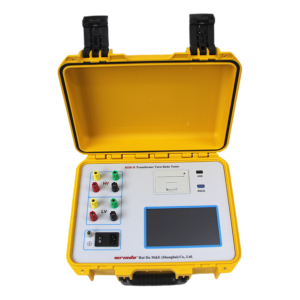
Click the image to know more about Transformer Turns Ratio Tester.
What Is Transformer Ratio Testing?
Transformer ratio testing is a routine, non-destructive test that checks if the turns ratio between a transformer’s high-voltage (HV) and low-voltage (LV) windings matches the number printed on the transformer’s nameplate. In short, it verifies that the transformer steps voltage up or down as intended.
Transformers work by using wire coils (windings) to transfer electrical energy. The number of turns in the HV winding compared to the LV winding sets the voltage transformation ratio. If this ratio is off—even by a small margin—the transformer won’t operate correctly, and hidden damage may be present.
Global standards, including IEC 60076-1 and IEEE C57.12.90, require this ratio to stay within ±0.5% of the nameplate value. Any deviation beyond this limit means the transformer fails the test and needs further inspection.
Why Does Transformer Ratio Testing Matter?
This test isn’t just a box-checking exercise—it prevents costly, dangerous problems down the line. Here’s why it’s non-negotiable:
-
Catch hidden faults early: Detects shorted winding turns, faulty tap changers, miswired coils, or insulation damage before the transformer is energized.
-
Avoid grid issues: Incorrect ratios cause circulating currents, overheating, energy waste, and even transformer failure that can knock out power to homes or businesses.
-
Ensure compliance: Meets international safety and performance standards required for manufacturing, commissioning, and maintenance.
-
Extend transformer life: Fixing small issues early prevents major breakdowns and extends the lifespan of expensive equipment.
How Does Transformer Ratio Testing Work?
The step-by-step process is simple and safe when done correctly, using a portable transformer ratio tester:
-
Prep the transformer: De-energize, lock out the unit, and demagnetize the core to eliminate false readings.
-
Connect the tester: Hook the tester’s leads to the HV and LV winding terminals (follow color-coded labels to avoid polarity errors).
-
Run the test: Apply a low, safe voltage (5–10% of rated HV) to the HV winding; the tester measures the induced voltage on the LV side.
-
Check results: The tester calculates the ratio and shows if it falls within the ±0.5% tolerance. For tap-changing transformers, test every tap position.
When Is Transformer Ratio Testing Performed?
This test is done at every key stage of a transformer’s lifecycle:
-
Factory Acceptance Testing (FAT) before shipping
-
On-site commissioning before first use
-
Annual routine preventive maintenance
-
After repairs, rewinding, or relocation
-
Before re-energizing after a fault or outage
Common Misconceptions About Ratio Testing
Many technicians mix up key terms or skip critical steps—here’s the truth:
-
Myth: Voltage ratio and turns ratio are the same. Fact: Turns ratio is fixed; voltage ratio is measured and can shift slightly.
-
Myth: Testing one tap is enough. Fact: All taps must be tested to spot tap changer issues.
-
Myth: Demagnetizing is optional. Fact: It’s required to avoid false test failures.
Final Thoughts
At its core, transformer ratio testing is a quick, reliable way to confirm a transformer is working as designed. It’s a foundational test for anyone working with transformers, keeping equipment safe, compliant, and efficient for years to come.
Quick Takeaway: If the ratio test passes within ±0.5%, the transformer’s winding alignment is healthy. If it fails, troubleshoot faults like shorted turns or bad tap changers before putting it back in service.
