What is Wrindu Insulating Oil Micro Water Tester?
Wrindu RDKF-106D Insulating Oil Micro Water Tester uses Karl Fischer titration to accurately measure trace moisture in oils, providing fast, reliable results for various industries.
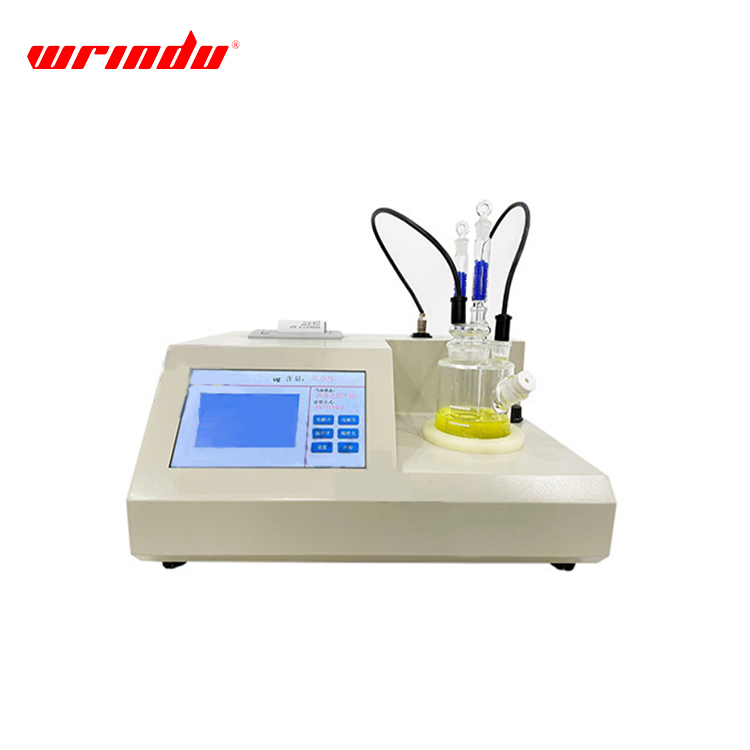
The RDKF-106D Insulating Oil Micro Water Tester is a high-precision instrument designed to measure trace amounts of water in insulating oils. This tester uses Karl Fischer coulometric titration, which is the most reliable method for detecting water content in various substances. It is ideal for industries like petroleum, chemicals, electricity, and more, providing fast, accurate, and reliable results for water analysis.
How Does the Oil Micro Water Tester Work?
The oil micro water tester operates using a 32-bit embedded microprocessor, which controls the entire system and ensures stable and precise measurements. It automatically adjusts the electrolysis current (0-400mA) for accurate water content detection. The results are calculated using one of four built-in formulas and are displayed in the required units, which can be easily converted between different measurements.
What Are the Key Features of the Oil Micro Water Tester?
| Feature | Description |
|---|---|
| 32-bit Embedded Microprocessor | Ensures fast, reliable operation and precise measurement control. |
| High Precision Measurement | Accurate detection of water content, ranging from 1μg to 200mg. |
| Automatic Detection | Uses 0-400mA electrolysis current for automatic and precise water content detection. |
| Color Touch Screen | Full numeric keyboard and touch screen for easy, intuitive operation. |
| Graph Curve Analysis | Helps analyze trends in water content over time, providing valuable insights. |
| Built-in Calculation Formulas | Four calculation formulas for automatic conversion of measurement units. |
| Micro Thermal Printer | Provides printed results for convenient record-keeping. |
| Simple Operation | User-friendly interface for quick setup and measurement processing. |
What Are the Technical Specifications of the Oil Micro Water Tester?
| Specification | Details |
|---|---|
| Titration Method | Coulometric titration (coulometric analysis) |
| Display | Color LCD touch screen |
| Electrolysis Current Control | 0 ~ 400mA automatic control |
| Measurement Range | 1μg ~ 200mg |
| Resolution | 0.1 μg |
| Accuracy | ± 3 μg (10 μg – 1000 μg); ± 0.3% for measurements over 1000 μg |
| Printer | Micro thermal printer |
| Power Supply | 220 × (1 ± 10%) V |
| Power Frequency | 50 × (1 ± 5%) Hz |
| Power Consumption | < 40W |
| Ambient Temperature | 5 ~ 40°C |
| Ambient Humidity | ≤ 85% |
Why Should You Choose the Oil Micro Water Tester?
If you need a reliable, high-precision tester for measuring water content in insulating oils, the RDKF-106D Insulating Oil Micro Water Tester is your ideal solution. With its fast measurement, simple operation, and accurate results, it ensures your insulating oils remain in optimal condition, preventing potential issues with electrical equipment.
FAQs
What is the primary function of an oil micro water tester?
It measures trace moisture in oil with high precision, usually in parts per million (ppm). Regular testing ensures moisture stays below critical levels (e.g., <20 ppm) to maintain oil’s dielectric strength and lubrication.
How does the tester work?
It uses Karl Fischer (KF) coulometric titration, where a chemical reaction occurs in the sample. The instrument measures the electricity needed to reach the reaction’s endpoint, which directly correlates to the water content.
Why is moisture in oil a serious problem?
Moisture degrades insulation and causes mechanical wear. In transformers, it lowers the oil’s breakdown voltage, leading to arcing, while in engines, it causes corrosion, sludge, and reduces lubrication efficiency.
What types of oil can be tested?
It can test most industrial and insulating oils, including transformer oil, turbine oil, hydraulic fluid, lubricating oil, and even vegetable or fuel oils.
How accurate are these testers in 2025?
They are highly sensitive, detecting moisture down to 1 ppm. Modern 2025 models offer automated calibration and high repeatability, making them the gold standard for moisture analysis.
Can I use it in the field?
Yes, portable testers provide lab-grade accuracy in a rugged, battery-powered format. They allow on-site testing in as little as 10 minutes.
What is the difference between dissolved and free water?
Dissolved water is bonded to the oil on a molecular level, while free water forms a separate visible layer. Micro water testers are designed to detect dissolved moisture, which can cause sudden failures when it condenses.
How often should oil be tested for moisture?
New oil is tested upon receipt, while in-service oil is typically checked quarterly. Critical equipment, like high-voltage transformers, may need more frequent testing or continuous monitoring to prevent moisture-related failures.
What standards govern these moisture tests?
Key standards include ASTM D1533, ASTM D6304, and IEC 60814, which outline the procedures and equipment requirements for measuring moisture in oil.
How much do these testers cost in 2025?
Most commercial units cost between $1,000 and $2,500. High-end models with advanced features like IoT and touchscreens are more expensive, but basic portable testers are more affordable than ever.
You might be interested in