What Is Wrindu Transformer Oil Gas Chromatography Analyzer?
Wrindu RDSP-3401 Transformer Oil Gas Chromatography Analyzer tests dissolved gases in transformer oil, providing accurate, high-sensitivity results for early fault detection and maintenance.
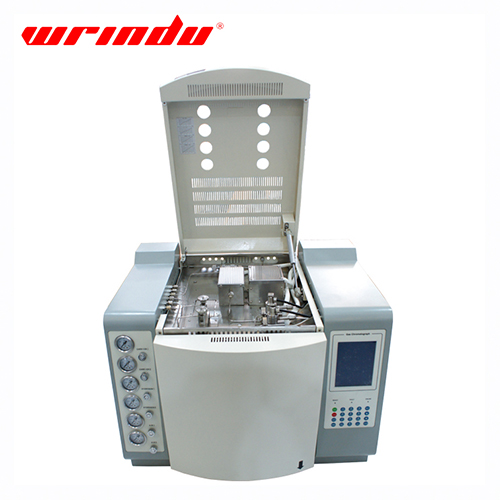
The RDSP-3401 Transformer Oil Gas Chromatography Analyzer is an advanced tool designed to test and analyze dissolved gases in insulating oil used in electrical equipment, particularly transformers. By utilizing gas chromatography, it provides accurate, high-sensitivity results, offering a crucial method for monitoring transformer health and preventing failures.
How Does the RDSP-3401 GC Analyzer Work?
Gas chromatography is a technique that separates and analyzes mixtures of gases. The RDSP-3401 uses gas as the mobile phase to carry the sample through a column, where the individual components are separated based on differences in boiling points, polarity, and adsorption. The detector identifies these components and generates an electrical signal that is processed into readable data. This process allows for a detailed analysis of the gases in transformer oil, which is key to detecting potential issues before they cause damage.
What Are the Key Features of Wrindu RDSP-3401 GC Analyzer?
| Feature | Description |
|---|---|
| Large LCD Display | Intuitive, easy-to-read screen with a user-friendly interface and one-click operations. |
| Remote Data Management | Allows remote data acquisition and management via an internet connection, increasing operational flexibility. |
| User-Friendly Software | Simple interface for setting parameters like temperature, gas flow, and detector functions. Includes automatic ignition and fault detection. |
| High Sensitivity and Accuracy | Advanced microprocessor for precise temperature control and reliable gas analysis data. |
| Self-Diagnosis | Automatically detects faults and alerts users to any issues, reducing downtime. |
| Temperature Control | Precise control of heating areas with ±0.05°C accuracy for consistent analysis results. |
| Quick Analysis Time | Fast analysis time and automatic data processing for efficient results. |
| Power Supply | AC 220V ±10%, 50Hz ±0.5Hz, with a power consumption of 2KW. |
Why Is Rindu RDSP-3401 GC Analyzer Ideal for the Power Industry?
The RDSP-3401 Transformer Oil Gas Chromatography Analyzer is essential for maintaining transformer reliability. It analyzes the presence of critical gases like hydrogen (H2), methane (CH4), acetylene (C2H2), and others, which are indicators of various faults in transformers. Early detection of these gases allows for preventive maintenance, helping to avoid costly breakdowns.
Additionally, the RDSP-3401 is a time-saver, with a quick analysis time and automatic data processing features. This means you get faster results, which are crucial for effective decision-making in the power industry.
What Are the Technical Specifications of RDSP-3401 GC?
| Specification | Details |
|---|---|
| Temperature Control Range | Room temperature +5°C to 420°C |
| Temperature Control Accuracy | ±0.05°C within 200°C |
| Power Consumption | 2KW |
| Detector Sensitivity | High sensitivity for gases like H2, CO, CO2, CH4, C2H4, C2H6, and C2H2 |
| Minimum Detection Concentration | As low as 0.08 PPM for gases like C2H4 (Ethylene) |
| Power Supply | AC 220V ±10%, 50Hz ±0.5Hz |
| Startup Stable Time | < 1.0 hour |
| Temperature Sensing Element | PT100 corundum ceramic platinum resistor |
| Heating Power (Maximum) | 1200W for column chamber |
FAQs
What is the primary purpose of a Transformer Oil GC Analyzer?
A: It detects internal faults by analyzing dissolved gases. The analyzer separates and measures gases produced by thermal and electrical stresses, identifying problems like arcing or overheating early.
How does the analyzer work?
A: It separates gas mixtures using a chromatographic column, then detects each gas individually. Gases are extracted from an oil sample, carried by an inert gas through the column, and measured by sensors like Flame Ionization Detectors (FID).
Which gases are typically measured?
A: It measures key fault gases, including Hydrogen (H2H_2), Methane (CH4CH_4), Ethylene (C2H4C_2H_4), and Acetylene (C2H2C_2H_2), as well as Carbon Monoxide (COCO) and Carbon Dioxide (CO2CO_2) to detect paper insulation degradation.
What does the presence of Acetylene indicate?
A: It signals high-temperature arcing or severe thermal faults. Acetylene is a crucial indicator of active, high-energy sparking inside the transformer.
Why is Hydrogen considered a “key gas”?
A: It is an early warning sign of nearly all types of faults. Hydrogen is often the first gas produced during oil breakdown, serving as a “smoke alarm” for potential issues.
Can the GC analyzer be used online?
A: Yes, it can be used both online and offline. Online monitors provide real-time data, while offline lab systems offer more precise and detailed diagnostic results.
What standards govern these tests?
A: Tests are guided by IEEE C57.104 and IEC 60599. These standards specify the procedures and concentration limits for interpreting gas results.
What are the main benefits of regular testing?
A: Regular testing allows for early fault detection, extends equipment life, and saves costs. Predictive maintenance helps avoid unexpected power outages and expensive repairs.
How are the results interpreted?
A: Results are analyzed by comparing gas ratios and concentrations to historical data and industry limits. Methods like Duval’s Triangle or Pentagon help identify the exact fault.
How much does a GC Analyzer cost?
A: Prices typically range from $14,000 to $27,000+, depending on whether the unit is a benchtop lab system or a portable field analyzer.
You might be interested in